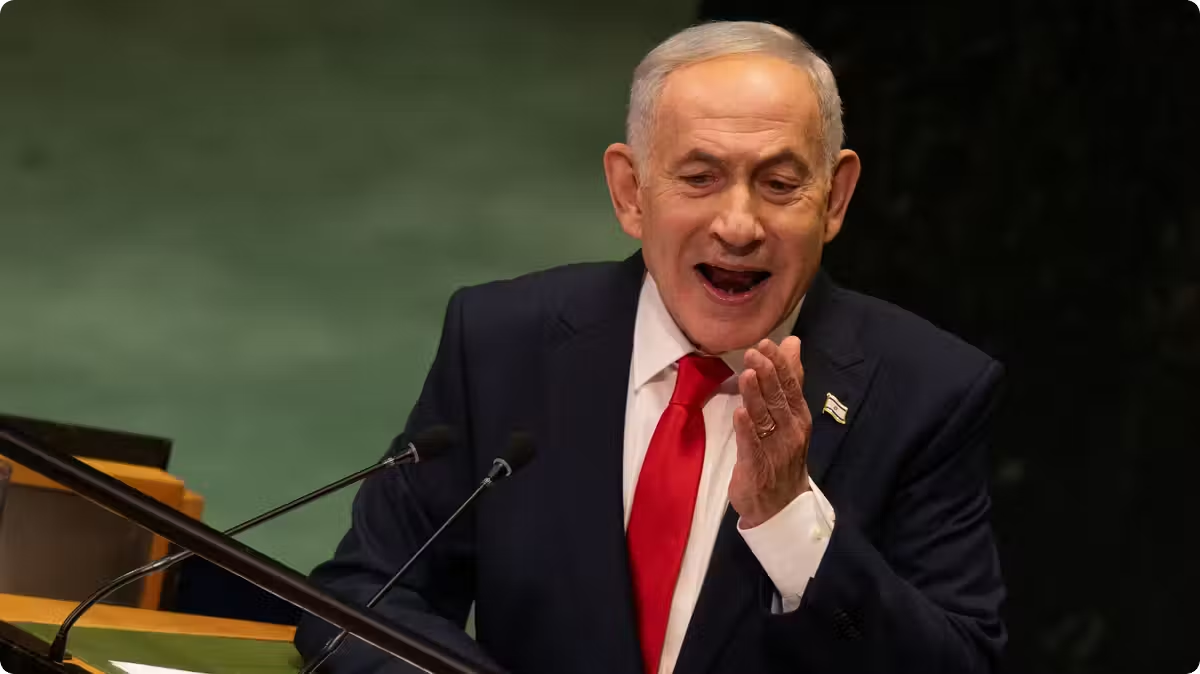
Israeli Prime Minister Benjamin Netanyahu has lost an important historical ally in the process of forming the new government, after the ultra-Orthodox United Torah Judaism (UTJ) party did not grant him support for forming the executive branch. The decision, announced by the Presidency of Israel at the end of the meeting with President Isaac Herzog, directly benefits his main political rival, Gadi Eisenkot, leader of the Yashar party, who previously faced difficulties in gathering the required majority of 61 mandates. [2]
Tensions between Netanyahu and UTJ escalated after the prime minister failed to promote a law that would consolidate exemptions from mandatory military service for yeshiva students. UTJ deputy Isaac Pindrus stated during consultations that 'the prerequisite or immediate element' in any future government is the regulation of the status of Torah students. In recent years, Netanyahu had supported this group's efforts to maintain exemptions, but the lack of resolution on the issue led him to withdraw his vote. [2]
With UTJ's abstention, which holds 9 mandates, Netanyahu's parliamentary support dropped to 45 seats (out of the Knesset's total of 120), compared to the 53 mandates obtained by his bloc in the October 27 elections. In contrast, Gadi Eisenkot, whose Yashar bloc won 48 mandates, received explicit support from the Arab United List (Ra'am) on Wednesday, which has 19 representatives. With the help of UTJ or other neutral formations, Eisenkot approaches the threshold of 61 mandates, currently standing at 56 mandates, with the possibility of reaching a majority through negotiation with parties on the Unified List or other groups. [2] [1]
President Herzog, who began consultations on Wednesday, November 4, for appointing the prime minister, will continue his discussions with other political forces. According to the Israeli Constitution, the designated candidate has 28 days to form a government, with the possibility of extending this period by another 14 days. In case of failure, the mandate reverts to another candidate, and in the final instance, parliament can propose another name or new elections can be organized. [1] [2]
As the story develops
Update
Herzog seeks a majority for Israel's government after elections
Following the parliamentary elections on October 27, which concluded without the formation of a majority, Israeli President Isaac Herzog is receiving various political forces this week for consultations aimed at appointing a member tasked with forming a government. [3]
Earlier this week, the Israeli Presidency announced that the United Torah Judaism (UTJ) faction, part of Benjamin Netanyahu's governing coalition, did not recommend any member for forming a government. This move marks a break from UTJ's previous recommendation for Netanyahu following the 2022 elections. [3]
The main reason for UTJ's decision is Prime Minister Netanyahu's failure to promote a law that would permanently enshrine the exemption from military service for yeshiva students. UTJ deputy Isaac Pindrus conveyed to President Herzog that 'the first or immediate measure' in any future government must be the regulation of the status of those studying the Torah. [3]
UTJ's abstination strengthens Gadi Eisenkot's position, leader of the Yashar bloc, making him the main candidate for forming the government. Eisenkot has already received explicit support from the Arab United List (Ra'am), significantly increasing his chances of investing an executive branch. [3]
The distribution of mandates in the Knesset, which requires 61 votes for a majority, shows that Netanyahu's camp obtained 53 seats, while Eisenkot's bloc obtained 48. However, the current distribution of parliamentary support changes the calculation. [3]
Following UTJ's withdrawal of support for Netanyahu, the estimated number of the prime minister's supporters drops to 46. In contrast, benefiting from Ra'am's support and considering that UTJ might join him or remain neutral, Gadi Eisenkot reaches 56 anticipated recommendations, critically approaching the threshold of 61 mandates. [3]
President Herzog has until November 11 to officially designate the candidate tasked with forming the government. Consultations continue with all political forces, including the Unified List, which has not yet made its preference public. [3]
Update
Netanyahu's position weakens: an ultra-orthodox party refuses to support him, while two Arab parties back rival Eisenkot
Benjamin Netanyahu's position in the post-election battle to remain Israel's prime minister weakened on Thursday, after an ultra-Orthodox Jewish party refused to give its support for any nomination, and two Arab-led parties backed his main rival, Gadi Eisenkot, according to Reuters. Israel's President, Isaac Herzog, was set to meet on Thursday with Netanyahu and his main political rival, Gadi Eisenkot, to decide which of the two to designate to form a government, after having held talks with smaller parties, and he has until November 11 to make a decision. The October 27 elections in Israel ended in a deadlock, as neither Netanyahu nor Eisenkot, a former military chief, succeeded in finding a clear path to a majority in parliament. [7]
- Categories:
- Politics
- Entities:
Sources
- Libertatea Decizie importantă în Israel. Un partid arab îi recomandă rivalului lui Netanyahu să formeze guvernul
- AGERPRES Israel/ Benjamin Netanyahu pierde sprijinul istoric al unui partid ultrareligios
- News.ro Netanyahu pierde sprijinul unui partid ultraortodox care îl susţinea de trei decenii
- stirileprotv.ro Netanyahu pierde sprijinul unui partid ultraortodox care l-a susținut timp de trei decenii
- Digi24 Netanyahu pierde sprijinul unui partid ultraortodox care i-a fost aliat timp de 30 de ani. Calcule noi pentru formarea guvernului
- Adevărul Premierul Israelului pierde sprijinul unui partid ultraortodox care l-a susținut în ultimele trei decenii
- Bursa Reuters: Poziţia lui Netanyahu se slăbeşte: un partid ultraortodox refuză să-l susţină, iar două partide arabe îl susţin pe rivalul Eisenkot