A significant majority of French voters aligned with the right and political center are calling for a primary election to select their unified candidate for the 2027 presidential race, according to a survey conducted by Odoxa for *Le Figaro*. The findings highlight a growing disconnect between party leadership dynamics and voter preferences, as the vast majority of supporters back a competitive preliminary selection process that would allow multiple contenders to emerge, even if it risks internal division. [3] [4] [2]
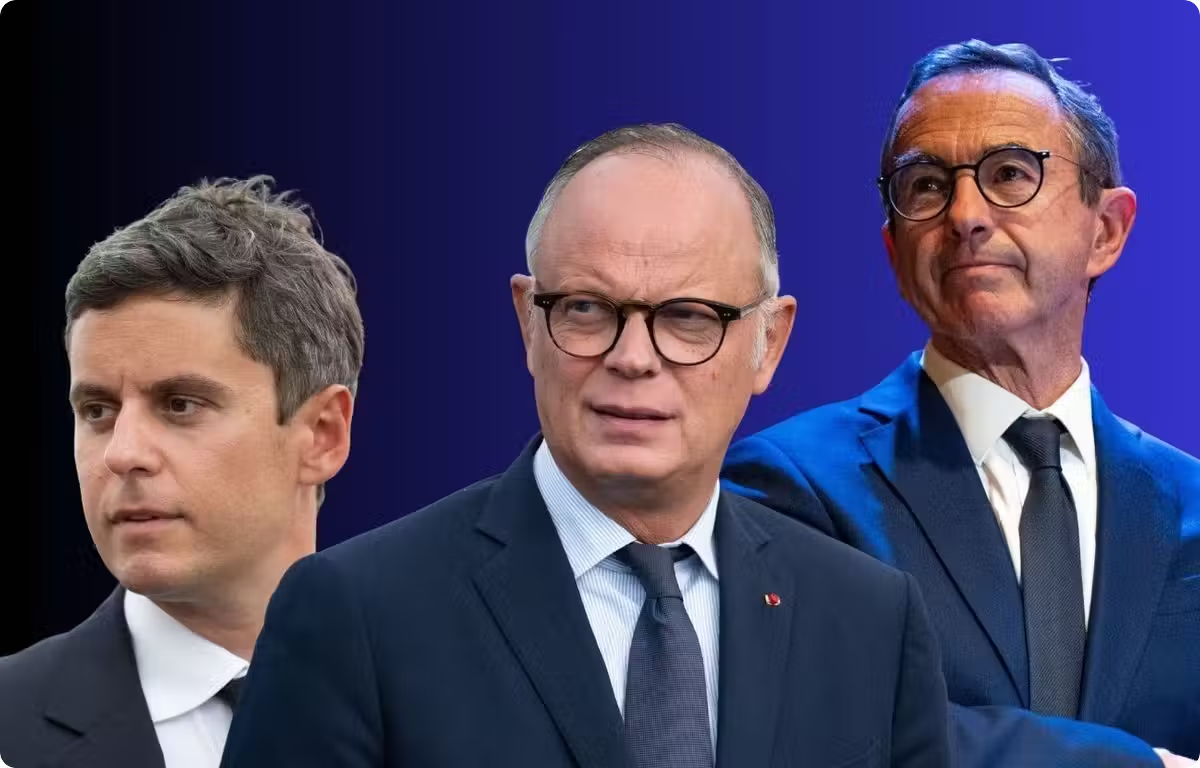
The survey indicates that 74% of sympathizers belonging to right-wing and centrist parties support the organization of a primary. Among the broader French population, support stands at 60%, suggesting that the desire for a primary is particularly strong within the specific political base most affected by potential fragmentation. The data was collected following recent public appeals by Gabriel Attal, leader of the Renaissance party, and Bruno Retailleau, representing The Republicans (LR), both of whom have advocated for a primary to avoid the risk of eliminating conservative and centrist voices in the first round of voting. [4] [2]
Support for the primary varies across specific political affiliations within the right and center spectrum. Interestingly, sympathizers of the Horizons party, led by Edouard Philippe—who has publicly refused to participate in such a primary—showed the highest level of enthusiasm for the idea, with 81% in favor. Among sympathizers of The Republicans (LR), Bruno Retailleau’s party, 79% support the primary. Meanwhile, among those aligned with Renaissance, Gabriel Attal’s party, 72% expressed support. This parallel suggests that while party leaders may debate the mechanics or timing of such a contest, their bases are largely eager for a structured selection process. [3] [4] [2]
Regarding the scope and participants of this potential primary, the majority of right and center sympathizers favor a broad field. Specifically, 62% support a primary that includes candidates ranging from Gabriel Attal to David Lisnard, the leader of the newly formed Nouvelle Énergie party. Lisnard, who left LR in the spring after the party refused to organize a primary, remains a popular figure among these voters. Conversely, there is strong resistance to expanding the field further; 61% reject the inclusion of Raphaël Glucksmann, the winner of the recent left-wing primary, and 60% oppose the participation of Eric Zemmour of the Reconquête party. This indicates that while voters want a competitive right-center selection, they prefer to keep the competition contained within traditional right and centrist circles. [4] [2]
In terms of individual popularity among right and center sympathizers, Bruno Retailleau emerges as the favorite. He leads with 62% favorable opinions, followed by Edouard Philippe at 59%, David Lisnard at 58%, Christine Lagarde at 49%, and Gabriel Attal at 42%. Each contender retains a specific strength in the eyes of this electorate: Philippe is favored for his statesmanlike stature (49%), Retailleau for his authority (41%), and Lisnard for his perceived proximity to voters (31%). However, the ranking shifts significantly when considering the entire French electorate, where Edouard Philippe leads with 39% favorability, followed by David Lisnard (37%), Bruno Retailleau (35%), Gabriel Attal (34%), and Christine Lagarde (32%). [3] [4] [2]
The push for a primary comes amidst warnings from some political actors about the dangers of division. Despite the high level of support for the concept, the underlying fear of splitting the vote is noted. However, 59% of right and center sympathizers believe that a primary would strengthen their camp rather than divide it. This sentiment contrasts with the stance of Edouard Philippe, who has consistently argued against a primary. During an appearance on TF1 on November 1st, Philippe described a primary as a [3]
The debate on social media, analyzed by the Backbone polling firm, mirrors the political discourse. The conversation has shifted from the principle of having a primary to the logistical details: who exactly gets to participate and under what rules. With Retailleau suggesting that Philippe will eventually be compelled to accept a primary, and Philippe maintaining his refusal, the timeline remains uncertain. Retailleau has proposed three televised debates before the end of the year, a move intended to clarify his standing ahead of any potential primary early next year. As of now, no right or center candidate is projected to qualify for the second round of the general election, with simulations often pitting Marine Le Pen against Jean-Luc Mélenchon or showing all right/center candidates trailing behind. [3] [4]
- Categories:
- Politics
- Entities:
Sources
- 20 Minutes Présidentielle 2027 : Les trois quarts des sympathisants de droite et du centre veulent une primaire
- 20 Minutes Présidentielle 2027 : Les trois quarts des sympathisants de droite et du centre veulent une primaire
- lindependant.fr Présidentielle 2027 : Trois quarts des sympathisants de droite et du centre veulent une primaire
- europe1.fr Élection présidentielle 2027 : 74% des sympathisants de la droite et du centre veulent une primaire