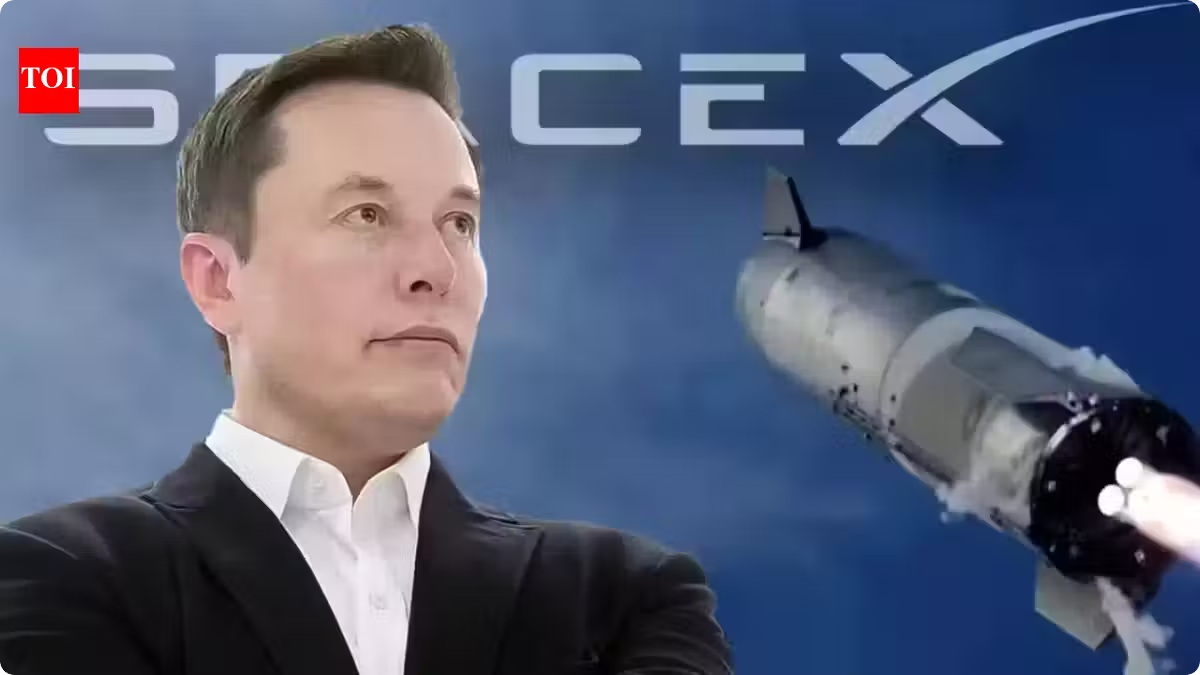
Tesla and SpaceX CEO Elon Musk reacted with ironic messages on the social network X to the Democratic Party's victory in the United States midterm elections. After several hours of silence, the businessman posted two messages linking election results with his vision of technology infrastructure. [2]
‘Space data centers look pretty attractive right now,’ Musk wrote in a message posted on the morning of Wednesday, November 4, according to electoral data indicating a major victory for the Democrats. The second post was a joke about his political influence: 'I find my space lasers interfering with the election didn't work this time,' stated the entrepreneur, with a shrug emoji. [1]
Musk's comments come in the context of significant Democratic gains, including a surprise win in the race for Governor of Texas by Democrat Gina Hinojosa, who opposes the expansion of data centers. This position contrasts with the growing footprint of Musk and his companies—Tesla, SpaceX, and xAI—which are developing high-performance computing infrastructure and data center projects in Texas. [1]
The Artificial Intelligence industry is facing increasing political scrutiny regarding massive data centers, with high electricity costs and environmental impact becoming campaign issues. Although Musk's messages did not directly target companies such as Google, Amazon, or Meta, which are expanding their AI infrastructure, they reflect ongoing tensions regarding the placement and impact of this critical infrastructure. [1]
As the story develops
Update
Elon Musk risks investments in Texas after surprise Democratic victory
The Democratic Party's victory in the US midterm elections marked a major setback for Elon Musk, who spent a record amount of at least $474 million on campaigns, of which $224 million were directed to the state of Texas. These funds were not recovered, given that Republican candidates supported by Musk's structures, such as Ken Paxton and Greg Abbott, lost to Democrats, and over $80 million went towards lost contests. Musk's initial reaction consisted of ironic messages on X, such as 'Space data centers look pretty attractive right now' and the joke about 'space lasers interfering with elections'. [4]
Democratic victories, including the surprise win by Gina Hinojosa in the Texas governorship, have placed under scrutiny the expansion of data centers and the political influence of tech giants. Gina Hinojosa promised a moratorium on new data centers, elimination of tax breaks, and requiring companies to pay full electricity costs, a stake that is particularly critical in Texas, Musk's operational base, where Tesla, SpaceX, and xAI are developing their projects. Elected Democratic Senator James Talarico called for removing 'big money from politics,' while researcher J.C. Lintzenich interpreted the results as a 'clear rejection of the Elon Musk image that entered Trump's orbit.' Nationally, America PAC, supported by Musk, spent nearly $87 million, but Republicans lost 29 races, leaving the tech sector under pressure. [4]
Update
Elon Musk jokes about space data centers after Democrats' victory
The Democratic Party's victory in the mid-term elections marked a major defeat for Elon Musk, who invested a record sum of at least $474 million in the campaign, of which $224 million were directed to the state of Texas. These funds were not recovered, as Republican candidates supported by Musk, Ken Paxton and Greg Abbott, were defeated by Democrats. The surprise win by Gina Hinojosa in the Texas governorship puts pressure on the expansion of data centers and the political influence of tech giants. Hinojosa promised a moratorium on new data centers, elimination of tax breaks, and the obligation of companies to pay full electricity costs. Texas remains a critical area, the operational base for Musk's Tesla, SpaceX, and xAI. Other Democratic victories, including in Ohio (Amy Acton) and Georgia (Keisha Lance Bottoms), suggest a national rejection of unrestricted data center development. In Ohio, Acton called for a conditional moratorium, and in Georgia, Bottoms announced a pause in construction, amplifying pressure on AI developers. Electoral effects were felt immediately in financial markets: S&P 500 and Nasdaq 100 indices dropped, affecting hardware suppliers (Samsung, SK Hynix, TSMC). These results threaten to overshadow positive financial reports from AI sector companies like AMD and Super Micro Computer. Texas's exposure is direct: approximately 13 gigawatts of data center capacity are now vulnerable, according to analyst Gordon Johnson. Projects without environmental permits could face delays of 12-18 months or migrate to other states. Texas holds almost 30% of US data center capacity scheduled to come online by 2028. Analysts at Jefferies and SemiAnalysis estimate that Hinojosa's victory moves Texas from risk level 3 to level 4, implying an immediate halt to approvals until a legislative session. Stricter rules regarding infrastructure payments, water consumption, and tax breaks could increase development costs. The impact of the elections extends beyond Texas, creating a clear political divide against AI projects nationwide. Newly elected Democratic governments in multiple states may implement moratoria similar to New York's, creating administrative barriers for the AI industry nationally. Democrats won in Congress can exercise strict oversight over Silicon Valley interests, which were less regulated in the first two years of the Trump administration. Electoral results reflect public fear regarding living costs and the conflict in Iran, translated into political rejection of the external costs of the AI boom. Markets anticipated regulatory risk: stock market index futures dropped sharply immediately after results were announced. Tesla and SpaceX shares recorded early losses, marked as a response to Musk's bet failure and uncertainty for the technological infrastructure supported by those same companies. The issue of costs and resource constraints for data centers is not just political but also economic and infrastructural, now being exposed to extensive scrutiny by the electorate and state authorities. The combined effect of national Democratic victories leaves half of US AI capacity addition projections vulnerable to strict local regulations. The stake is crucial in Texas, a central hub for Tesla, SpaceX, and xAI. Elected Democratic Senator James Talarico called for eliminating big money from politics. Researcher J.C. Lintzenich saw in the results a rejection of Musk's image integrated into Trump's orbit. America PAC, funded by Musk, spent nearly $87 million nationally, but Republicans lost 29 races. The tech sector is now under increasing pressure, not only through the lens of Musk's direct electoral losses but also through the changing political climate favoring control over the rapid growth of massive data infrastructure. Electoral effects are spreading to Europe and Asia, affecting the global supply chain. South Korean, Taiwanese, and Japanese AI component manufacturers recorded significant stock declines. Potential bans and moratoria demanded by newly elected Democratic governors target not only the speed of expansion but also financing mechanisms (tax breaks) and managing local impact (hydrological resources, energy prices). SemiAnalysis firm analysis suggests that losing time in the Texas market—which concentrates most future developments—can significantly influence the national pace of AI infrastructure implementation. The national context highlights that the victory in Congress, combined with control of Democratic state executives, offers a united front for blocking or hindering strategic projects of tech giants, a complete break from previous deregulation policies. Musk's viral jokes on the X platform regarding space data centers and laser interference constitute a subconscious reaction to the unpopularity his platform and companies are facing in the context of this new political reality. Proposed new legislative requirements, including halting approvals until a session prioritizes citizens over global corporations, represent the most unfavorable scenario for the AI campus development industry in Texas. The market no longer ignores political risk: stock prices and index contracts indicate a reevaluation of portfolios dependent on energy and digital infrastructure, in a year marked by geopolitical and inflationary uncertainty. For large companies operating in Texas, such as those led by Musk, pressure will manifest through higher predictable operating costs and increased bureaucracy, reducing the competitiveness of projects compared to states remaining open to investment. Projects that already hold permits and power can continue, but the lack of administrative guarantees for the coming years creates an economic safety vacuum for developers investing hundreds of millions. The bet for local councils is to regain control over land planning against entities perceived as insensitive to the impact on neighboring communities. Financial losses suffered by investors who supported Republicans, who lost numerous contested seats, amplify tension over how large companies align their lobbying and expansion budgets with the upcoming legislature. Industry passion for rapid expansion now hits a Democratic legislative wall in populous states, shifting the balance of power between technology and environmental regulation. The scale effect of local moratoria, if extended nationally through models adopted by other states, will block the scaling process of data networks powering artificial intelligence. Investors and top executives on Wall Street, previously divided between optimism and caution, are now facing a clear external factor validating fears regarding the sustainability of accelerated AI boom. Election reality has cooled AI boom enthusiasm. Democratic results create bad obstacles for industries seeking land, power, and permits, putting the final chapter on major technologists' bets with Donald Trump. Results add a political dimension to the financial debate on artificial intelligence. Even though Musk's tech company and SpaceX stocks suffered early losses, uncertainty regarding promised benefits remains a complex issue for CFOs. [5] [3]
Update
Elon Musk jokes about space data centers after Democrats' victory
Silicon Valley tech executives, including Elon Musk, Jeff Bezos, and Mark Zuckerberg, have been warned by Democratic politicians, who won the US mid-term elections and promise congressional investigations and regulatory measures against the accelerated development of artificial intelligence (AI) and the expansion of data centers. This political shift occurs in a context where the electoral campaign has been described as fueled by voter frustration regarding the political spending of tech billionaires, the rapid expansion of resource-intensive AI infrastructure, and suspicious alliances formed in the Trump era. Billion-dollar value figures from Silicon Valley could be subject to investigations by the Democratic Senate, which returns with increased powers. [6]
Prominent Democratic legislators announced their intention to subject tech sector leadership and its political operations to aggressive scrutiny. Massachusetts Senator Ed Markey stated on X: 'They will need to plant new forests for all the subpoenas we will issue.' Georgia Senator Jon Ossoff directly attacked tech executives: 'Silicon Valley titans are digging bomb shelters and warning that the artificial intelligence they create threatens human extinction. Big Tech needs to be brought to heel.' Texas Representative Greg Casar asked the Democratic majority in the House of Representatives to protect American jobs and liberty from 'AI magnates,' requesting that company CEOs submit to sworn hearings. He described the 'revolt against data centers' as the main theme of the 2026 elections, qualifying it as a precursor to a bigger 'AI earthquake' in American politics, marking voters' rejection of candidates bought by AI magnates. [6]
Formal steps toward congressional supervision are already underway: letters have been sent to Nvidia and Amazon, instructing executives to preserve corporate records for ongoing investigations. At the state level, newly elected Democratic governors have promised to block the expansion of AI data infrastructure. Texas Governor Gina Hinojosa pleaded for a moratorium on hyper-scale data center projects, while Ohio Governor Amy Acton campaigned for pauses in facility approvals. Georgia Governor Keisha Lance Bottoms committed to stopping the expansion of data centers within the state. [6]
Tech leaders' reactions vary from silence to deleting posts. Elon Musk, who spent $450 million supporting Republican candidates, including Ken Paxton (who lost the election), remained silent for eight hours before deleting a previous post calling for voting for Republicans. On Wednesday morning, he posted on X: 'Space data centers look pretty good right now.' Legislators intend to examine his actions within the Department of Government Efficiency (DOGE), as well as review the SpaceX-xAI merger and xAI's $200 million federal defense contract. OpenAI CEO Sam Altman called for explicit limitations on machine capacity and rejected ceding control over the future of superintelligence. Mark Zuckerberg, who canceled DEI programs and visited Trump's house, faces potential new congressional hearings. [6]
Update
Elon Musk jokes about space data centers after Democrats' victory
Bloomberg sources indicate that public backlash against the construction of such data centers could modify the industry's economic dynamics. Although rolling back certain projects introduces new risks for an important source of economic growth, imposed restrictions could paradoxically reduce the probability of a major investment bust. This would happen if targeted restrictions keep AI investment booms at a controlled level, thus avoiding market overload. Businessmen such as Elon Musk, Mark Zuckerberg, and Jeff Bezos face growing political pressures. Democratic leaders, including Senators Ed Markey and Jon Ossoff, have announced their intention to subject tech giants to aggressive scrutiny, demanding 'jury hearings' and investigating alliances between them and the Trump administration. This attitude is fueled by voter discontent over record political spending and the rapid expansion of AI infrastructure. Reactions vary from Musk's silence, who deleted a pro-Republican post, to Meta's cancellation of DEI programs, in a context where the Democratic legislature seeks to restore order vis-à-vis 'AI magnates'. [7]
- Categories:
- Politics
- Entities:
-
- X
- Donald Trump
- Texas
- Ken Paxton
- Greg Abbott
- James Talarico
- Gina Hinojosa
- Georgia
- Keisha Lance Bottoms
- Jon Ossoff
- Ohio
- Meta
- Tesla
- Elon Musk
- xAI
- Spacex
- Amazon
- Rutgers University
- Bloomberg
- Wall Street
- J.C. Lintzenich
- America PAC
- Nvidia
- Jefferies
- SK Hynix
- Silicon Valley
- Super Micro Computer
- Semianalysis
- Mark Zuckerberg
- Jeff Bezos
- Massachusetts
- Ed Markey
- Greg Casar
- Amy Acton
Sources
- The Times of India Hours after mid-term election results, Elon Musk sends 'let's go to Space' message to Google, Amazon, Meta and other companies building data centres; says: Right now …
- Bursa Elon Musk glumeşte despre transferul centrelor de date în spaţiu după victoria democraţilor din SUA
- Bloomberg Democrats’ Midterm Wins Threaten to Slow the AI Data Center Boom
- Bursa CNBC: Pariul electoral al lui Elon Musk a eşuat
- straitstimes.com US midterms: AI data centre boom is set for upheaval after US election rout
- The Times of India ‘They are going to need to plant new …’; Democrats fire warning shots for tech billionaires on AI and data centers; Elon Musk, Jeff Bezos, Mark Zuckerberg and other tech CEOs may face 'wrath'
- Bloomberg AI Investment Bust Seen Less Likely With Data-Center Backlash