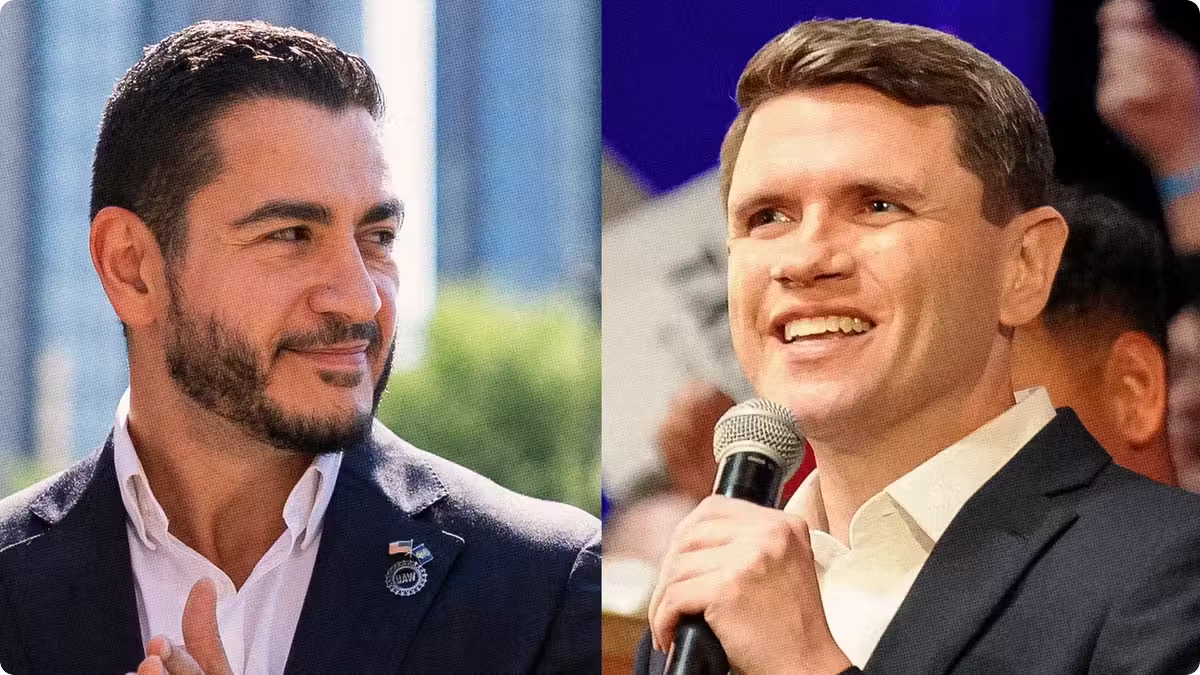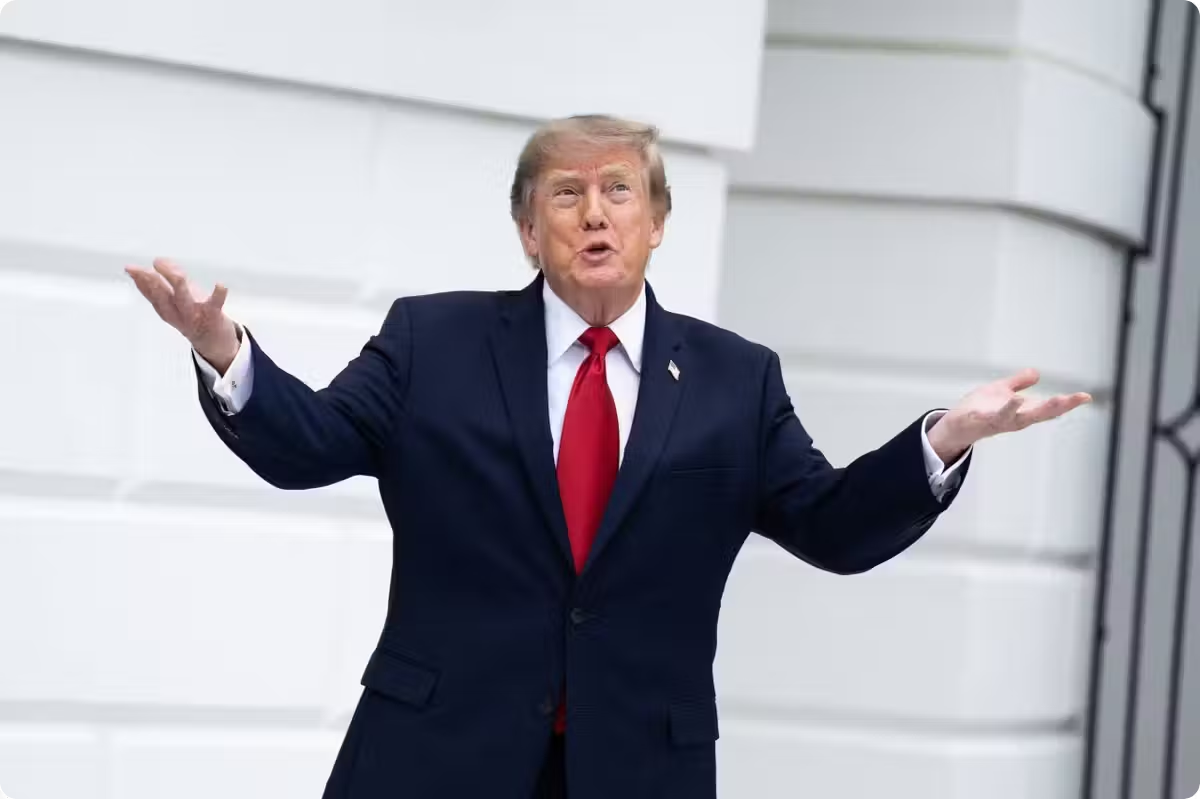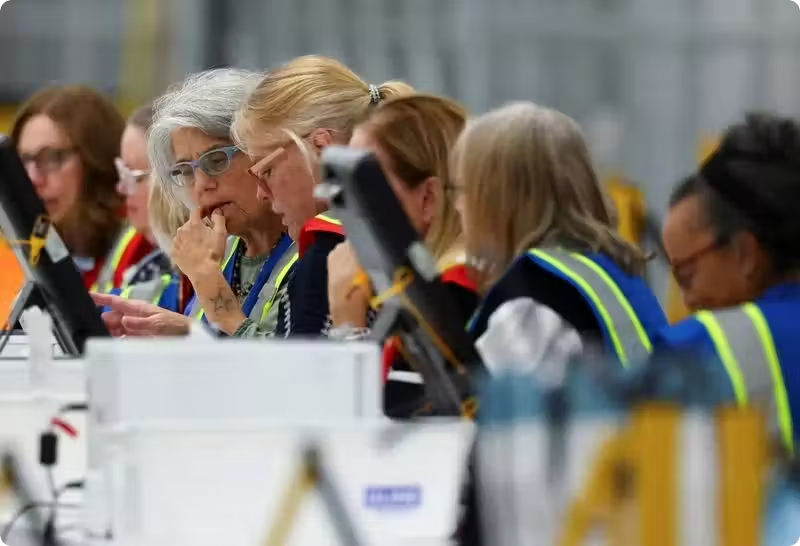
Democrats massively won control of the U.S. Congress in Tuesday’s midterm elections, a result marking a significant electoral rejection of President Donald Trump and the Republican Party. According to preliminary data and post-election polls, this major victory appears to have been driven by voter dissatisfaction with high living costs and polarization surrounding the conflict in Iran. [1] [2]
Exit polls conducted by SSRS on behalf of a consortium that includes major television networks and the Associated Press show that a large portion of the electorate is in a state of deep discontent. Approximately nine out of ten interviewees identified the cost of living as a crucial or major factor in their vote, indicating that the elections may constitute a rejection of the economic policies and overall direction imposed by the Trump administration. [1]
The vast majority of citizens expressed dissatisfaction with the direction in which the country is heading, a sentiment reflected in the desire of seven out of ten respondents to establish stronger congressional checks and balances on executive power. Only 62% of respondents approve of how the president is conducting his duties, one of the lowest approval ratings recorded in modern times. [1]
Frustration over inflation and trade policies, including tariffs imposed on foreign goods, as well as the decision to start the war in Iran, has exacerbated the economic situation for large segments of the population, according to opinions expressed in polls. Two-thirds of respondents held Trump directly responsible for high prices, demonstrating the failure of the Republican campaign to improve its image, regardless of the sustained efforts made in recent weeks. [1] [2]
As the story develops
Update
Voters overwhelmingly reject Trump’s agenda, elections become anti-inflation and anti-war referendum
American voters delivered a stunning rejection of President Donald Trump and his broader agenda on Tuesday. From Texas and South Carolina to Ohio and Kansas, Democrats broke through barriers in Republican strongholds, overturned mandates that had long been outside their control, and made history in several states. The amplification of these gains was particularly visible in areas that Trump won comfortably in the 2024 presidential elections, suggesting that the electorate that allowed him access to the White House is beginning to fracture. With Democrats projected to take control of both the House of Representatives and the Senate, the results of the midterm elections represent one of the most significant political reversals of the Trump term. [3]
The economy proved to be one of the most important factors shaping the electorate’s decisions. Although Trump aimed to combat inflation and improve standards of living upon his return in 2024, persistently high prices, tariffs on foreign goods, and the economic repercussions of the war with Iran appear to have undermined his promises. According to exit polls conducted by SSRS for a consortium of U.S. media organizations, nearly nine out of ten voters identified the cost of living as a crucial or major factor, while nearly two-thirds blamed Trump for high prices, and approximately six out of ten stated that his policies worsened the economy. [3]
Dissatisfaction went beyond household expenses. Approximately three-quarters of voters expressed anger or dissatisfaction with the direction of the country, and concerns about government corruption and Trump’s conduct occupied a prominent place. The war with Iran added another layer of discomfort, with voters increasingly questioning the administration’s priorities as economic pressures mounted. Trump’s attempts to divert attention toward Democratic candidates, portraying them as radicals or dangerous, failed to eclipse the issue that mattered most: the cost of essential everyday goods. [3]
The elections transformed into a referendum on Trump himself. Although he constantly urged voters to view the midterm elections as a verdict on his presidency, the Republican leader complicated his party’s electoral contest. A CNN voter poll showed that more than six out of ten did not approve of Trump’s performance, with a majority strongly disapproving. Approximately six out of ten voters in the AP poll believe Trump prioritizes personal interests to the detriment of the country, and approximately 70% want Congress to exercise tighter checks and balances on the presidency. His interventions in state contests yielded no results: Trump-endorsed candidates, including Ken Paxton in Texas and Dalene Graham in South Carolina, suffered defeats, and Republicans lost ground in states where the president repeatedly campaigned personally. The Republican coalition that propelled his 2024 victory is weakening: young people, Hispanics, and other groups that shifted toward Republicans two years ago are showing signs of returning to the Democrats. Approximately seven out of ten voters under 30 supported Democratic candidates for the House of Representatives, and approximately six out of ten Hispanic voters chose Democrats. [3]
Update
Democrats sweep U.S. Congress following massive rejection of Trump
President Donald Trump admitted that the war in Iran contributed to the losses suffered by the Republican Party in the midterm elections, as Democrats prepare to take control of both the House of Representatives and the Senate. Trump anticipated a legislative confrontation, stating that Democrats will send legislation he considers “insane” to his desk and that he will veto it, but added that after a few months of gridlock, the parties will find ways to collaborate. In a conversation with Fox News, the Republican leader acknowledged the pressure exerted by the international conflict, although he insisted that the electorate appreciates the importance of the measures taken by the administration regarding Iran. [5]
However, Trump downplayed the role of belligerence in favor of domestic economic issues, arguing that “gasoline prices” are the main factor in voter dissatisfaction, with voters reluctant to accept short-term consequences for long-term benefits. Trump framed political tensions rhetorically, declaring that “it wasn’t on the ballot,” but inviting voters to reflect on the possibility of a direct presidential presence. He promised collaborative governance, although he emphasized the Constitutional right to block Democratic bills. [5] [6]
The trend of overturning Republican mandates expanded into diverse communities: approximately seven out of ten voters under 30 and 60% of Hispanic voters pledged support for Democratic candidates, removing the barrier that previously placed Republicans in positions of power. [4]
Update
CNN: The seemingly resilient economy, but inflation and the war in Iran explain Democrats’ capture of Congress
CNN’s analysis highlights the economic paradox of the midterm elections: although macroeconomic indicators, such as low unemployment and consumer spending, suggest market resilience, voters perceived a decline in purchasing power caused by inflation. Chief economist at Navy Federal Credit Union, Heather Long, highlighted the decisive role of the conflict in Iran, stating that the election result would have been different without this war. Researchers at Brown University calculated that high prices for gasoline and diesel alone added $1,150 in costs to average American households starting with the onset of hostilities. These costs reversed the trend that governments had previously established, taking away the real salary gains of ordinary Americans. [7]
CNN polls from October 2024 reveal a radical shift in economic perception: Donald Trump now has a net negative score of -46 points regarding the economy, compared to Joe Biden’s -31 points in the last poll of the presidential campaign. Economist Steven Durlauf of the University of Chicago rejected the idea that Trump’s predecessor is solely responsible for the current economic situation, stating: “Even if Biden ruined everything, this does not absolve Trump.” The poll indicates a general conviction that the Trump administration’s policy, particularly lax regulations in the artificial intelligence sector and tariff policies, has exacerbated financial anxieties. Divergent economic expansion (K-shaped), which favors asset holders and homeowners to the detriment of disadvantaged classes, creates the feeling that the American Dream is inaccessible. [7]
Update
Democrats sweep U.S. Congress following massive rejection of Trump
Following the Democrats’ massive win in the midterm elections on November 4, 2026, which brought control of both the House of Representatives and the Senate, commercial officials in Washington found themselves in a new position. For the first time since Donald Trump returned to the White House in January 2025, they might hold the leverage the politician values most in negotiations, as the Congress dominated by Democrats, which viewed the scrutiny as a referendum on his policies (tariffs, energy, AI), will be able to impose its will. [8]
Update
JD Vance Blames Iran War for Republicans' Loss in Midterms
U.S. Vice President JD Vance blamed the war in Iran for the heavy losses suffered by the Republican Party in the 2026 midterm elections, stating on the X platform that a significant number of President Donald Trump’s 2024 supporters had shifted their preference in favor of the Democrats. Vance argued that voter turnout was not the main factor in the failure, but rather the electorate’s dissatisfaction with the administration’s policies, even admitting that “the motivation” of President Trump played a role. Democrats took control of both the House of Representatives and the Senate, marking a sharp political shift, especially in traditionally Republican strongholds. In a lengthy post on X, Vance launched a harsh criticism of post-election behavior, warning that he would expect a flow of “gaslighting” from the Republican establishment. He refused to point fingers at immigration policies as a main cause, saying: “Anyone talking amnesty is lying to you.” Vance called for an honest assessment of the election results, insisting that Republicans must acknowledge the role of the war and focus on “saving the country” by selecting candidates who share those values. Vance recalled his conversation with an analyst, saying that the latter told him that although supporters would appear, they would likely stall in front of the polls. When asked what would make those voters return to the Republicans, the analyst reportedly emphasized ending the war, the cost of living, America First, and the relationship with Israel. Furthermore, Vance claimed that Trump himself acknowledged this reality. He noted that while Trump partially blamed the defeat on the war, he insisted on Truth Social that if he were on the ballot, “we would have won by a huge margin.” Vance stated that an analysis of data from Florida shows that the local electorate was 9 points more Republican than Democratic, a result similar to that of 2024, and “it was not a turnout problem, but an orientation problem.” He cited his Republican analyst who had a prophetic comment, saying: “It is clear now.” Additionally, Vance admitted that the Republican economic message was not “tough” enough in the final weeks of the campaign. According to a poll by a Republican expert cited by Vance, Trump voters in 2024 clearly indicated their priority: “ending the war, focusing on the cost of living, America First, and revising the relationship with Israel.” “We voted. And the four reasons mentioned above are why many of them voted with Democrats,” he emphasized, citing a poll that “hit the results.” [10] [11] [12] [13] [9]
According to Vance, the Republican analyst indicated that although supporters showed up to vote, polls had predicted an 13-point gap in general preferences for the Republican party well before the elections. This analysis proved prophetic, according to the vice president, who specified: “It wasn’t a turnout problem. The main problem is that many people who voted for Trump/Vance in 2024 voted for the Democrat in 2026.” [10]
Vance listed four key reasons, drawn from polls, that would have determined Trump voters’ attachment to Democratic candidates: ending the war in Iran, focusing on the cost of living and inflation, prioritizing U.S. interests (“America First”), and revising the relationship with Israel. “We turned up, and the four reasons mentioned above are why many of them voted for the Democrat,” Vance said, citing a poll expert who correctly anticipated the results. Vance also admitted that the Republican Party’s economic message was not effective enough in the final weeks of the campaign. [10]
Although he recognized the importance of the war, Vance was firm in condemning the solutions proposed by certain Democratic personalities or other public figures. He positioned himself against amnesty for undocumented immigrants, saying that “anyone implying amnesty is lying to you,” but indicated openness to reforming the enforcement of immigration laws, focusing more on employers who hire undocumented workers. Vance also appeared as a controversial public figure, Rachel Campos-Duffy, criticized by some Republicans for calling for a diplomatic resolution to the conflict with Iran, saying her political advice was “correct.” The vice president urged angry supporters to channel their energy into future elections, emphasizing that losing the Senate for 6 years was an acceptable “cost” if an honest discussion about where the party is going is desired. [10]
Update
Trump Rejects Trudeau's Request to Cease Tariff, Threatening Additional Measures
An image of trucks crossing the Peace Bridge in Fort Erie, Ontario, Canada. Contact information and error reports. [14]
Donald Trump was rejected by the electorate weary of tariffs in the midterm elections, but one of the primary targets of his customs policies, Canada, is now facing a deadlock in negotiations. Prime Minister Justin Trudeau requested the immediate cessation of the 25% tariff imposed by Washington, but the U.S. responded that it could take additional measures, such as higher tariffs or import blockades. [14]
The trade war has become a major issue for Republicans in northern border states, becoming, along with the war in Iran, one of Trump’s policies that the electorate cited as the cause of the rising cost of living. [14]
Update
Trump Jr. Supports Vance’s Diagnosis of Republican Losses
Donald Trump Jr. publicly embraced Vice President JD Vance’s assessment regarding the Republican defeat in the midterm elections, highlighting divisions within the president’s camp regarding the war in Iran. Donald Trump Jr. reposted Vance’s message on X, adding: “Every word is 100%.” According to Vance, the four main concerns of voters that led them back to the Democrats are: ending the war, combating inflation and the cost of living, the “America First” policy, and changing the relationship with Israel. [15]
Update
Democrats sweep U.S. Congress following massive rejection of Trump
LBC Press relates Trump’s reactions to the massive defeat, where the president also accused the poor quality of Republican candidates, while Tehran issued severe warnings. The President stated: “I did what was right” and “I did it again.” At the same time, he acknowledged that “part of the reason was Iran,” declaring that the defeat should have been accompanied by a “bad shopping memory” from voters who voted Democrat. Trump threatened to continue fighting the “radical left-wing extremists.” On the Iranian side, Parliament Speaker Mohammad Baqer Qalibaf warned that the American government would face a “nightmare” if it betrays the population by continuing the conflict and thanked Americans for choosing “basket of lives” instead of war. Iran warned that refusing to end hostilities would be interpreted as a betrayal of the people. Trump acknowledged the role of the conflict in Iran in the Republican defeat, but drew a hard line with his candidates: “I will never apologize for fighting for this people, for their national security and for world peace.” Trump also accused the press, claiming it was denigrated and that “this industry is dead because people have bad minds.” Trump indicated that his absence from the ballot was a political advantage, arguing that he himself would have won by a “huge margin” in these elections. He referred to weak Republican candidates as the main cause of failure. Trump also suggested that the losses were caused by a rigged electoral process, although he accepted the final results. A White House official stated that Trump is concerned about the vulnerability of his candidates, especially those lacking legislative experience or who did not campaign. Trump acknowledged that the midterm elections led to a “blue soup,” but insisted that “it wasn’t on the ballot.” He warned that he would use the veto power to block any legislation contrary to conservative values. The massive losses suffered by the Republican Party in the November 4, 2026 midterm elections marked a major shift, with Democrats taking control of both the House of Representatives and the Senate. While Trump accused the war with Iran, other Republicans identified the lack of a credible alternative candidate and strategic errors as main causes. Also, many analysts observed that factions on the left of the party retreated in favor of the Democrats. Trump emphasized that the failure was caused by “bad candidate policy” and suggested that the party needed “a strong candidate” to counter the democratic wave. The loss of control of both Houses of Congress by Republicans will significantly affect Trump’s legislative agendas for the remainder of his term. With Democrats in power, Trump faces the impossibility of promoting conservative legislation, although he will have powerful tools (the veto right) available. While Trump was in Texas supporting candidates, the Democratic candidate James Talarico defeated former Texas Attorney General Ken Paxton, while in South Carolina, a Democrat won a Senate seat for the first time since 1998. Kansas also sent a Democratic senator for the first time since the late ‘80s. Moreover, Abdul El-Sayed, a left-wing Democratic candidate, defeated Mike Rogers in Michigan, becoming the first Muslim elected to the Senate. These Democratic victories were surprising because they occurred in traditionally conservative states, Republican strongholds, showing that frustration in rural areas was not limited to urban areas, but had expanded. The elections were seen as a verdict on economic policy and the war. In particular, gas prices and inflation determined a major shift in public opinion. Many advertising posters used the price of a gallon of gasoline as the main argument of the Democratic campaign. Trump brought arguments according to which the loss was caused by the “low” quality of his candidates. The White House stated several times that President Trump would try to promote them, but that they failed to capture the public's attention. The President finally acknowledged in the interview that the war with Iran influenced voter behavior, although he declared himself determined to fight against “radical left-wing” in future campaigns. He insisted that gas prices will decrease once the conflict is resolved, but warned that Democrats “will do crazy things.” Trump offered some quotes in recent interviews: “Iran was a piece of it”, “I don’t think this is the time to discuss what I did or didn’t do” and “I did what was right, I did it again.” There are mentions of a possible future political confrontation between different factions of the Republican Party, especially if the results are analyzed in the context of energy prices and tariff policies. Trump maintained his attitude as an intransigent leader, although he was surprised by the recorded results. He suggested that Republicans should continue the battle at the state level, despite the failure at the federal level. A disappointed supporter of Mike Rogers, a former member of the House of Representatives, participated in a calculation and debate meeting. Supporters hoped to observe a major change. The White House suggested that Trump was criticized for the way he promoted his candidates, who were considered weak compared to those he promoted in 2024. An official emphasized that Trump tried to support them, but the candidates had difficulties. “The President was very active in promoting candidates,” the official stated, adding that “candidate quality matters.” An announcement on Trump’s Truth Social mentions: “Anyone who voted for the Democrats today will have a serious buying problem.” Trump declared himself determined to defend against “radical left-wing,” although he admitted losing the elections. He promised to continue the battle for conservative values. Regardless of the midterm election results, Trump promised that he would not withdraw and that he would fight for “the people and for peace.” He reaffirmed his decision to intervene in Iran. Trump mentioned that the conflict in Iran began because Iranian regimes tried to obtain nuclear weapons. “I did what was right,” he added. Against the backdrop of Republican losses, Qalibaf published a message addressing the American peoples. “Shopping or food prices, Americans said NO TO WAR.” Qalibaf emphasized that “we are against any form of betrayal,” adding that “we will come to a nightmare if they do not listen to us.” An Iranian official stated to Reuters that Iran does not want conflict, but threatens to “turn night into day” if the United States continues hostilities. The war with Iran continues to be a tense subject. Trump mentioned that he is ready for war, but insists that “people must not die for an insignificant thing.” In an interview with Fox News, Trump declared that “I am not looking to kill many people,” but is ready to use the weapon if necessary. A source told the Financial Times that Trump is pleased with the provisional agreements on uranium stocks, but that “it is harder to reach a compromise.” Trump promised to continue fighting for global peace and security, but specified that they will never give up the “veto power” he has over any treaties. On November 4, 2026, Trump was photographed in a symbolic context: on a tour in Tehran, alongside Israeli Prime Minister Benjamin Netanyahu, he played darts on a background commemorating the 47th anniversary of the expulsion of the USA from Iran. Trump warned, in an interview with Fox News, that Democrats will send him “crazy” laws, which he will be forced to reject. “I reject them and they will come and say ‘How do we do this’ and ‘Let’s work together’.” He specified that he will work “alongside Democrats, even if they are radicals,” but without allowing their legislation to become law. The Financial Times confirmed that there are strong indications that Israeli Prime Minister Benjamin Netanyahu wants to launch an attack against Iran, but Trump stated that “he is ready, but maybe we don’t need it.” The USA continues indirect negotiation with Iran regarding the nuclear program, aiming to relaunch agreements. “Discussions are active, let’s see how it goes” An Iranian official affirmed that Qatari mediators traveled to Tehran to discuss a version of a previously discussed US-Iran draft agreement. “Tehran’s conditions must be respected if the USA wants the Strait of Hormuz reopened.” President Qalibaf called on the USA for “correct and explicit action,” saying that “only then will the Strait of Hormuz be reopened.” The conflict between the USA and Iran has cost lives, according to the Department of Defense. 23 members of the US military were killed and 865 injured. The Iranian official mentioned that Iran demands the cancellation of oil sanctions, stopping the US naval blockade, and releasing frozen Iranian funds as basic conditions for reopening the Strait of Hormuz. Secretary of the Supreme National Security Council of Iran, Mohsen Rezaei, stated that the US response to Iranian requests “is not convincing” and that Washington must explicitly address the seven Iranian conditions and act accordingly. Only if the USA respects the seven conditions will the strait be reopened. Donald Trump initially expressed disappointment regarding the election results, but passed by a partial acknowledgment of the problems. He tried to convince that the Republicans’ failure would have been prevented if he himself were in the race. Republicans’ losses were massive, with Democrats taking control of both Chambers of Congress. Trump accused the war with Iran, while JD Vance emphasized economic conditions. Trump reacted initially with denial, then with nonchalance and a slight conciliation, although he was in a “lame-duck” framework for all practical effects, although he remained armed with enormous executive powers. [17] [16]
Update
The Cost of the War: $1,150/household, a key factor in rejecting Trump
Against the backdrop of the Democrats' victory, experts at Brown University calculated that high prices for gasoline and diesel, determined by the war in Iran, added $1,150 in costs to average American households starting with the onset of hostilities, framing the Democrats' victory in an economic paradox, with consumption data remaining resilient. [18]
Update
Democrats recover the US Congress, largely rejecting Trump’s agenda
In the midterm elections on November 4, 2026, Democrats won control of both the House of Representatives and the US Senate, in a result described as a “perfect storm” electoral setback for Donald Trump. The Democratic victory occurred by breaking barriers in traditional Republican strongholds, including Texas, Kansas, and South Carolina, where Democratic campaigns won against candidates endorsed by Trump, such as Ken Paxton in Texas or a Democrat elected to the Senate in South Carolina (the first time since 1998). Michigan was represented by Abdul El-Sayed, the first Muslim elected to the Senate. [19]
The decisive factors of this electoral rejection were high living costs, the war in Iran, and the perception of weak Republican candidates. SSRS exit polls revealed that nine out of ten voters considered the cost of living a crucial factor, two-thirds blamed Trump for high prices, and 62% criticized his performance. Chief economist at Navy Federal Credit Union, Heather Long, pointed out that the outcome would have been different without the war in Iran. Researchers at Brown University calculated that high fuel prices added $1,150 in costs to average households starting with the onset of hostilities, offsetting real wage gains. Trump’s aggressive tariff policies, including the 25% tariff on Canada, also contributed to voter dissatisfaction. [19]
Update
Democrats winners, the opportunity for economic change
The Democrats’ massive blow in the midterms of November 4, 2026, may open the way for significant changes in economic policies, especially in the fields of trade, spending priorities, and artificial intelligence. However, political economy could remain rigid, Mark Zandi, chief economist at Moody's Analytics, highlighting that Trump’s key policies – the war with Iran, tariffs, and restrictive immigration policy – are already implemented by executive order, being independent of legislation proposed by Congress. [20]
Update
JD Vance blames the war in Iran and positions the Republican Party for 2028
After Democrats took control of Congress in the midterm elections of November 2026, US Vice President JD Vance launched an analysis placing the war in Iran at the center of the Republican Party’s electoral collapse. Vance described the result as caused by voter dissatisfaction, who shifted loyalty not due to lack of participation, but due to frustration with administration policies. He listed four major priorities that pushed Trump voters towards Democrats: ending the war, combating inflation and the cost of living, adopting the “America First” policy, and reassessing the relationship with Israel. This post-mortem was interpreted by observers as a first step in consolidating Vance’s position for a potential presidential candidacy in 2028. [21]
- Categories:
- Politics
- Entities:
-
- Donald Trump
- CNN
- Texas
- Ken Paxton
- Kansas
- James Talarico
- Michigan
- Abdul El-Sayed
- Iran
- AP
- Trump
- Washington
- Associated Press
- Joe Biden
- Republican
- Ohio
- Mike Rogers
- South Carolina
- Republican Party
- Democrats
- SUA
- Fox News
- Bloomberg
- SSRS
- Darline Graham
- Republicans
- Heather Long
- Navy Federal Credit Union
- Democrați
- Jd Vance
- Rachel Campos-Duffy
- Florida
- Strait Of Hormuz
- Canada
- Ontario
- Fort Erie
- Donald Trump Jr.
- Democratic
- Mohammad Baqer Qalibaf
- LBC
- Reuters
- Mark Zandi
- Moody'S Analytics
Sources
- Investing.com Takeaways from the US midterm elections
- Bloomberg Inflation Backlash, Trump Fatigue Powers Huge Wins for Democrats
- The Times of India Iran war, inflation or Trump fatigue: What drove Democrats' midterm surge?
- The Times of India 'Americans said no to war': Iran on US midterms as Trump admits conflict hurt Republicans
- telegraphindia.com Trump admits Iran war fuelled Republican losses as Democrats prepare to take control of Congress
- turkiyetoday.com 'Iran was a piece of it': Trump admits war hurt Republicans
- CNN Why did America swing back to the Democrats? It was the economy all along
- Bloomberg Trade policy after Trump and the midterm elections
- The Times of India 'Republican voters showed up but backed Democrats': JD Vance blames Iran war for GOP's midterms rout
- cnbctv18.com JD Vance blames Iran war for Republican losses, says Trump voters switched to Democrats
- foxnews.com Vance's scathing Iran war postmortem puts potential 2028 GOP showdown in focus: 'Everyone knows why'
- nbcnews.com Vance says the ‘real reason’ for GOP rout was anger over Iran war
- cbsnews.com Vance blames Iran conflict for GOP midterm defeats: "The reason we lost is the war"
- Bloomberg Trump Tariffs, Midterm Losses Leave Canada’s Carney With Tough Deal Choice
- The Times of India After JD Vance, now Trump Jr blames Iran war for US midterms defeat
- The Times of India Trump blames Republican candidates for midterm drubbing, Veep points at Iran and Israel
- lbc.co.uk Trump blames Iran war and 'poor quality candidates' for midterm defeat as Tehran warns of nightmare if US continues conflict
- ndtv.com Opinion: Opinion | A Wounded Trump Could Soon Make The World Pay For His Defeat
- The Times of India Why Trump’s got capitol punishment
- CNBC Here's what the Democratic election rout could mean for the U.S. economy
- The Times of India Vance lances Trump as MAGA enters week of the long knives