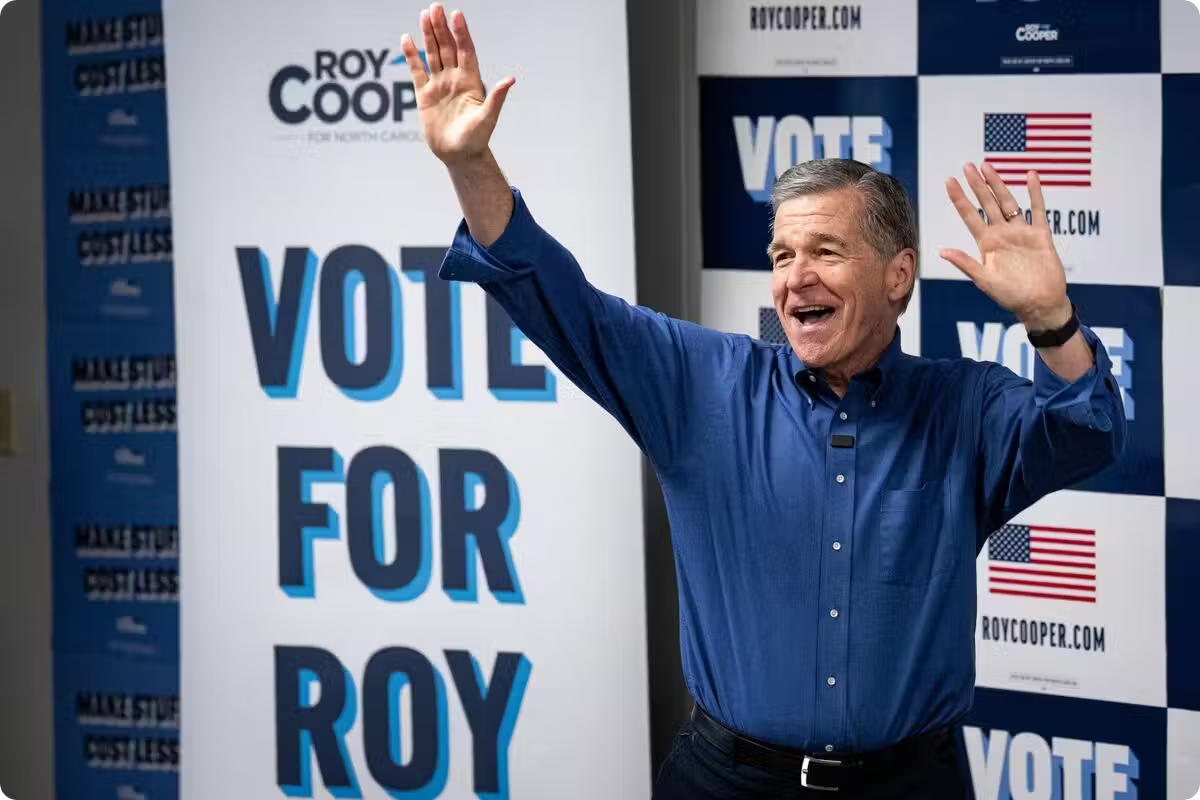
Democrat Roy Cooper won the open Senate seat in North Carolina, marking a critical victory in the party’s effort to capitalize on voters’ dissatisfaction with the economy to gain control of the chamber. [1]
Cooper achieved a clear victory over former National Republican Committee Chair Michael Whatley in a state that Donald Trump won three times during his presidential campaigns. With 56% of votes counted, Cooper had approximately 67% of the vote, while Whatley received 32%. [1]
The North Carolina victory joins other recent Democratic successes that suggest diverse campaign strategies. In Kansas, Adam Hamilton, a United Methodist minister, won based on his status as a prominent religious leader, while in Michigan, progressive doctor Abdul El-Sayed garnered support from progressive leaders, including Bernie Sanders. In Texas, James Talarico combined an economic message with religious rhetoric while softening his positions on certain socially contentious issues. [2]
Although both parties showed modest advantages on topics such as economic management and corruption, according to the AP Voter Poll, the Democratic victory should not be interpreted as full endorsement of an unlimited agenda. Members elected from previously Republican-leaning areas will have particular reasons to demonstrate practical results, while others will face pressure from supporters demanding investigations and more combative opposition. [2]
Democrats now face the decision of determining which measures warrant negotiation with Trump and which are intended to highlight differences ahead of the 2028 elections. These elections will determine whether their majority is constructive or simply oppositional. [2]
- Categories:
- Politics
- Entities: