The Democratic Party's victory in the U.S. midterm elections has fundamentally shifted the balance of power in Washington, opening the prospect of direct confrontation between Republican President Donald Trump and a Democratic majority in both chambers of Congress starting in January 2027. This 'divided government' scenario will allow Democrats to use legislative tools to restrict the Trump administration's actions, including by launching investigations, blocking legislation, and rejecting nominations requiring Senate confirmation, while Trump retains his veto power and executive prerogatives. [1]
Elbridge Colby, the second-ranking official at the Pentagon and architect of the doctrine that envisions the withdrawal of U.S. troops from Europe, provides an analysis of this power imbalance in an exclusive interview for Night Watch. Colby defines the moment as historic, emphasizing that the elections served as a powerful instrument for sanctioning corruption and abuse of power. Although the result was not a clear vote of confidence for the Democratic Party, Colby notes increased American dissatisfaction with the high cost of living, the unfulfilled promises by Trump regarding price reductions, and corruption within the administration, which emerged as a central theme of the vote. [2] [1]
The international context reflects the same concerns. Spanish Prime Minister Pedro Sánchez linked the vote to opposition against policies that impoverish the population and favor elite privileges, comparing the phenomenon to that in Brazil. In Europe, leaders such as British Prime Minister Andy Burnham and Norwegian Prime Minister Jonas Gahr Store see an opportunity window for addressing the cost of living and shifting direction on climate and foreign policy. Germany has reiterated its intention to maintain cooperation with both sides, while Russia hopes that Trump will continue his peace efforts, although Russian diplomacy warns of a more hostile Democratic majority. China and Japan prioritize the continuity of bilateral relations and alliance security, independent of the outcome of domestic U.S. politics. [1]
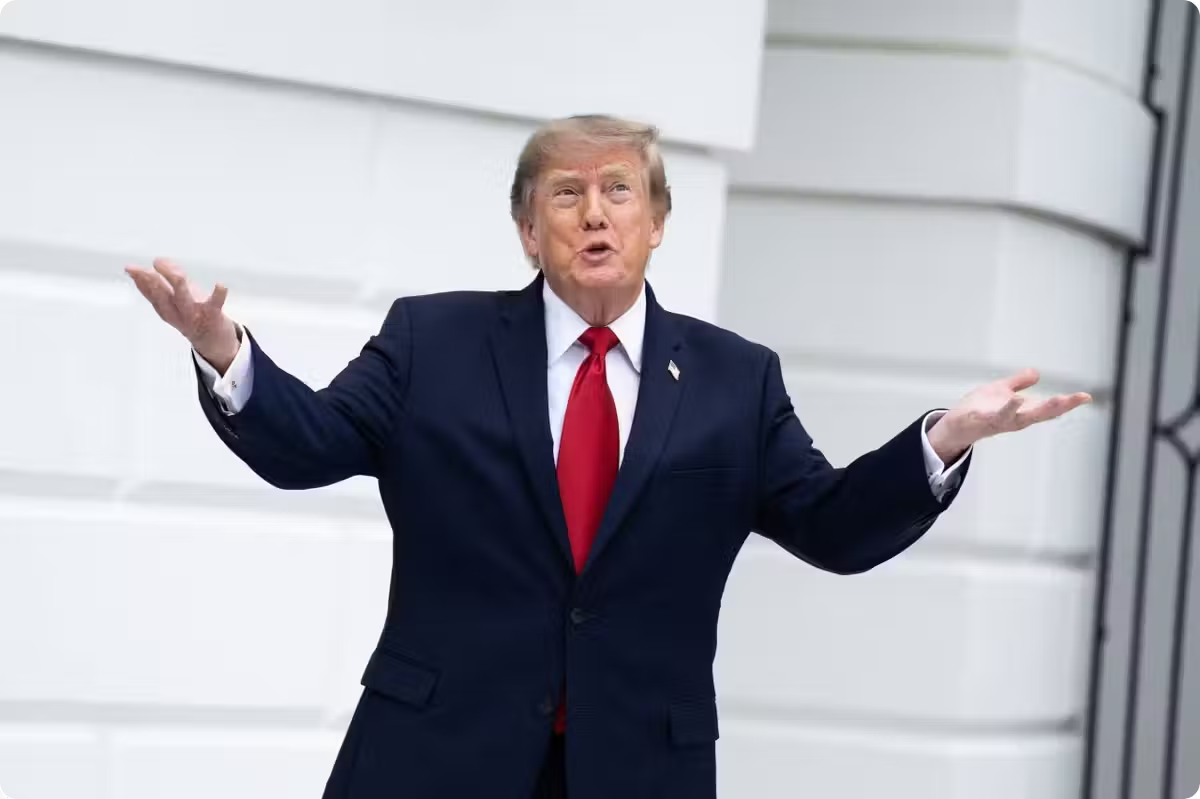
Within the Republican Party, the results have exposed internal crises. Donald Trump quickly accepted the result, justifying himself by noting that he did not appear on the ballot and attributing the losses to economic policies and the war in Iran, which increased energy prices. Republican leaders, such as John Thune, promised resistance, while the dissenting voice of the Florida governor highlighted the danger of losing the Texas stronghold, predicting long-term consequences. Colby notes that Trump's separation from the party does not prevent the MAGA movement, which remains a segment of 30% of the electorate, although the president's popularity is declining. [1] [2]
The future Democratic majority will need to navigate the internal challenges of its own party, marked by the split between the progressive wing, which is more vocal and attractive to young voters, and the moderate wing. Figures such as Hakeem Jeffries, the future Speaker of the House, and Jon Ossoff, the Senator from Georgia, are emerging as key players. Colby warns that Democrats risk falling into the trap of victory hubris, keeping in mind that 54% of voters hold an unfavorable opinion and most expressed opposition to Trump rather than confidence in the Democrats. Legislative gridlock and tensions between camps will characterize the next two years, while investigations into corruption will remain a focal point. [1] [2]
The demographic advances of Democrats among young people, minorities, and women were decisive, but Republicans maintained support in rural areas and among men without university degrees. This dynamic shows that the victory is solid but not unanimous, necessitating governance that responds to the deep economic grievances of the American electorate, regardless of party affiliation. [1]
- Categories:
- Politics
- Entities:
-
- Donald Trump
- CNN
- Texas
- Hakeem Jeffries
- Kansas
- James Talarico
- Michigan
- Abdul El-Sayed
- Iowa
- Roy Cooper
- Adam Hamilton
- Europa
- Partidul Democrat
- Congres
- Washington
- Georgia
- Jon Ossoff
- Annie Andrews
- Ohio
- Maine
- NPR
- Fox News
- Pentagon
- Partidul Republican
- Elbridge Colby
- Administraţia Trump
- ABC
- CNBC
- Sherrod Brown
- Carolina De Sud
- The New York Post
- Troy Jackson
- Josh Turek
- Carolina De Nord
- PBS News
- Observatorul De Noapte