For as long as we have been human, we have asked the fundamental questions of existence: Why are we here? What is our purpose? How shall we live? According to recent reflections on our cultural evolution, we have inadvertently built a prison for ourselves, not through malice, but through a gradual drift away from our ancestral roots. Remembering who we truly are—what author Daniel Quinn calls the 'Great Remembering'—is presented as the key to unlocking this self-imposed confinement. The modern feelings of anxiety and loneliness in a hyperconnected world may reflect how far we have drifted from the people we originally were. [1]
Daniel Quinn, in his novel *Ishmael*, outlines two prevailing narratives that guide human behavior. The first, which defines much of modern civilization, posits that the world belongs to us. The second, which characterized nearly all of human history prior to the advent of agriculture, suggests that we belong to the world. In Quinn’s framing, humans lived as part of nature before adopting agriculture and settling down roughly 10,000 to 12,000 years ago. [1]
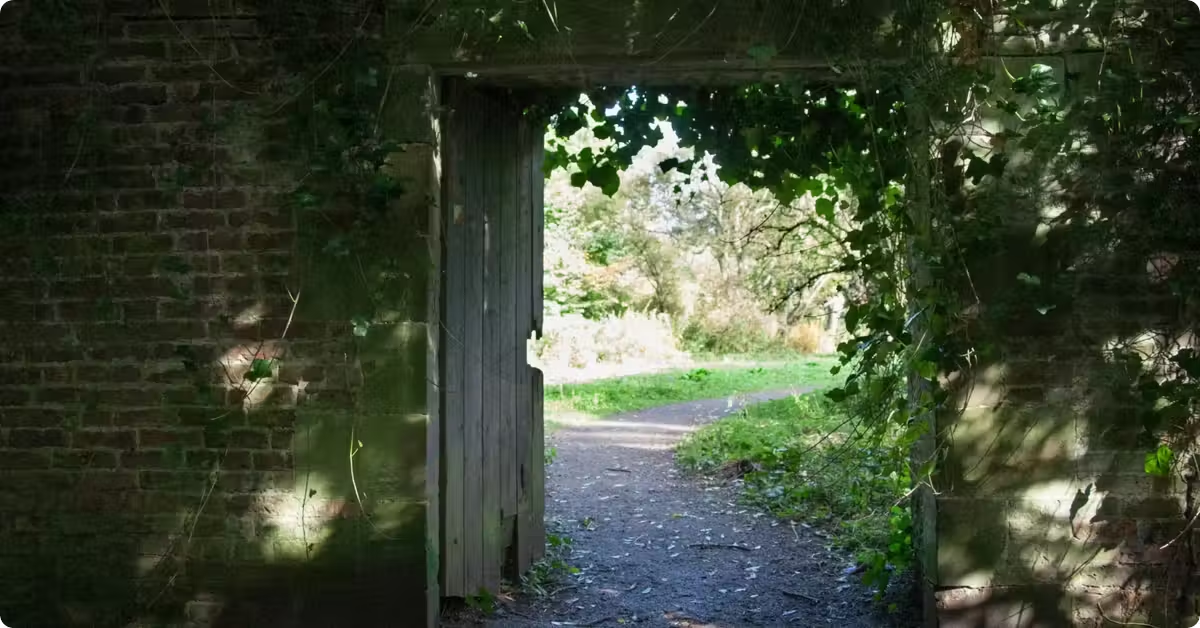
As we moved indoors, we constructed houses, villages, and cities. Initially, these walls served protective purposes, keeping out the cold, predators, and the dreaded 'others.' However, over millennia, these physical barriers transformed into psychological ones. They separated us from the natural world, obscuring the reality that we are an integral part of it. This separation led to what Quinn identified in his later work, *The Story of B*, as the 'Great Forgetting.' Our culture lost touch with the long human story that preceded civilization, effectively acting as if humanity began with the rise of the city, ignoring the vast expanse of hunter-gatherer history that formed our foundation. [1]
The narrative of civilization’s progression has traditionally been linear: farming came first, then villages, and eventually temples. However, archaeological discoveries at Göbekli Tepe in Turkey challenge this sequence. Located on a hilltop, Göbekli Tepe features enormous carved stone pillars, some standing more than 18 feet tall and weighing 10 tons or more. About 11,500 years ago, people who lived as hunter-gatherers began erecting these structures. As archaeologist Klaus Schmidt succinctly put it, 'First came the temple, then the city.' This suggests that the quest to understand ourselves and commune with the divine may have actually driven the formation of civilization, rather than being a subsequent development. [1]
While excavators have since found signs of habitation at Göbekli Tepe, suggesting that the line between sacred and ordinary was likely blurred for its builders, the site remains a pivotal point in understanding our past. It hints at the first thing we may have forgotten: the interconnectedness of the spiritual and the mundane. As people settled, stored food, and claimed land, the ease of leaving a group diminished. The communal stories that once taught sharing began to be retold to justify why some individuals deserved more than others. Over thousands of years, the walls that once protected us became instruments of division, separating the haves from the have-nots, and ultimately, all of us from nature. [1]
This divergence has created a state described as 'Accelerating Evolutionary Mismatch.' We are essentially running 'god-like software' on 'Stone Age hardware.' This gap between our modern societal structures and our ancestral biological programming creates a prison that entraps us psychologically. Many people experience anxiety without a clear external cause, feeling overwhelmed by an accelerating treadmill that feels impossible to keep up with. The walls that once provided shelter now imprison our minds, isolating us from the rhythms of the natural world. [1]
Reconsidering the myth of the Garden of Eden offers further insight. After Adam and Eve eat the fruit, 'the eyes of them both were opened,' signifying a moment of full self-awareness. Perhaps this is when we became conscious of ourselves, our mortality, and our place in the cycle of life and death. In the traditional reading, this awareness led to expulsion from the garden. However, an alternative interpretation suggests we walked out of the Garden on our own, seeking to connect with one another and answer the Big Questions. In seeking these answers, we left our natural home and subsequently forgot where we came from. [1]
The Buddhist monk Thich Nhat Hanh stated, 'We are here to awaken from the illusion of our separateness.' The first awakening, symbolized by the Garden, made us aware of our individual selves. The next necessary awakening is remembering that we all share the same home. As fellow *Homo sapiens*, we have always been part of the natural world. The solution is not necessarily a new story, but rather the 'Great Remembering' that Quinn advocated. We need to recall that the 'Field' described by poet Rumi in 'Out Beyond Ideas of Wrongdoing and Rightdoing' was always our home. [1]
The Garden and the Field may represent the same place, and the way back is simply through memory. Long before the language of evolution existed, our greatest spiritual teachers used a simpler word for one human family: neighbors. We have all experienced moments in this 'Field,' such as during a storm or a power outage that turns strangers into neighbors, temporarily removing the metaphorical walls. Because we built these walls together, we must take them down together. When enough of us remember that we are neighbors, we can reconnect and cooperate. [1]
The path to a thriving future is narrow as our divisions but wide as our cooperation. By acknowledging the 'Great Forgetting' and actively engaging in a 'Great Remembering,' humanity can begin to dismantle the psychological prisons we have constructed. This involves recognizing our inherent connection to the natural world and to each other, moving beyond the narrative of dominion to one of belonging. The insights drawn from archaeological sites like Göbekli Tepe, combined with philosophical reflections from thinkers like Quinn and spiritual teachings from traditions worldwide, suggest that healing this mismatch is possible if we choose to remember our shared origin. [1]
- Categories:
- History