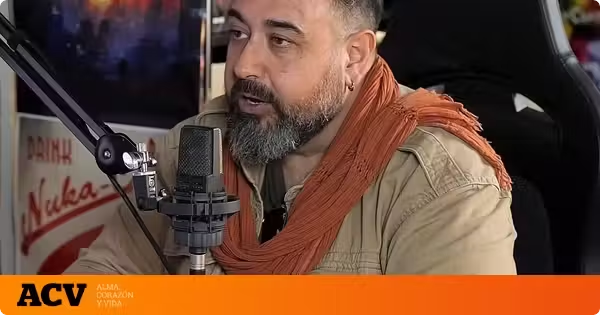
The story of King Tutankhamun’s tomb has long been shrouded in mystery and superstition, particularly regarding the infamous “curse of the pharaohs.” However, Tito Vivas, a renowned archaeologist and science communicator, suggests that the real horror of the discovery was not supernatural vengeance, but rather a devastating financial and legal blow to those who found it. Speaking on The Wild Project, Vivas explained how the integrity of the tomb inadvertently destroyed a lucrative business model that was built on the expectation of plunder.
Vivas emphasizes that during his lifetime, Tutankhamun was far from the legendary figure he is today. Describing the young king as a “mindundi” (a slang term for a nobody or insignificant person), Vivas notes that Tutankhamun ascended to the throne as a child and was quickly forgotten by history. His tomb, located in the Valley of the Kings near Luxor, remained hidden beneath debris and other constructions while countless other royal burial sites were systematically looted over the centuries. It was precisely this obscurity that allowed the burial chamber to survive almost completely intact until the twentieth century, when British archaeologist Howard Carter began his exhaustive search through the valley.
The pivotal moment in this narrative was not merely the physical act of uncovering the tomb, but the legal framework surrounding the excavation. In the early 1900s, Egypt was still under significant British influence, and clear regulations governed archaeological finds. By law, any artifacts discovered during an excavation were to be split equally—50 percent each—between the investor funding the dig and the Egyptian state. However, there was a crucial exception that threatened the interests of George Herbert, the 5th Earl of Carnarvon, who financed Carter’s expedition: if the tomb belonged to a reigning king, the artifact-sharing arrangement did not apply in the same way, effectively stripping the investors of direct ownership over the priceless objects.
When Carter and his team finally breached the sealed wall and realized they had discovered the undisturbed burial chamber of a king, the initial excitement was quickly replaced by panic. As Vivas ironically points out, where one might expect cheers of triumph, the immediate reaction among the investors was more akin to dismay: realizing that while they had found the king, they could not legally keep the gold, jewels, and treasures that constituted a personal fortune. The discovery, therefore, was a double-edged sword; it offered historical glory but eliminated the possibility of direct commercial exploitation of the items within.
To mitigate the financial loss caused by the strict preservation laws, Carnarvon devised an alternative revenue stream: exclusive media rights. He signed a contract with *The Times* of London, selling off all access, information, interviews, and photographs related to the excavation. This move forced newspapers worldwide to pay for any story they wished to run about the Valley of the Kings. Reporters traveled to Egypt but were barred from entering the tomb or speaking to the principals unless they paid what amounted to an informational toll. This monopoly on news created a global spectacle and kept the world captivated by the pharaoh’s latest moves.
It was within this highly charged media environment that the most famous aspect of the curse myth emerged. Just four months after the tomb’s opening, Lord Carnarvon suffered a minor injury—a mosquito bite on his face that became infected after he accidentally cut himself while shaving. The infection progressed rapidly, leading to blood poisoning (sepsis) and his subsequent death in Cairo. While a tragic end, Vivas explains that this outcome was medically comprehensible. Interestingly, many of his colleagues reacted with little sympathy; some reportedly remarked, “He deserves it,” likely due to the intense stress and controversy surrounding the expedition.
The tragedy of Carnarvon’s death became the seed for the broader curse legend. Over time, various anecdotes were woven into the narrative to support the idea of a supernatural punishment. Stories circulated of electrical blackouts across Cairo at the moment of Carnarvon’s death, the death of his pet dog at the same hour in England, and other coincidental misfortunes. These tales were amplified by sensationalist press outlets during the height of the spiritualism movement and were bolstered by high-profile supporters, including author Sir Arthur Conan Doyle, who lent credibility to the supernatural interpretation.
However, Vivas asserts that the reality thoroughly debunks the curse. Howard Carter, the man who actually discovered and excavated the tomb, lived for another decade working at the site and then spent another ten years in London without experiencing any mysterious afflictions. There was no systematic chain of sudden deaths among those involved in the expedition. Instead, the individuals associated with the find died from natural causes, often at advanced ages or due to pre-existing health conditions. The “curse,” upon close inspection, appeared suspiciously selective, striking only those whose deaths would provide compelling material for newspaper headlines.
Beyond the specific case of the curse, Vivas also used the platform to highlight another less romanticized reality of Egyptian archaeology: the systematic looting of tombs and mummies. Ancient grave robbers rarely contented themselves with merely taking chests or figurines. They frequently destroyed mummified bodies in a desperate attempt to extract amulets, jewelry, and gold plates hidden within the wrappings or placed inside the corpse itself. This predatory behavior is why many pyramids and tombs lack complete remains. Exceptions are rare, such as the discovery of symbolic fragments like a foot, which likely belonged to a king in the Red Pyramid of Sneferu, proving that intact preservation was the exception rather than the rule.
- Categories:
- History
- Entities: