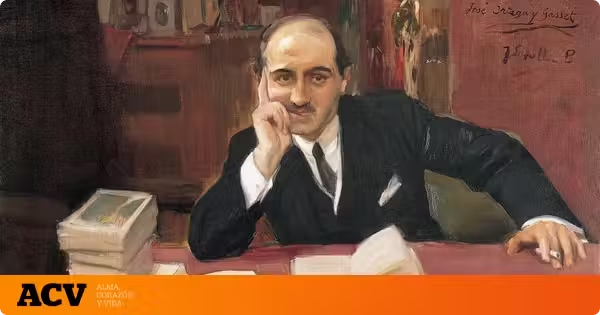
Spanish philosopher José Ortega y Gasset (1883–1955) reflected on the fluid nature of human identity, asserting that nothing about a person is permanent. His thought suggests that individuals are defined by continuous transformation rather than fixed states. [1]
In a widely cited statement, Ortega y Gasset wrote: “Nothing of what man has been, is, or will be has been, is, or will be once and for all, but he became so one good day and another good day he will cease to be so.” This quote emphasizes that identity is not a definitive, unchangeable trait but a dynamic process. [1]
People change, circumstances evolve, and what seems an inseparable part of existence today can vanish over time. Therefore, who one is at a given moment does not have to define them for their entire life. [1]
Changing is not losing identity, but recognizing that it transforms. [1]
Everything ends. [1]
This philosophical reflection allows us to understand personal changes differently. It is often thought that decisions, beliefs, or even the way one relates to others are permanent characteristics. [1]
However, experience shows that old habits can be abandoned, ways of thinking modified, and aspects of oneself previously unknown can be discovered. In this sense, changing does not necessarily mean losing identity, but recognizing that it transforms. [1]
Furthermore, Ortega y Gasset’s words remind us that no stage of life is eternal. Both difficult moments and those we would wish to prolong indefinitely have a beginning and an end. His thought encourages accepting uncertainty and understanding that living also consists of leaving behind what one day was to make way for what one can yet become. [1]
- Categories:
- History
- Entities: