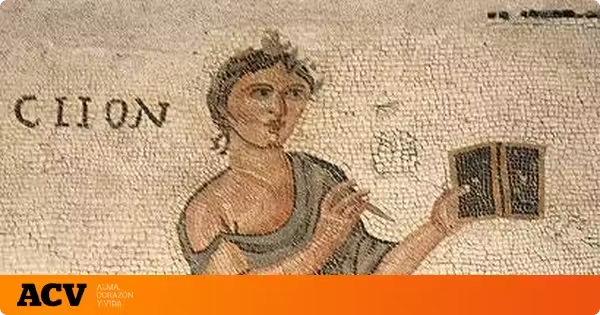
Pompeius Trogus, a Roman historian of Gallic origin who lived between the 1st century BCE and the 1st century CE, is known for one of the most famous reflections on the ancient history of Spain. He described the Spanish populations as extremely valuable in battle, but also identified a deep structural weakness: their inability to remain united in the absence of a common enemy. This ancient observation continues to generate interest, being frequently invoked in contemporary discussions about unity and internal conflicts in the Iberian Peninsula. [1]
The quote attributed to Pompeius Trogus states that 'the Spaniards are very brave, but have a major flaw: if they do not have a common enemy, they occupy themselves fighting among themselves.' The formulation preserved in ancient texts explains this dynamic through the preference of the Spaniards for war over rest; in the absence of an external threat, conflict was sought within. Thus, the historian highlighted the dual nature of the ascending warrior character of the Hispanic peoples and the difficulty of maintaining political cohesion when external pressure disappears. [1]
The historian's perspective must be placed in the context of the Roman conquest of Hispania, a military process that spanned approximately two centuries. From the arrival of the Roman legions in 218 BCE, numerous populations from the peninsula – including the Celtiberians and Lusitanians – firmly opposed Republican expansion through significant armed resistances. However, political fragmentation and divergent territorial interests prevented the formation of durable and coherent alliances against a much more militarily organized enemy. [1]
Episodes of resistance, such as the siege of Numantia and the campaigns led by the Lusitanian leader Viriathus, clearly demonstrate the capacity of the Hispanic peoples to confront Rome. Nevertheless, these movements took place in different areas and historical periods, without constituting a common front for the entire peninsula. Pompeius Trogus's observation captures precisely this contradiction: a formidable military force at the local and individual level, masked by a chronic lack of political cohesion in pre-Roman Hispania. [1]
Pompeius Trogus was the author of the 'Philipponica Historiae,' a vast historical work of 44 volumes covering events related to various civilizations of the ancient world. Although the original text was lost, the summary later made by Marcus Junianus Justinus has transmitted essential passages to the present day. In book XLI of this summary, detailed descriptions of Hispania and its inhabitants appear, emphasizing physical tenacity, warrior spirit, and tendency toward internal conflict. [1]
After more than two millennia, Pompeius Trogus's reflections remain useful for discussing division and the difficulty of achieving consensus, although they reflect a historical reality distinct from modern Spain. The historian analyzed a peninsula composed of tribes with their own interests, before their absorption into the Roman Empire. His message underscores that bravery and physical resilience are insufficient in the absence of common goals, a principle that explains the current relevance of this ancient description. [1]
- Categories:
- History
- Entities: