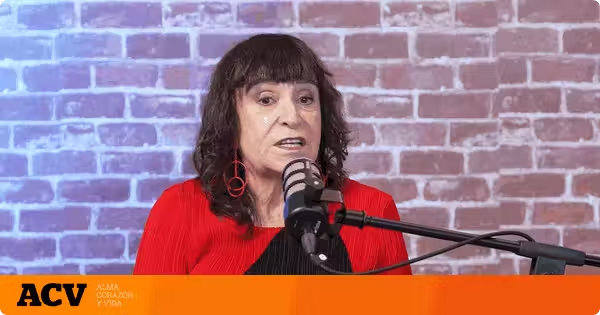
The passage of time is an inevitable reality that people confront in vastly different ways. While some find tranquility and new opportunities in maturity, others acknowledge a growing anxiety as they age. Rosa Montero, a prominent Spanish writer and journalist, has spoken openly about these feelings during her recent participation in the 'ac2ality' podcast, sharing a particularly honest perspective on what it means to grow older.
When asked by the podcast host about the aspects of aging that have surprised her most, both positively and negatively, Montero’s answer was stark. She admitted that growing old has no appeal and finds the process terrifying. Her reaction stems from her intense enthusiasm for life and the difficulty she faces in accepting that her available time is continuously diminishing. For Montero, the true problem of aging is not related to the physical changes the body undergoes, such as wrinkles or loss of firmness, which she places in second plane. Instead, her deepest concern is existential: she believes the worst part of aging is losing the future.
Montero clarified that what hurts her the most is witnessing how the horizon of possibilities ahead of her shrinks. This concern highlights a significant paradox of age: continuing to possess the same desires and vitality while realizing that the window of opportunity for new projects closes progressively. She insists that she has not given up on her usual activities nor lost interest in what she is passionate about. However, she now lives with the certainty that life is not infinite, a concept that felt much more distant when she was younger.
Despite these reflections on mortality, Montero also highlighted a contradiction inherent in the aging process: the gap between chronological age and psychological perception. She confessed that, subjectively, she has not changed at all in her life. She feels exactly as she did when she was younger, maintaining her habits, interests, and desires. In moments, this continuity surprises her. Her way of understanding the world and enjoying daily experiences remains fundamentally the same.
To illustrate this phenomenon, Montero referenced a reflection attributed to the writer Oscar Wilde regarding the distance that can exist between inner identity and external aging. This is an experience many people relate to: feeling young internally while the calendar advances without stopping. The disparity between self-perception and actual age often becomes evident when one becomes conscious of the time elapsed. As Montero noted, while the body changes, the self-perception does not necessarily evolve at the same pace.
Her openness about the fear of losing time connects with her well-known passion for living fully. It underscores the emotional complexity of aging, where personal continuity clashes with the objective reality of a finite future. Montero’s comments offer a raw look at how high-achieving individuals grapple with the limitations of time, prioritizing the preservation of their internal vitality over the acceptance of external decline.
- Categories:
- Culture
- Entities: