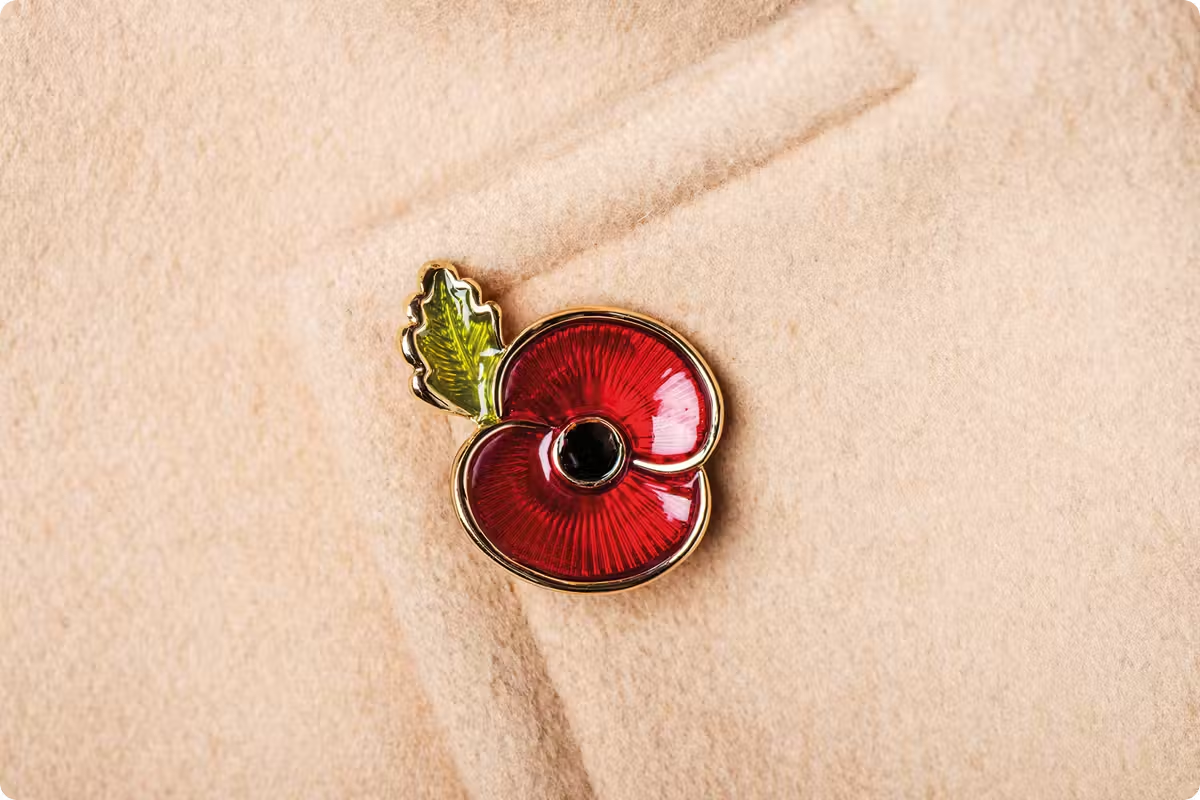
During November, the poppy symbol consistently reappears in British visuals, worn on clothing and displayed in public spaces to remind people of the sacrifice made by those who served. Although memorial monuments remain strong markers of national and community identity, data suggests that their role as carriers of individual biographies is gradually diminishing. For 84% of those interviewed, local memorials are essential to ensure that wartime sacrifices are not forgotten, yet there is a pronounced gap between their symbolic value and knowledge of the specific individuals commemorated. [1]
According to a study conducted by Findmypast, the UK-based genealogy and history website, 73% of respondents expressed concern about the gradual disappearance of personal stories behind names engraved in stone. A practical issue further exacerbates this disconnect: more than one in three citizens cannot locate their community’s war memorial, while 70% are unsure if they could identify even a single person honored on it. These figures indicate a erosion of the direct link between the current community and previous generations, a phenomenon observable across the entire United Kingdom. [1]
In response to this collective memory challenge, Findmypast launched “Military Lives,” a free digital tool aimed at reviving the stories of commemorated soldiers. The project represents a significant technological initiative, marking the first large-scale use of machine learning to correlate UK war memorial data with millions of historical records and newspaper archives. The algorithm creates a map of connections, highlighting hidden links between families, neighbors, work colleagues, and comrades-in-arms who are commemorated on the same memorial. [1]
Another crucial dimension of the project is bringing visibility to women behind the war effort. The platform encourages discovery of the roles played by wives, mothers, and sisters who kept families and communities united while loved ones were away at war, while also acknowledging the contributions of women who served directly. Findmypast’s approach goes beyond simply recognizing names; it invites communities to discover lives that were lived, people who were loved, and neighborhoods left behind—to combat the feeling that the stories behind the stones are lost forever. [1]
- Categories:
- Culture
- Entities: