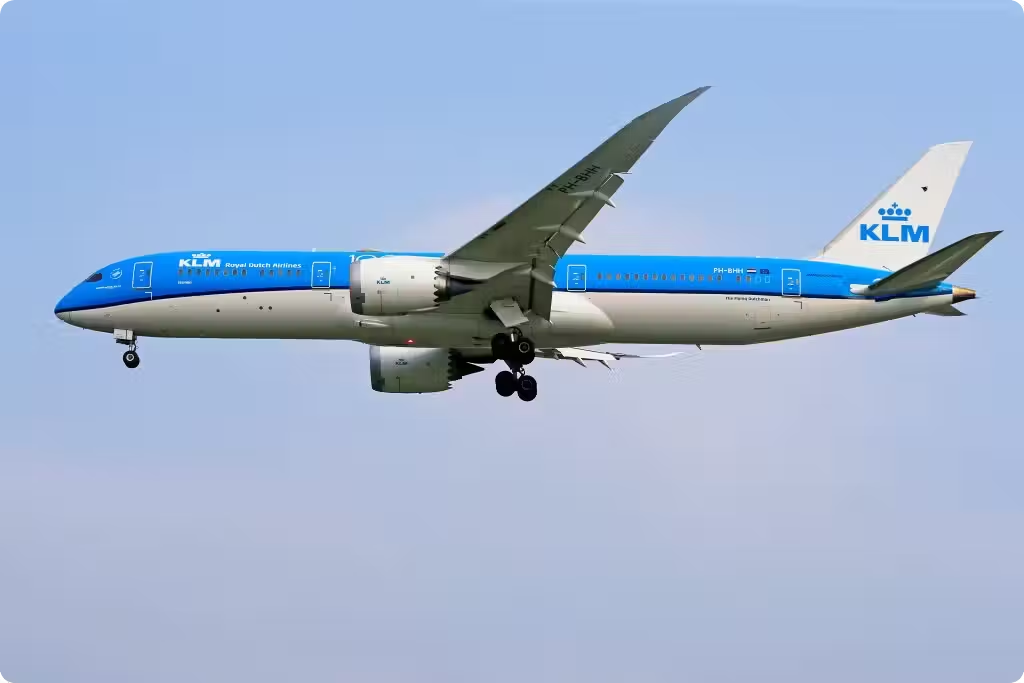
Royal Dutch Airlines (KLM) has officially lodged a criminal complaint with the Public Prosecution Service concerning a serious safety incident that occurred aboard one of its flights in September 2026. The incident involved a lithium-ion power bank that ignited while charging during a journey from Amsterdam Schiphol to Curacao. According to statements released by the carrier, the ignition of the device created an immediate hazard to the flight, endangering the safety of passengers, crew members, and the aircraft itself. The airline emphasized that filing the complaint is a standard procedure when passengers commit gross violations of aviation safety regulations that jeopardize the integrity of a flight. [1]
While KLM has maintained strict confidentiality regarding the identity of the passenger involved in the incident, it has confirmed in public communications that the power bank responsible for the fire belonged to Camiel Eurlings. Eurlings is a prominent Dutch political figure who previously served as a senior executive at KLM before entering politics. The disclosure of his involvement has drawn significant attention to the incident, highlighting how high-profile individuals are subject to the same stringent safety protocols as any other traveler. The airline declined to provide further personal details about the individual, focusing instead on the procedural and safety aspects of the case. [1]
The sequence of events unfolded during the flight’s cruise phase. The power bank began to overheat and ignite while the passenger was charging it within the cabin. Upon detecting the situation, the cabin crew intervened to suppress the fire and mitigate risks to the aircraft and its occupants. Due to the severity of the onboard emergency caused by the thermal runaway of the battery, the pilot made the decision to divert the flight back to Amsterdam Schiphol Airport. The aircraft landed safely, and all passengers were evacuated without serious injury, although the incident was deemed a major safety breach. [1]
Under international and European aviation regulations, particularly those enforced by the Dutch Civil Aviation Authority and KLM’s own internal policies, the use and charging of portable electronic devices containing lithium batteries are strictly regulated. While passengers are permitted to carry power banks in their hand luggage, they are strictly prohibited from charging them or using them during the flight. This prohibition is due to the risk of thermal runaway, which can lead to fires that are difficult to extinguish in the confined space of an aircraft cabin. KLM explicitly requests that passengers keep such devices with them and not store them in overhead bins where they could become trapped if they ignite. [1]
Following the incident, KLM conducted an internal investigation to establish the full context of the violation. Based on the findings, the airline determined that the passenger had grossly disregarded established safety rules, necessitating legal action. The carrier stated that filing a complaint is a routine measure in cases where the safety of a flight, passengers, and crew is compromised by reckless behavior. The matter was subsequently transferred to the relevant law enforcement agencies for criminal processing. [1]
The Public Prosecution Service (Openbaar Ministerie) confirmed that it has received KLM’s complaint and will formally process it. A spokesperson indicated that the prosecutor’s office is treating the matter seriously given the potential implications for aviation security. The criminal investigation is being handled by the Aviation Police (Luchtvaartpolitie), a specialized branch of the Dutch National Police Force dedicated to enforcing laws specific to the aviation sector. The Aviation Police have the jurisdiction to investigate incidents occurring on board aircraft registered in the Netherlands or operated by Dutch carriers, regardless of whether the flight was domestic or international. [1]
In parallel with the criminal inquiry by the Aviation Police, the Dutch Safety Board (Onderzoeksraad voor Veiligheid, OVV) has initiated its own independent investigation. The OVV is responsible for investigating safety incidents in transport sectors, including air travel, to determine underlying causes and prevent future occurrences. Their examination will likely focus on the technical failure of the power bank, the adequacy of the crew’s response, and the effectiveness of existing regulatory frameworks regarding personal electronic devices on board commercial aircraft. The findings from both the police and the Safety Board may influence future policy decisions regarding lithium-ion batteries in aviation. [1]
This incident is not an isolated case involving power banks and KLM flights. The airline industry has faced recurring challenges related to portable charging devices over recent years. In a previous incident last year, a power bank overheated and caught fire inside a backpack during a KLM flight from São Paulo to Amsterdam. In that instance, the cabin crew successfully extinguished the fire before it could spread, but the event again highlighted the inherent dangers of carrying non-compliant or defective lithium batteries in the cabin. These repeated incidents have led to increased scrutiny and stricter enforcement of battery-related regulations by airlines and airport security agencies globally. [1]
Travelers are reminded that while power banks are allowed on board aircraft, they must be carried exclusively in hand luggage. They are strictly forbidden from being placed in checked baggage due to the fire risk in cargo holds where early detection and suppression are more difficult. At security checkpoints, passengers must present power banks separately for inspection, as they are classified as restricted items despite being essential for modern electronics. Passengers are advised to inspect their devices for damage, ensure they are turned off, and protect their terminals from short circuits by covering connectors or placing them in protective cases. [1]
As the investigations by the Public Prosecution Service, the Aviation Police, and the Safety Board proceed, the case of the power bank belonging to Camiel Eurlings serves as a high-profile reminder of the zero-tolerance approach airlines maintain toward safety violations. The outcome of the legal proceedings may set precedents for how similar incidents involving prominent individuals are handled in terms of liability, fines, or other sanctions. KLM continues to emphasize that its primary concern is the safety of all individuals on board, and it reserves the right to take legal action whenever such safety is compromised by passenger negligence.
- Categories:
- Transport
- Entities: