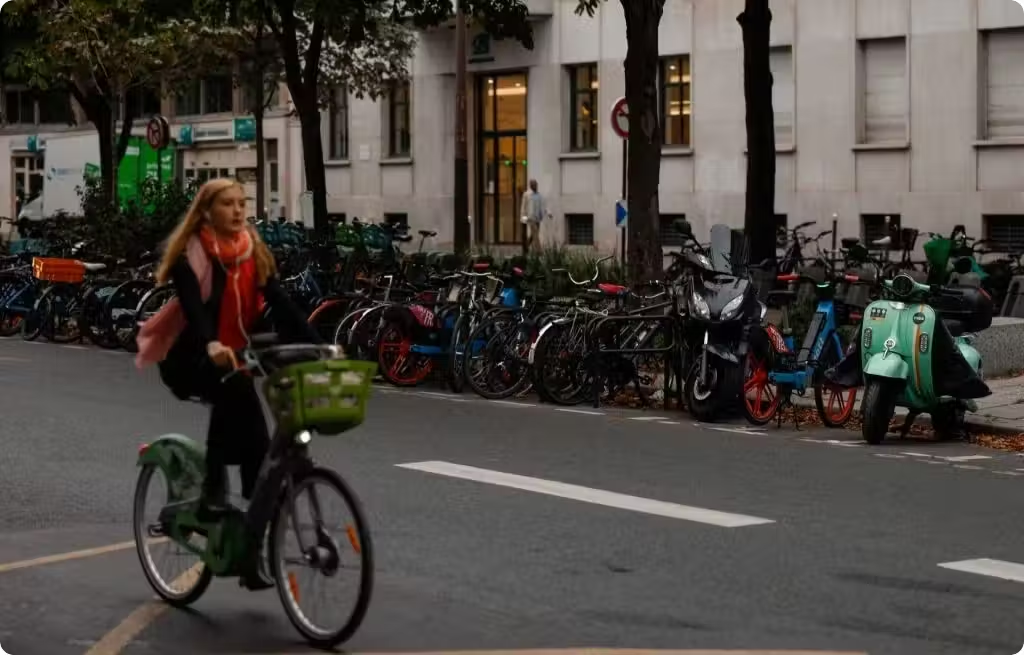
France is navigating a shift in urban micro-mobility policies, with several cities replacing traditional pedal-powered rental bicycles with electric-assisted models. In Nantes, the entire fleet of short-term mechanical bikes will be swapped out for electric-assisted bicycles (EABs) starting in January 2027. This decision has sparked debate among residents accustomed to the physical effort of traditional cycling. Similarly, the agglomeration of Annecy (Haute-Savoie), as well as smaller towns like Saintes (Charente-Maritime), Montargis (Loiret), and Arras (Pas-de-Calais), have opted for fleets composed entirely of electric bikes. Larger metropolitan areas such as Toulouse, Lyon, and Paris generally maintain a balanced approach, offering both models. [1]
The transition in Nantes was driven by a four-year consultation process involving local municipalities. Aurélien Boulé Fournier, a metropolitan councilor for active transport, stated that while the shift to electric was not an absolute initial requirement, it ultimately proved more practical for serving the entire agglomeration. The move also addresses environmental factors; proximity to the Atlantic Ocean brings winds that can discourage physical cycling. Additionally, switching to electric assist helps users avoid arriving at work perspiring. This strategy mirrors approaches in hilly cities like Annecy, where electric bikes facilitate longer distances and greater terrain versatility with reduced physical exertion. [1]
Consumer research highlights a nuanced public perception. An Ifop study for the Jean Jaurès Foundation and Upway, published in June, found that 51% of French people view EABs as an effective alternative to cars for short or daily trips. However, 23% believe EABs are primarily intended for residents of large cities. Cities promoting electric bikes aim to encourage the abandonment of private cars for commutes. Conversely, Toulouse’s transport network, Tisséo, maintains a mixed fleet where 50% are electric. This dual model allows 57% of trips to be made by EAB, which the operator cites as a way to keep mobility affordable while offering modern vehicles. Despite the benefits, cost remains a concern; in Nantes, the price for short-term rental usage is set at 21 cents per minute. [1]
- Categories:
- Transport
- Entities: