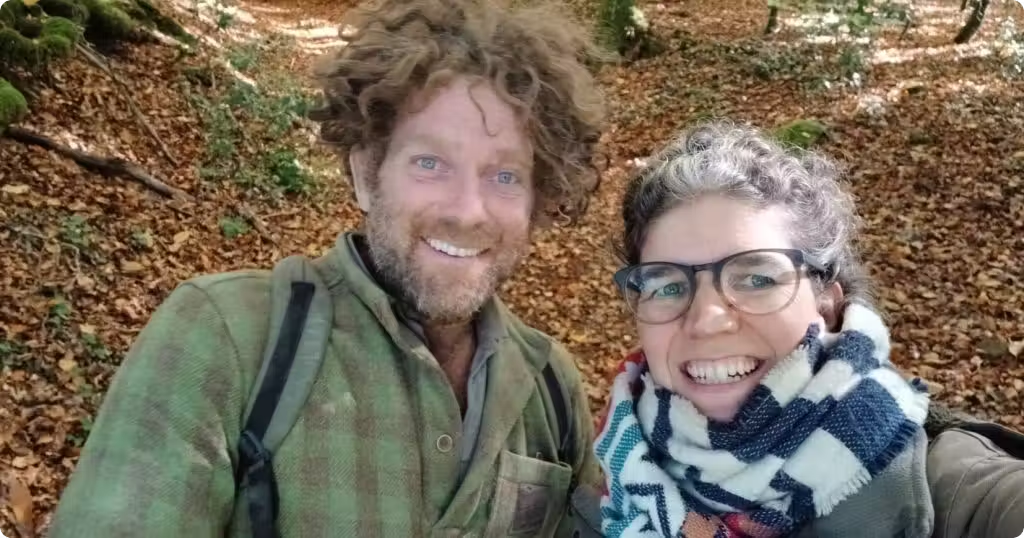
Jaqui Huibers-Bolt, 43, and her husband Lucas have successfully uprooted their lives in the Netherlands to establish a new existence in the French countryside, trading suburban convenience for the rugged independence of rural self-sufficiency. In early 2025, the couple, accompanied by their young daughter, embarked on a journey in a converted camper, searching for a place where they could rebuild their lives away from the pressures of modern urban employment. Their destination was not a conventional home, but an abandoned cow shed situated in a tiny hamlet in the Corrèze department, near the Massif Central region. This move represents a significant leap for the family, who have transitioned from a life where Lucas worked as a landscaper and Jaqui wrote educational materials, to one defined entirely by manual labor, DIY construction, and the slow pace of rural life. [1]
The decision to relocate was born out of a desire for change and the appealing prospect of affordable property in France, a country the family knew well from previous holidays. Unlike many who dream of such a move, Jaqui and Lucas acted on their ambition. Lucas modified an old work car into a camper, turning their vehicle into both transportation and temporary home as they scouted locations. They eventually settled in Corrèze, a department in the Nouvelle-Aquitaine region known for its untouched nature, rolling hills, and stone architecture. The area’s isolation and beauty were decisive factors, particularly after they discovered an old friend of Lucas’s who owned an unused cow shed. What began as a casual inquiry about purchasing the structure quickly solidified into a concrete plan, leading to a surprisingly smooth administrative process for securing urban planning certificates and building permits. [1]
The renovation of the cow shed has become a labor-intensive project that the couple undertakes almost entirely on their own. Lucas, leveraging his background as a landscaper, has taken on the role of main contractor, having installed first-floor windows for the living area, laid electricity, erected walls, and constructed a kitchen. He is currently engaged in tiling the bathroom, using ceramic tiles that the couple made themselves in a neighbor’s kil oven. While the intention behind making their own materials was cost-saving, Jaqui notes that the effort nearly equaled the expense, though the result is a set of unique tiles. The couple has lived in a caravan parked on the ground floor of the barn for much of this period, adapting to cold winters with layers of blankets. Although they have begun using the new living room, they still sleep in the caravan, partially because the renovation is incomplete and partially due to ongoing infrastructure issues. [1]
One of the most persistent challenges of their new life is the lack of basic utilities. Despite having secured legal permission to convert the structure, the couple has been waiting a long time for running water. In rural France, connecting to the water supply often requires coordination with local municipal authorities. Jaqui reveals that the mayor has repeatedly promised to arrange for running water but has yet to follow through. Until this essential utility is provided, their living situation remains reminiscent of camping. This bureaucratic delay highlights a common friction point for self-build projects in remote areas, where infrastructure updates lag behind personal initiative and legal compliance. [1]
Life in Corrèze has also brought the couple closer to the land, offering resources that facilitate a more sustainable lifestyle. They have acquired parcels of private woodland, which serve as a crucial source of heating fuel, as wood burning remains prevalent in the region. The couple has demonstrated resourcefulness by slicing fallen branches into thin planks to create flooring, a process that continues as they fell trees and dry the wood for future use. Lucas’s skills extend to creating a garden filled with potatoes, tomatoes, kale, carrots, radishes, onions, beans, zucchini, endive, and lettuce. Although their onion and garlic crops failed, the garden provides a significant portion of their fresh produce. Additionally, Lucas has built a pizza oven using farm equipment found in the forest and frequently forages for edible mushrooms, such as porcini in recent years and chanterelles in wetter seasons. [1]
Socially, the couple is integrating into the local community, though they note the distinct differences between rural France and their previous life in the Netherlands. Their daughter has started attending primary school, which now serves a growing number of children as the region sees an influx of younger families, both French migrants and foreigners. Jaqui has made friends with English expatriates and maintains her connection to the Netherlands through digital means, including a Substack blog where she documents their adventures. However, the transition is not without its drawbacks. Jaqui misses the convenience of being able to step out the door for quick errands, as everything in the countryside is distant. Lucas misses specific Dutch comforts, most notably sambal oelek, underscoring the cultural and sensory adjustments required when leaving one’s homeland for a remote location. [1]
- Categories:
- Tourism