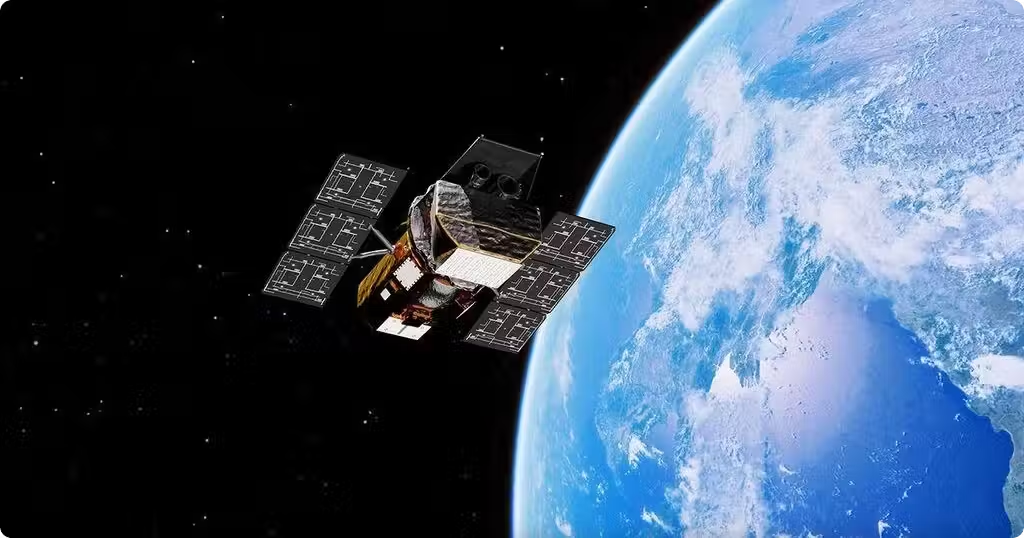
NASA's Swift space observatory, named after astronomer Neil Gehrels, re-entered Earth's atmosphere over Indonesia on November 4, 2026, after a 22-year mission, culminating in the failure of a costly rescue attempt. [1]
Launched in 2004, the telescope was initially designed for a two-year lifespan but operated for over two decades, exceeding all expectations and becoming an essential tool for astronomy. Although its size and mass (approximately 1.5 tons) raised concerns, NASA estimated the risk of injury to a person on Earth from satellite debris at a probability of 1 in 2,100, considering this event unlikely. The robotic recovery crew, named Link, was sent by Katalyst Space Technologies in July 2026 at a cost of $30 million, but encountered major difficulties: the robot could not get closer than 11 kilometers to the telescope and entered an uncontrolled rotation, forcing the abandonment of the mission in August. Link itself crashed into the atmosphere in September. [1]
Before the permanent shutdown of its systems in October 2026, Swift served as cosmology's 'first responder,' detecting over 2,000 gamma-ray bursts and 1,400 supernovae. The telescope issued rapid alerts to other observatories, including Hubble and James Webb, enabling them to conduct in-depth studies of black holes, active galaxies, and stellar explosions. John Nousek, an astronomer at Pennsylvania State University who led the control team, stated that although the end was catastrophic, the lessons learned from Swift's success will be used to accelerate future discoveries in exploring the universe. [1]
- Categories:
- Technology
- Entities: