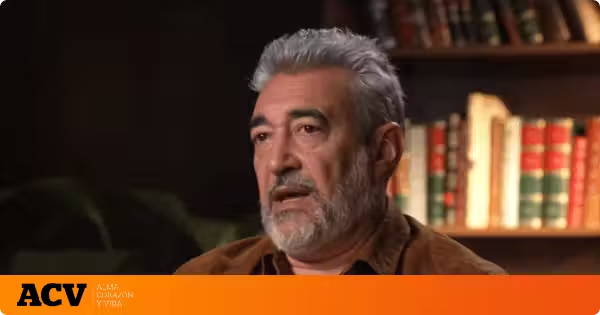
Neurobiologist Jose Luis Trejo of the Spanish National Research Council (CSIC) said that within a few decades parts of the human brain could be moved outside the skull, describing a future in which memory and skills are augmented with external devices linked to the nervous system.
Speaking on the podcast 'Tengo un plan', Trejo said that the idea is not science fiction and offered a personal, non-scientifically proven horizon of 15 to 20 years for certain advances in brain-computer interfaces that can read neural electrical signals and translate them into computer commands.
He outlined the goal of neurotechnology as building devices that interpret neuronal electrical activity and establish direct communication with computer systems, so that some information currently processed by the brain could be stored on an external device connected to the nervous system.
Trejo said that in principle it would not be a utopia to be able to 'insert' a language or musical skill, comparing the scenario to science-fiction films where protagonists acquire knowledge almost instantly, while stressing that these possibilities remain speculative at present.
Artificial intelligence is central to the prospect, according to Trejo. He explained that the brain works through complex neural networks that exchange information via electrical and chemical signals, and that new computing systems can identify patterns that are difficult to decipher with traditional methods.
As an example of existing work, he cited a person with severe speech difficulties who was able to communicate using a brain-computer interface that records signals related to the intention to speak and uses algorithms to turn them into words reproduced by a computer system.
Trejo compared such devices to pacemakers that detect cardiac rhythm disturbances and deliver electrical impulses to correct them, noting that the brain is far more complex because of the enormous number of neurons and connections involved in each process.
He said we will be able to work with the brain in a technologically unprecedented way and that artificial intelligence will be fundamental to interpreting the information and developing new medical applications.
Trejo stressed the distinction between research in progress and the ability to implant complete knowledge directly into the brain, noting that no clinical technology currently exists capable of implanting a full language or complex skill via a chip, so such applications remain hypothetical.
Beyond potential benefits, he raised concerns about storing personal information in electronic devices, particularly regarding identity. If memories were kept on an external device, questions would arise about what happens if the system fails, is lost or is manipulated by third parties.
Using childhood memories as an illustration, Trejo said dependence on a computer device for part of memory would open important debates about privacy, security and the limits of technological intervention on the brain.
He also warned that early innovations could create economic inequalities, with the most advanced devices initially accessible only to those with greater resources, although they could progressively spread to the wider population.
Despite uncertainties, Trejo argued that first applications should focus on improving quality of life for people with neurological diseases, including implants capable of partially compensating for loss of brain functions after injury.
- Categories:
- Technology