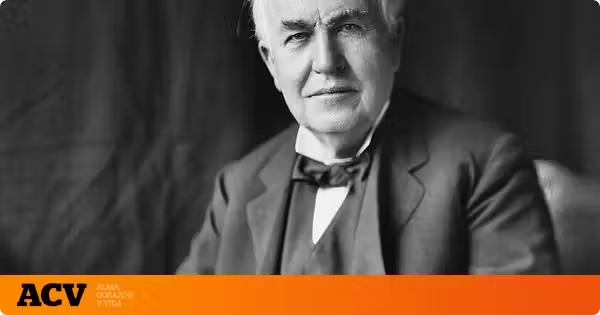
Thomas Edison holds a paramount position in the history of inventions that fundamentally transformed daily life. His legacy is defined by two monumental contributions: the recording of sound and the development of electrical illumination. These achievements were not isolated incidents but part of a broader trajectory marked by rigorous experimentation. At his laboratories, Edison gathered teams of individuals, specialized tools, and accumulated knowledge, creating an ecosystem designed to convert abstract ideas into tangible products usable outside the confines of pure research. This approach established a blueprint for modern industrial innovation, bridging the gap between theoretical possibility and practical application.
The scale of Edison's inventive output is staggering. According to the National Park Service, which preserves his historic laboratory in West Orange, New Jersey, the American inventor secured 1,093 patents in his home country alone. This number underscores a prolific career that extended far beyond the mere conception of devices. Edison’s work was characterized by an exhaustive understanding of the entire production cycle. He did not stop at designing an apparatus; he comprehended the necessary trials, modifications, and manufacturing methods required to bring it to market. This combination of deep research and practical engineering application helps explain one of the most enduring reflections attributed to Edison regarding the mindset required for success.
Among his many recorded thoughts, one particular quote stands out for its philosophical depth: “Dissatisfaction is the first requirement for progress. Show me a man who is completely satisfied with himself and I will show you a failure.” This statement, found in *The Diary and Sundry Observations of Thomas Alva Edison*, serves as a critique of complacency. It suggests that accepting a solution as perfect is dangerous because it halts further inquiry. In this view, dissatisfaction is not a negative emotion to be suppressed but a catalyst. It appears as the starting point for a relentless search for improvement, rather than a mere complaint without consequence. The second part of the quote employs a sharp, definitive tone to underscore this idea: anyone who believes they have reached a definitive solution stops exploring alternatives, thereby inviting obsolescence or failure.
The development of electrical illumination provides a concrete historical example of this process of continuous improvement. Contrary to popular myth, Edison did not invent the first light bulb. Other researchers and inventors had previously worked on electric illumination, developing prototypes that glowed but often lacked durability or efficiency. Edison’s contribution was different. He created a practical incandescent lamp and, more importantly, a complete system that allowed it to be used in homes and businesses. This system included electrical generation, wiring networks, and distribution components. The advancement required solving a complex set of interrelated problems, far exceeding the simple challenge of getting a filament to emit light. It was a holistic engineering achievement driven by the need to make electric light viable, reliable, and accessible.
Edison’s commitment to refining his work continued long after initial recognition. After opening his West Orange laboratory in 1887, he returned to the phonograph, an invention he had developed a decade earlier. Rather than resting on his laurels, he worked extensively on perfecting the device and improving its mass production capabilities. This effort encompassed the recording equipment, the sound storage mediums, and the machinery needed to manufacture them. His trajectory allows us to relate his reflection on dissatisfaction to a concrete practice: the continuous revision of a result even after achieving basic functionality. This iterative approach was central to his methodology, ensuring that his inventions remained competitive and useful as technology evolved.
The philosophy of dissatisfaction as a driver for progress resonates beyond the laboratory. It challenges the human tendency toward comfort and acceptance. By framing dissatisfaction as a “first requirement,” Edison positions it as essential for growth. In a modern context, this idea applies to business, science, and personal development. It warns against the stagnation that comes with success. The lesson from Edison’s life and work is that true progress is not a destination but a continuous journey. Those who seek to improve their creations, their methods, and their outcomes remain engaged in the process of discovery. Conversely, those who become completely satisfied risk falling behind, as the world around them continues to evolve. Edison’s legacy thus serves as both a historical record of technological triumph and a timeless reminder of the mindset required to achieve it.
- Categories:
- Technology
- Entities: