Mason Wright became the third person in the world to complete 1,000 consecutive miles on an athletics track in Layton, Utah, over 18 days, under variable weather conditions including rain and freezing temperatures. Wright describes his motivation as the desire to achieve something that truly sounds impossible. [1]
The culture of extreme male physical challenges includes, among others, David Goggins’ “4x4x48” challenge chain, started in 2020, or Travis Kerry’s record for the longest distance pulled without a shaved bear, set in London in December 2025. Kevin Ocipeka from Germany completed the longest-distance burpee over a marathon course (26.2 miles), finishing in 155 hours, 44 minutes, and 51 seconds. Psychotherapist and performance coach Michael Ceely observes a “wheel effect” of extreme competition, fueled by social platforms. A GQ investigative piece explores the motivations behind these extreme physical efforts, analyzing their psychological and social impact. [1]
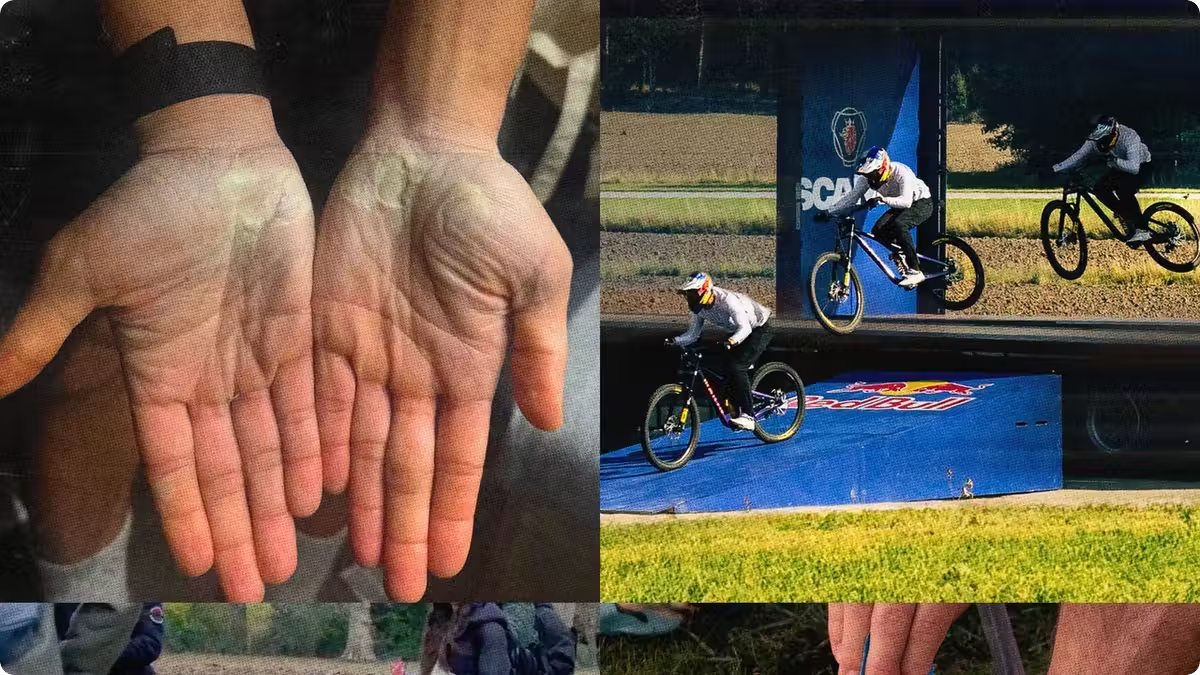
Professional mountain biker Matt Jones explains the genesis of his obsession: geniuses emerge from constant curiosity (such as how to lift or jump over a catch or trough) which becomes a hyper-vision leading to achievement. A classic example of extreme spectacle created by Matt Jones: jumping through the open rear trailers of two trucks traveling in opposite directions, with a margin of error measured in fractions of a second. [1]
British ultrarunner William Goodge, who ran marathons in 50 US states over 24 days in October, asserts that fear is an integral part of his enthusiasm for challenge. The logistics of Goodge’s difficulties include flight delays, unfavorable weather conditions, and days where he had to run three marathons with very short breaks. [1]
Travis Kerry pursued the challenge aiming for a Guinness World Record for the longest unpulled bear carry, a challenge that destroyed his hands, requiring a friend's help to remove water from the simple gloves he wore. To overcome mental exhaustion during tough runs, Kerry was encouraged by his trainer to scream as loudly as possible, using Tower Bridge as the backdrop. [1]
The physical consequences of these extreme efforts can include permanent nerve damage, as feared by Mason Wright and Travis Kerry. Matt Jones admits that most of his epic moments over the past decade were accompanied by physical pain, noting that there is a limit to the strength and years a body can endure. [1]
William Goodge began running after his mother died from cancer, saying that physical suffering was a way to process the mental and spiritual pain associated with her loss. Mason Wright’s 1,000-mile run was also a healing process following the loss of his father at a young age, linking together repetitive moments and forced meditation on what life means. [1]
Matt Valaoras, known for holding the plank position for long periods, uses his runs and these challenges to manage anxiety. He notes that although the beginning was modest (45 seconds of plank as a university student), he built successive proofs of his own resilience capabilities until he could handle the cruelest conditions (such as a swarm of mosquitoes feeding on him while holding a plank during a baseball game). [1]
Michael Ceely emphasizes that physical suffering is often an acceptable social means for men to process emotional suffering, offering them a healthy way to 'resolve' the problem. Valaoras admits that bodily exertion is a mechanism for avoiding direct confrontation with emotional problems, but observes that after intense exercise, it becomes easier for him to expose his vulnerabilities. [1]
Travis Kerry interprets emotional suffering as necessary fuel for performance, a process of mental deflection where pain becomes a clear motive (“why”) for continuing. These extreme efforts create a cycle of anticipation and reward (adrenaline, endorphins, dopamine) that can lead to physical addiction. [1]
Social media intensifies the pressure to surpass precedents and generate spectacular content; Matt Jones explains that without his fans and sponsors, he probably would not have executed the jump through the car trailers. [1]
- Categories:
- Sport
- Entities: