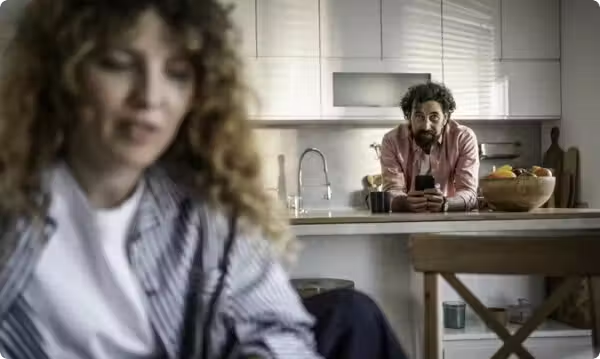
The Good Men Project recently published an essay titled 'On Loving, Leaving & Doing it Your Way,' which explores the complex psychology behind staying in relationships that have lost their future. The piece challenges the binary notion that remaining in a draining partnership is solely an act of weakness. Instead, it suggests that individuals may remain due to a depth of perception, seeing potential in their partner that the partner has not yet realized in themselves. This emotional entanglement pulls people into the contradictions and complexity of the relationship, leading them to believe that if they provide enough love, understanding, and effort, the situation can be resolved. The narrative posits that naming the brokenness is often seen as a prerequisite to fixing it. [1]
Contrasting this with the concept of genuine love, the author argues that true affection does not involve fixing or saving another person. Authentic love is described as accepting the other person’s identity without expecting reciprocity or imposing timelines. The essay emphasizes that love should not shrink feelings to a manageable distance or demand selfishness. The difficulty lies in recognizing when one has lost sight of their own life by viewing it exclusively through a partner’s eyes, effectively pushing themselves out of the center of their own story. [1]
A critical threshold identified in the piece is the moment an individual decides to reclaim their autonomy. This boundary is not defined by external advice from books or friends, but is an internal realization that can be sobering or devastating. The author asserts that self-trust involves knowing one’s own timing and needs, recognizing the precise moment to act, and understanding that the hardest part is often waiting for the feeling of readiness, which may never arrive. Consequently, some individuals leave regardless of comfort, driven by an internal certainty rather than emotional ease. [1]
The article acknowledges that different people navigate these decisions at different paces. Some can identify a situation is unwanted and depart immediately, while others must exhaust every option and give everything they have until there is nothing left to offer. The text explicitly validates both approaches, stating that forcing oneself to stay or leave before being ready to accept the consequences is unnecessary. It frames the decision as personal responsibility, asserting that there are no universally right or wrong choices, only decisions that become right through ownership. [1]
The final message serves as a permission slip to handle breakups according to one’s own emotional capacity and timeline. The author emphasizes that love and pain are not mutually exclusive; one can love someone who causes hurt and still lack the immediate strength to leave. The guidance encourages individuals to exhaust all options if needed, leave without apology if the time is right, or go back if that is the choice, without judgment. This approach allows for growth beyond perceived limitations, enabling individuals to define what love truly means to them and affirming that doing it their own way is sufficient. [1]
- Categories:
- Society
- Entities: