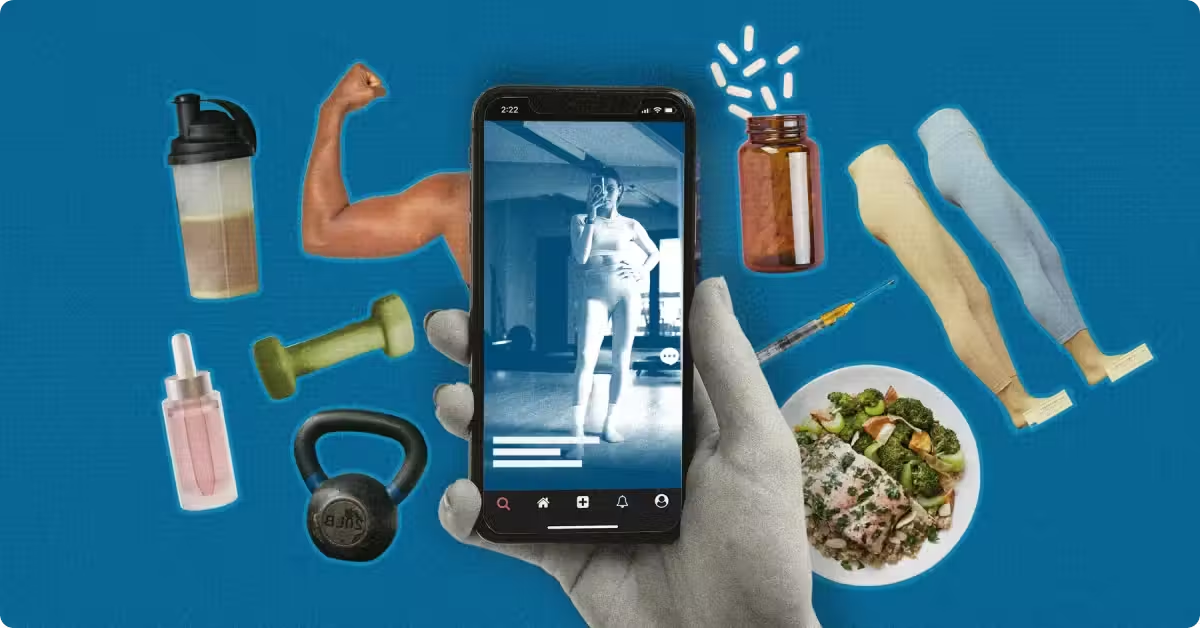
A Pew Research Center analysis conducted in spring 2026 revealed that a vast majority of health and wellness influencers on social media promoted products or services at least once over a three-month period. The data showed that 38% of these influencers' posts included some form of product or service promotion. [1]
A accompanying survey of 5,023 U.S. adults, conducted between June 9 and 15, 2025, found that 40% of respondents obtain health and wellness information from social media influencers or podcasts. Among these consumers, 63% reported trying a fitness, diet, or beauty routine, and 55% stated they had purchased a health or wellness product based on an influencer's recommendation. Additionally, 42% had encouraged an acquaintance to try a product or treatment, 39% asked a doctor about a medical procedure, and 33% stopped using a product or treatment due to influencer content. Approximately 14% attended a related event, meetup, or seminar. [1]
Instructional content, including workout guides, apps, and recipes, represented the most common type of promotion, appearing in 36% of posts that contained recommendations. Other informational materials, such as books, podcasts, or YouTube videos, were present in 11% of such posts. Broadly categorized, informational resources were the most frequent promotion type, appearing in 45% of all recommendation posts. Within the recommendation posts, physical products accounted for 32%, including supplements (11%), personal care (8%), apparel and accessories (7%), wellness devices (5%), food and drink (5%), and medication (1%). Services comprised 22% of promotions, with direct coaching or consulting at 15%, medical services at 5% (including complementary medicine and medical spas at 1% each), and events or communities at 9%. Approximately three-quarters of influencers who shared at least one promotion recommended an informational resource at some point. Physical product recommendations were also widespread, with around 70% of promoting influencers recommending such items at least once. Direct services, such as coaching and consulting provided by the influencers themselves, were recommended by 58% of influencers who engage in promotion. Promotions for offline and virtual communities, such as retreats and webinars, appeared in 9% of recommendation posts, and were utilized by 40% of influencers who run promotions. [1]
Gender and racial disparities exist in consumer responses: women are more likely than men to try routines, buy products, or encourage others to seek treatments. Furthermore, Black consumers are more likely than White consumers to report purchasing products or encouraging others based on influencer recommendations. Influence can also lead to the cessation of habits, with one-third of those who follow health and wellness influencers reporting they stopped using a specific product or treatment after an influencer discussed it. [1]
The study specifically examined health and wellness influencers—individuals with large online audiences who provide health-related information primarily via social media. This research builds upon previous studies regarding influencer demographics and audience engagement patterns. The analysis utilized two primary data sources. For the social media component, researchers analyzed 535,512 posts from 6,334 influencers across Instagram, TikTok, and YouTube, published between February 1 and April 30, 2026. Out of these, 204,545 posts were identified as containing a product or service recommendation. An LLM was employed to extract and classify the snippets of text referencing these offers. The researchers defined 'promotion' broadly to include not only explicit sponsorships or brand partnerships but also any suggestion to purchase a product or subscribe to a service. However, the study notes that this methodology likely missed subtle promotions and undisclosed sponsorships. [1]
The intensity of promotion varied significantly among creators. While 92% of influencers promoted something during the study period, a small group of 10% was responsible for nearly half (46%) of all recommendation posts. For this prolific minority, an average of 66% of their posts were promotions, compared to a 38% average for other promoting influencers. Promotional behavior differed by gender: women were more likely to promote apparel (8% vs. 5%) and personal care/appearance products (10% vs. 4%) than men, but were less likely to promote medical services (3% vs. 10%). [1]
Professional backgrounds influenced promotion frequency. Dieticians, nutritionists, and complementary, alternative, and integrative health professionals (including chiropractors and massage therapists) were among the most likely to promote products. Conversely, mental health professionals and conventional medicine practitioners, such as doctors and nurses, were among the least likely to do so. Generally, recommendations aligned with professional expertise: athletes most frequently promoted apparel, while medical professionals focused on medical services. Instructional guides were common across backgrounds but most frequent among coaches and dieticians. Regarding supplements, those with no listed credentials and athletes were the most frequent promoters. Complementary and alternative healthcare professionals were approximately twice as likely to recommend supplements as conventional medicine professionals. [1]
Certain topics were more likely to trigger promotions; roughly two-thirds of posts mentioning over-the-counter medications or supplements contained a recommendation. Posts concerning men's health, personal appearance, longevity, nutrition, and healthy habits also featured recommendations in 50% or more of instances. In contrast, posts about health policy were significantly less likely to include promotions. [1]
Influencers utilize various monetization strategies, including offering free resources to capture engagement. Approximately 12% of recommendation posts promoted free products or services, a trend most prevalent among informational product promotions. A smaller portion of posts (6%) included affiliate links or discount codes, a practice most common among promotions for physical products. [1]
- Categories:
- Society
- Entities: