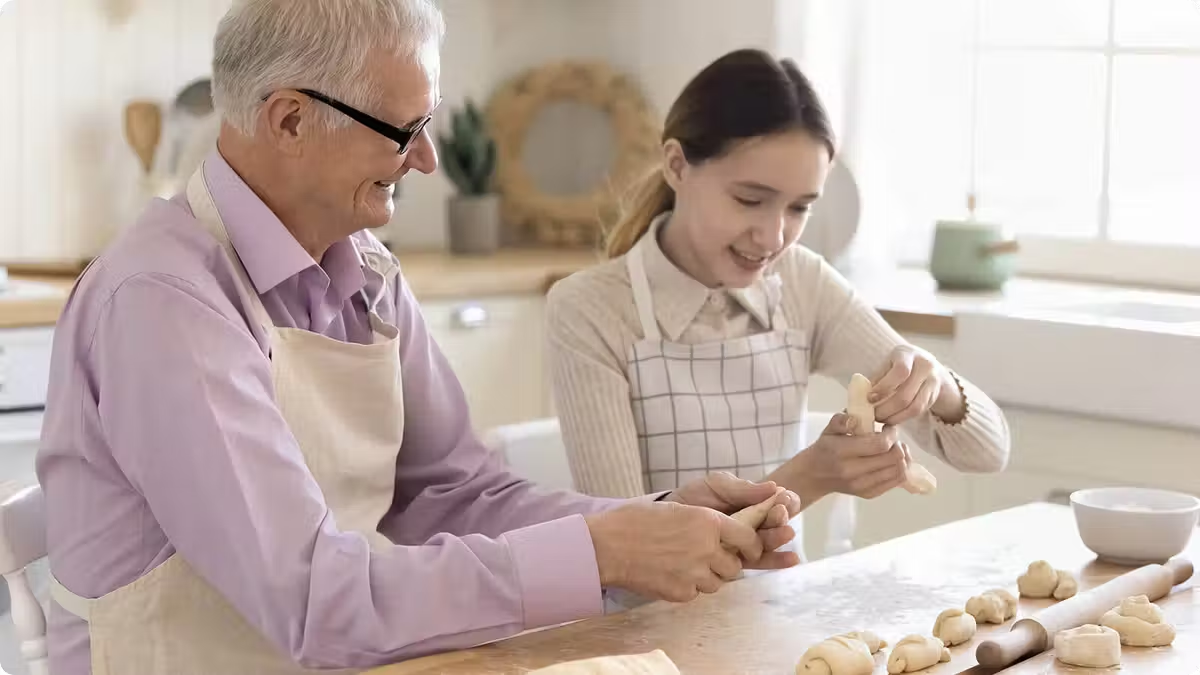
Adults often have vivid, lasting memories of the specific skills taught by their grandparents, such as shuffling cards, rolling pie dough, or using a drill, even when they cannot recall the gifts received for occasions like their ninth birthday. This disparity suggests that the act of teaching a tangible skill creates a stronger mnemonic footprint than the reception of material objects. [1]
The sensory details of these moments—located in kitchens or garages, characterized by the guidance on how to hold a tool or the handling of sticky dough—are retained with high fidelity. These environments and the physical nature of the instruction become anchored in memory, preserving the presence of the grandparent alongside the learned activity. [1]
Because the skill persists in the individual's behavioral repertoire, the grandparent associated with that teaching remains psychologically attached and present in the grandchild's mind. The longevity of the memory is directly linked to the utility and recurrence of the learned action in the grandchild's daily life. [1]
While gifts provide a momentary peak of pleasure, the process of learning, repeating, and integrating a skill into daily routine offers memory multiple points of retention. Psychological research supports the view that these active, learned memories endure longer than those derived from passive consumption of presents. [1]
Skills require joint construction between grandparent and grandchild, fostering a collaborative dynamic that gifts do not replicate. This mutual engagement ensures that the memory is not isolated to a single moment of receipt but is distributed across the duration of the learning process. [1]
Unlike a gift which is opened once, a skill involves a sequence of demonstration, handoff, correction, and retry. The grandparent’s role shifts from presenter to supervisor, watching, adjusting, and waiting for the grandchild to succeed. This interactive rhythm creates dozens of small contact points in memory rather than a single frame. [1]
The memory of learning a skill includes not just the technical acquisition but also the identity of the person who stood beside the learner. A gift is static; the teaching process is dynamic and relational, embedding the grandparent's presence into the grandchild's growing competence. [1]
Psychologist Robert Bjork of UCLA describes this phenomenon through the concept of 'desirable difficulty.' Learning that demands effort encodes more deeply than easy learning. Initial failures, such as a fumbled card shuffle or uneven pie crust, act as friction that makes the eventual success permanent in memory. [1]
Handing a grandchild a real task, such as using a vegetable peeler or checking oil, sends a powerful message of trust. It signals that the adult believes the child is capable of handling responsibility, a sentiment that resonates more deeply than the transient joy of receiving a toy. [1]
Children spend much of their time being restricted by age or safety concerns. When a grandparent bypasses these restrictions for a supervised, real-world task, it validates the child’s competence. Mastering these tasks gives the child a private sense of agency and capability that belongs solely to them. [1]
Whether chopping onions safely, planting seeds, or following a multi-decade family recipe, the successful execution of these tasks reinforces the bond. The grandchild remembers not only the skill but the trust placed in them by the grandparent, creating a legacy of competence and confidence. [1]
Parents often operate under time pressure and safety constraints, managing schedules and daily logistics. Grandparents typically offer a different pace of time, allowing for patience. This environment permits repeated failures, such as cracking an egg poorly multiple times, without intervention, which is crucial for learning. [1]
This specific type of patience is remembered as clearly as the lesson itself. The lack of rush and the allowance for error define the quality of the interaction, distinguishing it from the often hurried and directive nature of daily parenting. [1]
Clinical psychologist Corinne Masur emphasizes that beyond being competent, children need to *feel* competent. A grandparent teaching a skill with patience fulfills both needs: the skill proves capability, and the supportive context proves the grandchild's worth and potential. [1]
While other psychological trends highlight issues like familial neglect or excessive apologizing, the core narrative of grandparent-grandchild bonding centers on the transfer of tangible skills. This transfer preserves the intergenerational link through shared practice and mutual accomplishment rather than mere consumption or conflict. [1]
Other reports indicate that individuals who feel taken for granted in their families exhibit specific verbal patterns, such as saying eight particular things casually. Additionally, those who apologize constantly may be driven by past conditioning rather than politeness. These findings, while related to family dynamics, are distinct from the specific mechanisms of skill-based grandparenting. [1]
- Categories:
- Society
- Entities: