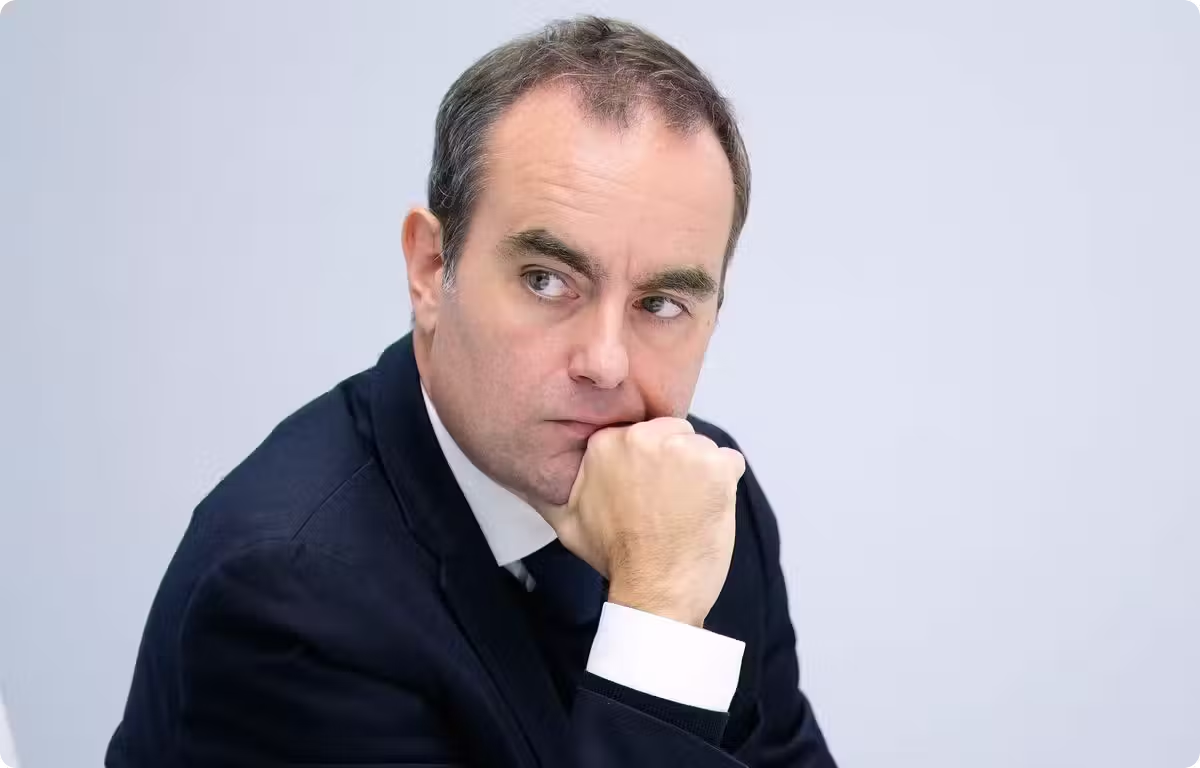
Amidst escalating social tensions across France, Prime Minister Sébastien Lecornu has scheduled a pivotal 'social conference' for Monday at Matignon. The meeting brings together trade unions and employer organizations to address urgent concerns regarding wages and purchasing power. This initiative follows a day of significant strikes and demonstrations, signaling the government's intent to engage directly with social partners to resolve the ongoing crisis of discontent. [1] [2]
Labor Minister Jean-Pierre Farandou has emphasized the importance of achieving a net monthly minimum wage (Smic) exceeding 1,500 euros. Currently set at 1,477.93 euros, the minister stated in an interview on TF1 that discussions with unions and employers are expected to continue until Sunday. His goal is to reach a compromise that addresses not only the minimum wage but also professional branch minima and corporate wage negotiations. He stressed that any increase in the Smic must be carefully measured for its potential impact on employment. [1] [2]
The central demands of the protest movement remain focused on wage revaluation. The CFDT union is calling for a net increase of 100 euros, while the CGT is demanding a 10 percent raise. Both organizations insist that any increases should apply to all salaries. Additionally, the CGT has proposed indexing remuneration to prices to protect against inflation. Other ministries are concurrently engaged in parallel discussions, with David Amiel, Minister of Action and Public Accounts, holding talks with civil service representatives to address issues within the public sector. [1] [2]
The intensity of the social unrest is evident in the scale of recent mobilizations. On Thursday, 193 marches gathered an estimated 575,000 people according to ministry figures, with 65,000 participating in Paris alone. Trade unions claim a higher turnout, estimating 1.6 million participants nationwide. The Ministry of Interior reported 448 arrests, 53 injuries among law enforcement officers, and 86 incidents involving fires during the protests. These figures remain provisional and are subject to consolidation. [2]
The coalition driving the protests, known as the intersyndicale, has declared that mobilization will only cease if their demands are met. This group includes major unions such as CFDT, CGT, FO, CFE-CGC, CFTC, Unsa, FSU, and Solidaires. They argue that the current level of social anger, fueled by high living costs and entrenching poverty, requires immediate government response. Frédéric Souillot, secretary general of FO, warned Prime Minister Lecornu that delaying action will only increase the cost of resolving the crisis, noting that living on less than 2,000 euros is increasingly difficult for many households. [1] [2]
Beyond the official government meetings, the activist landscape remains highly active. Organizations representing youth and the 'gilets jaunes' (yellow vests) are preparing for 'Acte IV' of their movement, planned for Saturday, November 7th. Student groups like UNEF have joined the call, highlighting deteriorating study conditions alongside economic grievances. Meanwhile, the scale of poverty affecting the situation is underscored by food banks launching their annual donation drive, targeting 2.4 million beneficiaries through a network of 128,000 volunteers over three days. [2]
- Categories:
- Society
- Entities: