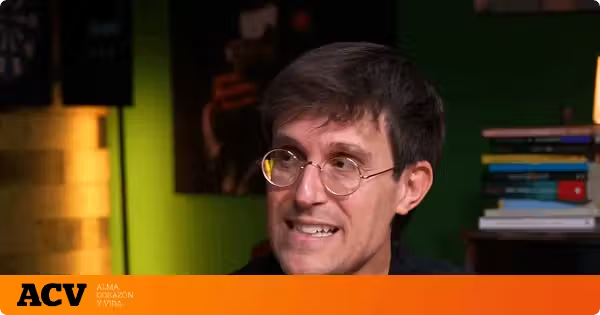
The decision to step away from a religious vocation after years of dedication is rarely simple, involving deep emotional and psychological transitions. Damián María, a former priest, has recently shared the personal crisis that led him to reconsider his continuation in the priesthood, describing a journey marked by emotional exhaustion, doubt, and the fear of abandoning a way of life he had originally chosen by conviction. His testimony highlights the intense pressure faced by those who dedicate their lives to serving others, revealing the hidden toll of sustained spiritual and professional commitment. [1]
In a recent interview, the former cleric explained that the initial symptoms of his crisis began approximately two or three years prior. During this period, he started feeling incapable of coping with the demands of his daily routine. Describing the onset of this struggle, Damián María stated, 'What I feel first is that I cannot, I feel exhausted.' He clarified that this fatigue did not stem solely from religious responsibilities but also from the functioning of religious institutions and the constant pressure to be available for others. He characterizes priestly life as particularly demanding both physically and emotionally, noting the burden of being '24 hours at the service of others,' a dedication that can eventually take a severe toll on one's well-being. [1]
Damián María identifies the condition he experienced as burnout syndrome, also known as professional exhaustion syndrome. This state is characterized by exhaustion related to chronic work stress, a common experience among caregivers and those in high-empathy roles. However, he notes that the true turning point occurred when he realized his distress had evolved from a question of capacity to one of will. 'There comes a moment where I realize it has gone from I cannot to I do not want,' he explains. This shift was critical for him, as it indicated that his crisis could no longer be resolved through rest or reduced responsibilities alone. It forced him to question whether he truly wished to continue his path as a priest. [1]
Becoming aware of this situation did not bring immediate peace. On the contrary, the former religious figure recalls going through moments of immense anguish, accompanied by feelings of guilt towards his surroundings and his own beliefs. He confesses, 'There is not only fear there, there is panic.' Among his primary concerns was the sensation of disappointing God, the people who had trusted him, and even himself. The intensity of this crisis reached a point where he feared for his own mental and physical health, admitting that at times he thought he was genuinely dying or going mad. These words reflect the profound emotional impact of a decision that involves not just changing professions, but also abandoning an identity built around a religious vocation. [1]
One aspect Damián María emphasizes is that his decision did not arise from a lack of commitment to the priesthood. According to his account, he lived his vocation based on conviction, dedication, and affection for others. Precisely because of this deep engagement, recognizing that his desires had changed proved especially painful. He reflects, 'When you have lived with honesty, when you have lived out of pure love, with passion and from the fullest freedom at every moment, it is enormously difficult to go back on your word.' His testimony brings to light a reality that is not always visible: the emotional exhaustion that those who dedicate their lives to caring for others can experience. [1]
Beyond the religious sphere, his story raises a broader question about the difficulty of accepting that a decision made with absolute conviction may no longer align with what a person needs years later. Damián María's experience serves as a testament to the complexity of human vocation and the importance of acknowledging when personal limits are reached, even in the most dedicated paths. His open sharing aims to shed light on the psychological realities of those who serve in caregiving roles, emphasizing that leaving a deeply held calling is often a process of self-preservation rather than failure. [1]
- Categories:
- Society
- Entities: