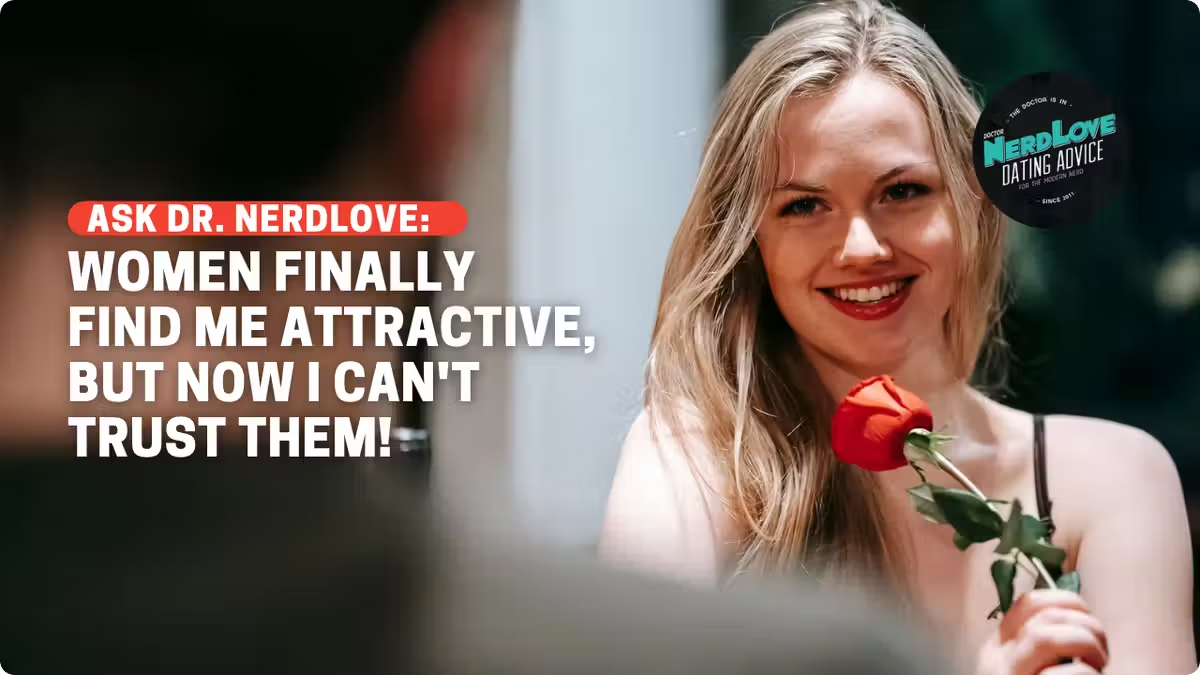
The author Greg Kaelcher, known professionally as Doctor NerdLove, publishes advice columns addressing modern dating challenges through his platform, DoctorNerdLove.com, and his podcast, *Do As We Say, Not As They Did*. His recent contributions focus on the psychological and social barriers that prevent individuals from forming authentic romantic connections, particularly when external circumstances, such as sudden wealth or long-standing insecurities, complicate interactions. [1]
A contributor to the column described a transformative period in his life, detailing a background marked by severe hardship. He recounted being raised by a single mother after his father abandoned the family, resulting in financial instability throughout his youth. During these early years, he struggled with obesity, poor dental health, thinning hair, and undiagnosed ADHD, which contributed to social isolation and a lack of peer interaction. His primary refuge was academic achievement; he graduated as the valedictorian in both high school and college, securing scholarships based on merit, although these successes came with the burden of significant student loan debt and damaged credit. [1]
A sudden and unexpected change in fortune reversed many of his lifelong challenges. An inheritance from his absentee father, combined with successful investment decisions, provided substantial financial resources. This windfall allowed him to achieve several major life goals: paying off all debts for himself and his mother, correcting a significant overbite, losing over a hundred pounds, undergoing cosmetic surgery to remove excess skin following his weight loss, addressing his hair loss, and treating scars from severe cystic acne. He also engaged a stylist to refine his wardrobe. These cumulative changes transformed his physical appearance and financial stability, placing him in a position he had previously considered unimaginable. [1]
This dramatic improvement in his physical and financial status altered his dating life significantly. Men who previously felt invisible now find themselves viewed as viable romantic partners by people who had never considered them before. However, the columnist characterized this influx of attention not as an uncontested blessing, but as a 'quality problem,' suggesting that the surge in interest has introduced complications regarding the authenticity and motives of those seeking his company. [1]
The central issue raised is a profound inability to trust the intentions of those showing interest. This distrust stems from a history of betrayal and exploitation. In his youth, he experienced social manipulation, where peers teased him by falsely claiming mutual interest, only to mock him when he acted on it. He described feeling reduced to an instrument for bullying rather than a person worthy of direct engagement. This pattern of being used to inflict pain on others, rather than being valued individually, created deep-seated emotional wounds that continue to affect his ability to connect. [1]
His early romantic experiences were marked by harsh rejection and humiliation. Attempts to approach women were often met with visceral disgust, with some expressing overt revulsion. A pivotal moment occurred on his twenty-first birthday in Las Vegas, where he encountered a woman who was subsequently revealed to be an escort. The interaction ended in humiliation when she requested payment before any intimacy had occurred. Fearing physical confrontation, he paid the fee but was unable to proceed with the encounter, a traumatic experience that left him wary of female advances for years. [1]
These cumulative negative experiences led to a prolonged period of emotional withdrawal. For many years, he was unable to make himself vulnerable to potential partners, protecting himself from the pain of rejection and exploitation by avoiding romantic engagement altogether. This defense mechanism served to isolate him further, reinforcing his belief that he could not safely navigate the complexities of dating. [1]
The influx of wealth has also attracted individuals seeking financial gain. Family members, particularly from his father’s side, emerged to present sob stories, propose dubious investment opportunities, or attempt extortion based on alleged debts. These incidents were not mere suspicions but serious enough to require legal intervention and financial management. This environment of predation has reinforced his belief that proximity to him is driven by financial opportunism rather than genuine interest. [1]
Despite his improved appearance, which he describes as decency in attractiveness rather than movie-star handsomeness, he finds himself unable to relax in romantic settings. He perceives a constant threat that women are interested in his wallet rather than his personality. This hypersensitivity causes him to shut down interactions at the slightest hint of ulterior motive, even when innocent explanations are plausible. The fear of being conned overrides his ability to form connections, leaving him isolated. [1]
The writer acknowledges that his stance may appear arrogant or misogynistic but emphasizes that his caution is rooted in legitimate past trauma. He recognizes that most people he meets are not exploiting him, yet he remains unable to lower his guard. This disconnect between his intellectual understanding of risk and his emotional capacity to trust has left him experiencing profound loneliness and difficulty in meeting new people genuinely. [1]
Seeking guidance, he asks how he can discern whether women are interested in him for his character rather than his potential to fund a lavish lifestyle. He seeks methods to mitigate his fear of deception while acknowledging that his caution is not entirely unreasonable, but is preventing him from living a fulfilling social life. [1]
In his response, Doctor NerdLove titles the section 'It’s Not Paranoia When They’re Really Out To Get You,' validating the columnist's fears while distinguishing them from actionable advice. He begins by noting a serendipitous coincidence: NVIDIA CEO Jensen Huang was recently reported to have been involved with an individual suspected of being an intelligence agent, highlighting how public figures with wealth and status often face intense scrutiny regarding the motives of those around them. This anecdote serves to normalize the columnist's feelings of suspicion. [1]
Kaelcher argues that concerns about exploitation are statistically common among individuals who acquire significant wealth suddenly. Lottery winners frequently report being overwhelmed by requests, sob stories, and sometimes threats. Crypto millionaires, similarly, have been targeted by criminal gangs, including kidnappings and threats to access digital assets. Therefore, the columnist's wariness is grounded in reality, not merely paranoia. Furthermore, money is frequently cited as a primary source of conflict in relationships, adding another layer of complexity to his situation. [1]
He combines the reality of financial predators with the documented casual cruelty of teenage behavior to explain the columnist's defensive posture. Having been bullied and exploited in his youth, it is unsurprising that he now stands in a 'defensive crouch,' unsure whom to trust. The columnist’s background created a heightened state of vigilance that has persisted into adulthood, exacerbated by his recent change in status. [1]
Addressing financial safety, Kaelcher defers to experts, stating he is not a security professional and cannot provide technical advice on protecting assets. Instead, he focuses on the interpersonal and psychological aspects of building trust. He suggests that the columnist assess how visible his wealth is in social contexts. Based on the writer's description, Kaelcher notes that he has not engaged in conspicuous consumption—he has not bought flashy sports cars, worn expensive designer labels exclusively, or thrown lavish parties. This prudent spending lowers the risk of appearing as an easy target, avoiding the 'Sucker Over Here' signal that attracts opportunists. [1]
However, Kaelcher questions whether the columnist is inadvertently signaling wealth through dating behaviors. Taking women to expensive dinners or extravagant first dates can set expectations that such luxury is the norm in the relationship. This does not necessarily attract 'gold diggers' in the malicious sense, but it may lead ordinary women to adjust their expectations to match a 'Crazy Rich Asians' or 'The Materialists' style romance, rather than a standard partnership. The columnist is advised to evaluate if his lifestyle presentations align with the type of partner he wishes to attract. [1]
The advice is not to adopt 'stealth wealth' or poverty drag, but to consider the image sent to potential dates. Ostentatious displays of wealth tend to attract those motivated primarily by money. Kaelcher asks the columnist to reflect on whether his current mode of presentation is consistent with his intention to find a partner who values him for his character. He emphasizes that while men may claim to value high salaries, visible ostentation often acts as a filter that selects for materialistic attractions. [1]
Kaelcher also prompts reflection on how the columnist meets people. He asks whether the interest came from people who approached him first or from strangers he pursued. He inquires whether the attention felt disproportionate or if it developed organically. This distinction is crucial; sudden, intense interest from strangers may warrant more caution than gradual connections formed through shared interests or social circles. Trusting one’s gut when interactions feel 'too good to be true' is a valid defense against opportunists, especially given his past with 'Bible study groups' or similar sketchy setups. [1]
A critical component of this advice is the concept of the 'inner warning system.' Kaelcher argues that the columnist’s radar is set too sensitively, potentially due to unresolved trauma from his youth. He suggests that the writer may still identify with the twenty-one-year-old who was humiliated by the escort, rather than recognizing his current autonomy and improved status. This internal misalignment causes him to misinterpret normal romantic interest as a threat. [1]
The columnist is encouraged to examine his self-image. Intellectual knowledge of being attractive does not automatically translate to internalized self-worth. Significant physical and financial changes can occur rapidly, but the emotional narrative may lag behind. If the writer continues to view himself as the 'lonely, unlovable geek' of his past, he may subconsciously attribute positive attention from others to his money, using wealth as a crutch to justify interest that he feels he does not inherently deserve. [1]
If this psychological disconnect is present, Kaelcher recommends time, deliberate choice, and potentially therapy. Shifting from suspicion to trust is difficult given his history, but it requires actively choosing to believe in the honesty of others until proven otherwise. He suggests working with a therapist to overcome these self-limiting beliefs, as emotional inertia can be powerful and hard to break without professional support. [1]
Trust is presented not as a binary state but as a graded process. The columnist should allow partners to earn his trust incrementally. He is advised not to hide his fortune but to avoid leading with it, which helps filter out opportunists early. Subtle distinctions in clothing or lifestyle markers may be missed by most people, allowing genuine connections to form before financial discussions arise. Using money as a means to impress or compensate for insecurity is discouraged. [1]
Practical steps include splitting the bill on early dates to avoid overwhelming the partner with 'princess treatment' or projecting a 'lustrous peacock plumage of hundred-dollar bills.' If money becomes a topic, the columnist is advised to remain vague until the relationship is established, noting that being debt-free is itself an impressive and attractive quality to many. He can use deflections like claiming assets are tied up in trusts if faced with inappropriate requests. [1]
The summary of Kaelcher’s advice is to stop using money as an emotional crutch while adjusting his self-perception. He urges the columnist to be open to trusting those who have not given him cause for concern, maintaining firm but reasonable boundaries. This balanced approach should naturally repel opportunists while allowing genuine partners to reveal themselves. [1]
In a secondary segment, Doctor NerdLove addresses a letter from a female reader concerned about men’s inability to accept diverse standards of attractiveness. The writer highlights her preference for unconventional features, such as big noses, and interests in nerdy hobbies, noting that she is unmoved by muscle cars, muscles, or wealth. She advocates for accepting that women have individual agency in dating preferences, urging men to simply be themselves. [1]
Kaelcher responds by questioning what men believe: the direct statements of women, or the prevailing narratives from male-dominated online communities. He notes that this debate is a common fixture in comments on his podcast, *Do As We Say, Not As They Did*, where he and co-host Dr. Liz discuss what women actually find attractive. [1]
He explains that men often resist believing women when told that conventional metrics of perfection are not mandatory. This resistance is fueled by influencers and content creators who exploit a psychological tendency: people tend to believe assertions repeated confidently and frequently. This mechanism spreads misinformation, whether from questionable wellness gurus or influential online personalities. [1]
Kaelcher cites the example of Joe Rogan, whose podcast guests often correct him, yet listeners persist in believing his assertions due to their delivery. This dynamic allows 'just-so stories' to bypass skepticism, especially when they confirm existing fears or biases. The repetition of these ideas creates an illusion of consensus, making toxic beliefs appear universal. [1]
This effect is amplified by algorithmic information bubbles. Kaelcher points to recent elections where platforms like X (formerly Twitter) created echo chambers that misled journalists and politicians about public sentiment. Similarly, online subcultures can make niche or extreme viewpoints appear dominant simply through volume. He references how terms like '-maxxing' and 'mogging,' originally incel shibboleths, entered mainstream discourse via sheer usage, becoming normalized in major publications and even named 'word of the year' by Collins Dictionary. [1]
The solution, Kaelcher argues, is often 'touching grass'—stepping away from reinforcing online communities and engaging with the real world. Many individuals abandon radicalized or pessimistic dating beliefs after real-world interactions disprove the negative narratives they consumed online. Direct experience serves as a potent antidote to online distortion. [1]
Finally, Kaelcher addresses the comfort found in believing one is hopelessly disadvantaged. He suggests that blaming fate or societal laws provides a shield from responsibility. While this belief is emotionally protective, it is counterproductive. He concludes that most people must eventually choose to disengage from these toxic discourses, often triggered by external life changes or direct exposure to reality. The role of advisors is to provide alternative voices and ensure that pathways exist for those ready to reconnect. [1]
Kaelcher’s column covers two distinct but thematically linked letters. The first deals with the psychological impact of sudden wealth and past trauma on dating trust, while the second critiques the male tendency to reject positive reinforcement from women in favor of pessimistic online dogmas. Both segments emphasize the importance of grounding relationships in reality rather than digital echo chambers or defensive cynicism. [1]
The publication context of this advice is DoctorNerdLove.com, a platform dedicated to navigating modern dating dynamics. The column reinforces the outlet’s focus on dismantling harmful gender narratives and promoting authentic connection. The integration of podcast references and social commentary underscores the multi-platform approach to addressing these societal issues. [1]
References within the column include citations to public figures such as NVIDIA CEO Jensen Huang, linking personal relationship advice to broader cultural moments involving wealth and trust. Mentions of Collins Dictionary highlight the linguistic normalization of online subculture terms. The podcast *Do As We Say, Not As They Did* is presented as a venue for ongoing dialogue on these topics, reinforcing the community aspect of the advice. [1]
The analysis of 'mogging' and '-maxxing' terminology illustrates how online toxicity infiltrates mainstream media. Kaelcher’s observation that major newspapers use these terms without irony serves as evidence of the pervasive influence of digital subcultures on public perception, further validating the need for individuals to seek diverse and real-world perspectives. [1]
The female reader’s perspective adds a necessary counterpoint to the typical male-centric advice columns. Her insistence on individual agency challenges the notion that dating is a market governed by rigid economic or biological rules. This inclusion broadens the scope of the column, addressing the mutual responsibilities and misunderstandings between genders. [1]
Kaelcher’s rebuttal to male readers who cling to negative beliefs highlights the psychological comfort of victimhood. By blaming external factors, men avoid the vulnerability required for genuine connection. This insight connects the first letter’s themes of insecurity with the second’s critique of online radicalization, suggesting that both stem from a refusal to accept the complexity of human interaction. [1]
The column concludes with a call to action for readers to actively seek out alternative narratives. Rather than waiting for a paradigm shift, individuals are encouraged to engage in therapy, conversation, and real-world socialization. The emphasis is on personal agency in overcoming the informational and emotional barriers constructed by the digital age. [1]
The use of specific examples, such as the Las Vegas escort incident and the investor scams, grounds the advice in tangible reality. These anecdotes serve not just as backstory but as causal factors in the columnist’s current behavior. Kaelcher’s method of validating these experiences while offering constructive paths forward distinguishes his approach from purely dismissive or purely supportive advice. [1]
The discussion of financial visibility and lifestyle presentation offers practical, actionable steps. By adjusting how wealth is displayed and integrated into dating scenarios, the columnist can reduce noise and attract more compatible partners. This technical aspect of dating advice complements the psychological insights, providing a holistic framework for improvement. [1]
Kaelcher’s tone balances empathy with directness. He does not shy away from pointing out the columnist’s potential role in perpetuating his own isolation through poor self-image and selective perception. This candid approach is characteristic of his brand, aiming to provoke self-reflection alongside comfort. [1]
The parallel between political misinformation and dating misinformation is a key rhetorical device. Just as voters were misled by algorithmic bubbles, daters are misled by online echo chambers. This analogy elevates the stakes of the advice, framing it as part of a broader societal challenge against distortion and disconnection. [1]
The mention of political figures like Hasan Piker, Abdul El-Sayed, and Zohran Mamdani illustrates how even informed observers can be blinded by niche online dynamics. This serves to reassure the dating column’s readership that they are not alone in their confusion; the problem is systemic and affects all levels of society. [1]
By linking the dating advice to contemporary political events and linguistic trends, Kaelcher contextualizes personal struggles within larger cultural shifts. This approach validates the reader’s feelings while directing them toward solutions that require active participation in the real world, rather than passive consumption of online content. [1]
The column’s structure, moving from individual case study to broader social critique, ensures that the advice is both personalized and universally applicable. Readers facing similar financial or insecurity issues can see themselves in the first letter, while those struggling with online echo chambers can relate to the second. [1]
Kaelcher’s reference to 'poverty drag' and 'stealth wealth' demonstrates his familiarity with current fashion and socioeconomic trends. This knowledge lends credibility to his advice, showing that he understands the nuances of class signaling and how they impact romantic perceptions. [1]
The advice to 'split the bill' and remain vague about finances is framed as a testing mechanism. It allows genuine interest to survive scrutiny, while filtering out those motivated solely by money. This practical tip is simple yet effective, requiring no technical expertise or significant lifestyle change. [1]
The acknowledgment that trust is a skill to be developed, rather than an innate trait, empowers the reader. It suggests that despite his traumatic past, the columnist has the agency to retrain his instincts. This message of hope is tempered with realism, noting that it will take time and effort. [1]
Ultimately, the column serves as a guide for navigating the intersection of wealth, identity, and trust. It challenges readers to examine their own biases and environmental influences. By integrating personal narrative with social analysis, Doctor NerdLove provides a comprehensive resource for those seeking meaningful connection in a complex digital landscape. [1]
- Categories:
- Society