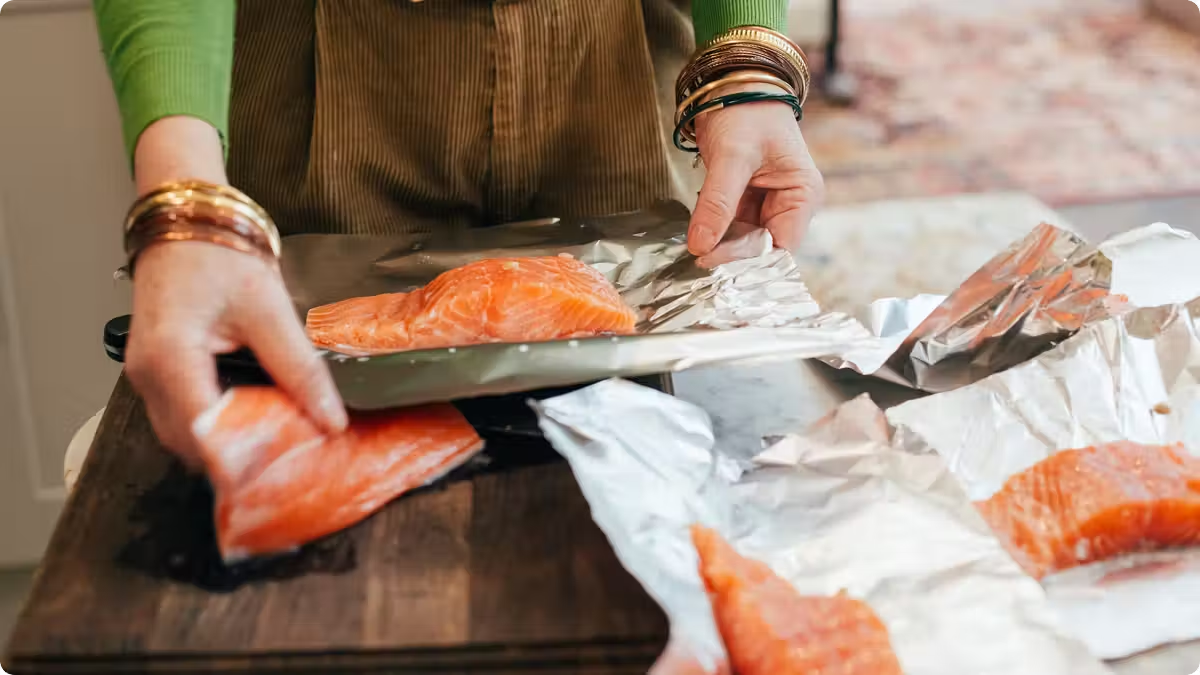
A German lifestyle feature on aluminium foil says most people get the orientation wrong and explains why the shiny and matte faces behave differently when food is wrapped or covered. The piece frames the choice as a matter of modest heat reflection rather than a dramatic cooking effect. [1]
According to the article, the shiny side reflects thermal radiation a little more strongly than the matte surface. For that reason it is often recommended for keeping warm dishes warm, with the shiny face turned inward when wrapping freshly baked potatoes or other hot foods so some heat is reflected back toward the food. [1]
The matte side has lower reflectivity and absorbs a bit more thermal radiation, which is why the guide associates it with cooling. When the aim is to keep food as cool as possible, the matte face can be placed inward. [1]
The author stresses that the practical difference with conventional household foil is small in everyday use. Still, the recommendation is to cover warm foods with the shiny side inward and cool foods with the matte side inward, while noting that specially coated foils with non-stick or other treatments should always be used per the manufacturer's instructions. [1]
The article notes that the two surfaces arise from manufacturing and that the effect should not be overstated. It concludes that for normal kitchen tasks the difference is limited, and the main point is to choose the orientation that matches whether you want to retain warmth or promote cooling, without expecting a large change in temperature. [1]
- Categories:
- Society