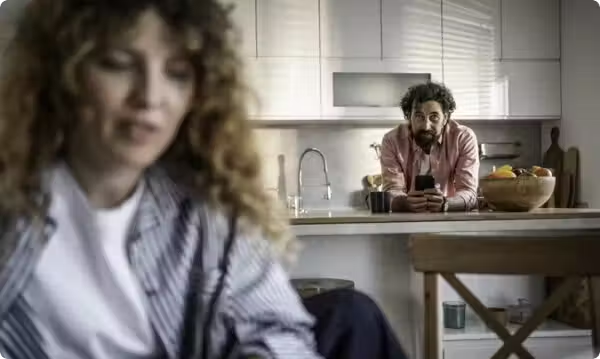
Recent reflections published on The Good Men Project, previously available on Medium, highlight eight subtle behavioral patterns that individuals often ignore due to their desperation for love or validation. The article identifies these behaviors as 'red flags' that, while not immediately obvious, signal an imbalance in the relationship dynamic. The narrative emphasizes that these warning signs were not invisible. They manifested in small, fleeting moments, brief facial expressions, and shifts in conversation topics that occurred just before difficult truths emerged. Individuals often recognized these cues at the time but filed them away, actively choosing to maintain a preferred version of the relationship's reality. This analysis focuses on the complexity of perception rather than mere oversight. It addresses the specific reasons why individuals see these signs but choose not to examine them, arguing that this hesitation is often a rational coping mechanism at the moment rather than a sign of stupidity or blindness. The author posits that the subtlety of these flags is inherent to the structure of the relationship itself. If the issues were blatant from the start, they would not require such nuanced interpretation. The confusion experienced is described as part of the architecture of these problematic dynamics. [1]
One major red flag identified is the partner's reluctance to offer genuine apologies. While they may eventually acknowledge wrongdoing, it often happens only after the other person has expressed sufficient distress to make the situation inconvenient to manage. The question posed is whether the apology stems from remorse or from a desire to restore order and smooth over discord. The dynamic here is characterized by apologies that feel like problem-solving tactics rather than empathetic connections. After such interactions, the individual often feels that something has been merely 'smoothed over' rather than truly resolved, leaving a lingering sense of unresolved tension. Another pattern involves the individual feeling as though they are constantly performing within the relationship. There is an underlying atmosphere of assessment, where one's value is being evaluated rather than simply accepted. This prevents the individual from fully relaxing, creating a state where they are always 'listening for the temperature of the room.' The analogy used is that of auditioning for a role that keeps changing. Love, in this context, feels like a job interview one cannot stop preparing for, suggesting a lack of unconditional security in the partnership. [1]
A third flag is the implicit message that the individual is lucky to be in the relationship. This creates a status differential that is never discussed but is felt structurally—through whose needs are prioritized, whose discomfort is addressed first, and whose plans are adjusted. The individual works to close a gap that consistently moves further away. This dynamic builds in a maintenance mechanism where the individual stays busy trying to earn their place. The article notes that busy people, constantly focused on proving themselves, do not leave, trapping them in the cycle. The fourth indicator involves the reception of good news. While the partner may acknowledge and smile at successes, there is often a hesitation—a 'recalibration'—before celebration. This suggests that wins must be processed and permitted, leading the individual to frame their successes with more caveats and less joy than they would share with friends. The text distinguishes this conditional acceptance from the texture of true love. It reflects a dynamic where the full version of one's success might demand support or attention that the partner is uncomfortable providing. [1]
Fifth, individuals find themselves explaining their existence constantly. This is not always due to direct interrogation but rather an atmospheric requirement. Motives are perpetually on trial, leading to pre-explaining decisions before objections are even raised. What feels like communication is actually bracing for impact. The author argues that a loving partner does not need constant justification. Explanations should provide context, not serve as currency to buy peace or approval. The sixth red flag is the cyclical nature of warmth. The partner may be genuinely warm and memorable at times, but this warmth is inconsistent. It arrives and recedes, leading the individual to experience the relationship not as a whole, but as a quest to recover its best moments. This pursuit keeps the individual engaged. They may rationalize withdrawal as the partner 'going through something' and view the returns as proof of who the partner 'really is,' ignoring the uneven distribution of good moments. [1]
Seventh, when the individual expresses hurt, the conversation shifts to focus on the partner's intentions or feelings. Instead of addressing the pain caused, the focus turns to how hard the partner has been trying or how unfair it is to be perceived negatively. The individual ends up comforting the partner for causing the hurt. While generosity is virtuous, doing this every time results in the individual's pain being rerouted through the partner's feelings. The original hurt remains unaddressed, and the individual becomes the provider of reassurance instead of the recipient of care. The eighth and final subtle flag is feeling relief rather than love when the partner is in a good mood. The text challenges the reader to distinguish between feeling loved and feeling safe from anxiety. If the baseline of the relationship is low-level worry about the partner's mood or assessment, the absence of that anxiety masquerades as happiness. [1]
The article concludes by asserting that none of these signs individually, nor collectively, necessarily force a departure. This is because the individual is invested in the person and trying to reconcile contradictory information. The confusion is structural, and seeing these flags earlier is framed as a result of experience and recognition rather than superior intelligence. Ultimately, the piece validates the reader's past choices, stating that they were not wrong for being generous or for trying to make sense of the ambiguity. The ability to recognize these signs in the future is presented as a skill gained through lived experience. This post was previously published on medium.com under the title '8 Subtle Red Flags You Ignored Because You Were Desperate for Love.' It includes photo credit to Rodrigo Rodrigues | WOLF Λ R T on Unsplash. The content is associated with newsletters focusing on dating and relationship advice. The author connects this piece to the broader portfolio of publications available on Medium, inviting readers to join their community there. This post was previously published on medium.com. The publication promises regular delivery of dating and relationship advice via inbox. Readers are invited to subscribe for three times weekly content. A note highlights that the author has eight publications on Medium, encouraging readers to join that platform. Separators and formatting markers are present in the original source. More separators. Photo credit attribution to Unsplash photographer Rodrigo Rodrigues | WOLF Λ R T is repeated. [1]
The distinction made in this coverage is between the psychological dynamics of self-sabotage and the recognition of external warning signs. While vulnerability requires exposing weakness, ignoring red flags involves a failure to recognize disrespect. Both articles deal with the complexity of internal states in relationships but approach them from divergent angles. One focuses on the proactive sharing of hidden fears, the other on the reactive realization of overlooked abuses. Neither the narrative of the candidate article nor the text of the incoming article supports an association. The thematic overlap is strictly categorical, relating to the general genre of relationship psychology. The specific incidents, actors, and proposed resolutions in both texts are entirely distinct. Therefore, the incoming article stands as a separate report. The article is published by The Good Men Project. It targets an audience interested in dating advice. The tone is reflective and analytical. It uses a second-person narrative to engage the reader directly. Visual elements include stock photography. No further narrative content exists. The metadata field is covered. [1]
- Categories:
- Society
- Entities: