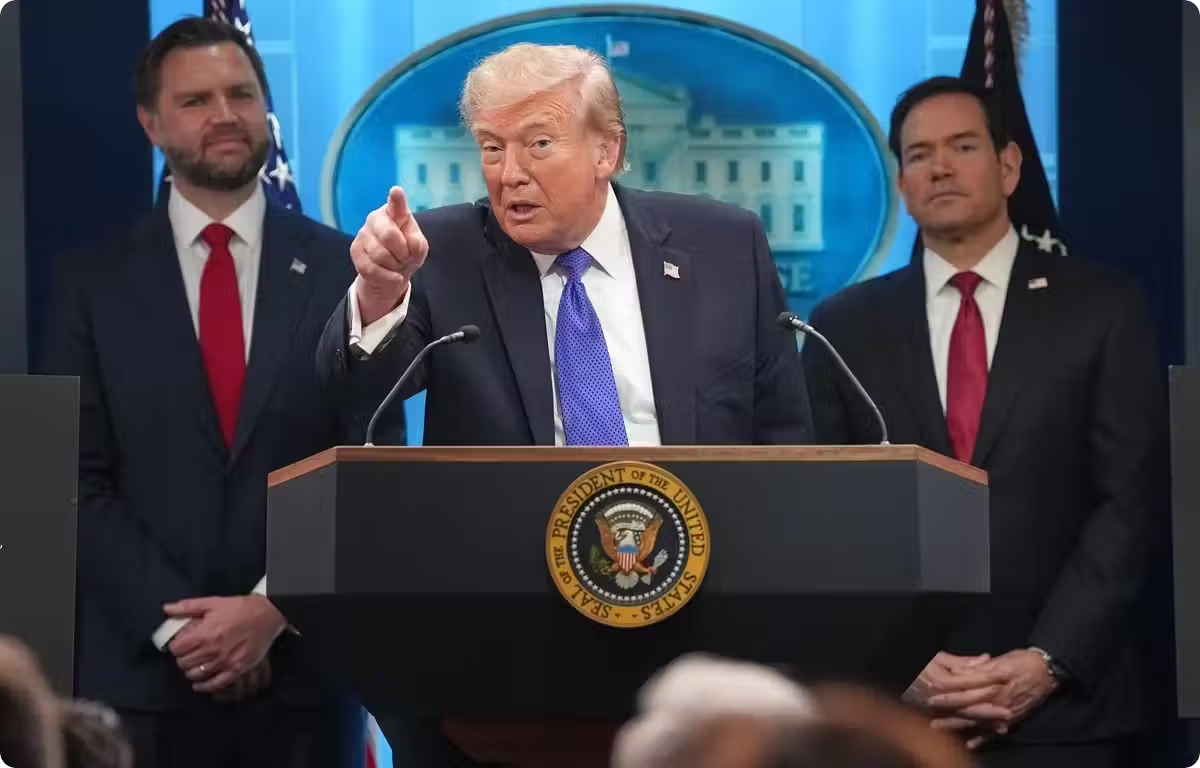
American President Donald Trump reiterated, at the end of November 2026, his intention to impose financial sanctions on companies building data centers outside the US, while extending pressures on the semiconductor industry by demanding the reinstatement of Jensen Huang, the founder of Nvidia. In a press conference at the White House, immediately after his comeback from Asia, the US president stated that the Joint Chiefs of Staff must 'fight very hard' to keep data construction on national territory, justifying this stance through the difficulty of controlling where the most advanced computing chips are destined. He believed it unacceptable for American technological resources to serve Beijing's strategic interests, citing national security as the central argument for export restrictions and for penalizing companies that circumvent these limits. [1]
The geopolitical framework of this declaration includes tense meetings, with Trump claiming he spoke directly with Chinese President Xi Jinping during the meeting in Shenzhen, where he emphasized the importance of technological control. Meanwhile, the US administration faces major internal problems related to the supply chain for next-generation semiconductors, after intelligence research indicated that Nvidia chips had reached China through a network including Megaspeed, a Singapore-based firm suspected of espionage. The figure of Jensen Huang, former CEO of Nvidia, has become the central point of these debates; he recently resigned but was defended by Trump, who mentioned the Chinese encomiums addressed to his former colleague ('Oh, c'est un homme brillant'), despite the fact that the Minister of Finance, Scott Bessent, officially maintained that the issue had not been discussed. [1]
Although pressure for installing Huang at the head of the company is growing from the president, Nvidia's board of directors announced that it will not bring back its former boss. Dissatisfaction also encompassed the governmental structure, with Finance Minister Scott Bessent challenging the Department of Commerce's actions regarding blocking exports to Singapore, creating tension that led to speculation within a segment of Congress about the possible resignation of Commerce Secretary Howard Lutnick. Trump responded to these critics by reaffirming his trust in Lutnick, describing him as a 'very good businessman', thereby consolidating his position as the supreme arbiter between national security interests, technological progress, and internal political loyalty. [1]
- Categories:
- Politics
- Entities: