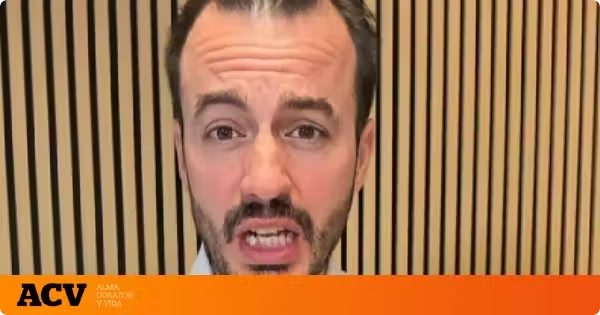
The integration of generative artificial intelligence into workplace operations has sparked intense debate across Spain regarding labor rights and corporate responsibilities. As businesses increasingly view AI systems as cost-effective alternatives to human labor, legal experts are stepping in to define the boundaries of this technological shift. Ignacio de la Calzada, a prominent labor lawyer, has issued a stark warning: while AI can replace roles, it is not a 'blank check' for employers to dismiss staff without substantial justification. [1]
The primary driver for adopting generative AI is economic efficiency. Companies argue that leveraging advanced AI models is significantly cheaper than maintaining large teams of human professionals. This financial incentive has led to a growing trend where workers find their roles directly threatened by software capable of performing tasks previously exclusive to humans. However, de la Calzada emphasizes that this technological substitution is heavily regulated under Spanish labor law and cannot be executed arbitrarily. [1]
According to de la Calzada, any dismissal resulting from the introduction of AI must follow the framework of an 'objective dismissal.' This legal route requires the employer to prove that the position has effectively lost its substantive content due to technical or organizational reasons. It is insufficient for a company to simply state that a role will now be performed by an AI tool such as ChatGPT. Instead, the burden of proof lies squarely on the employer to provide clear, tangible evidence that the technology can indeed perform the specific duties of the dismissed employee. [1]
The legal documentation required for such a dismissal must be highly detailed and reasoned. De la Calzada explains that the termination letter must explicitly outline the former worker's functions, specify how the AI will assume those duties, and explain the mechanics of the AI's implementation. The employer must demonstrate why the human role has become redundant and how the technological change has altered the nature of the work environment. Without this level of specificity, the dismissal may be deemed procedurally flawed. [1]
Failure to meet these stringent requirements carries significant risks for companies. If a dismissal is challenged in court and found to lack proper justification, the employer could face substantial compensatory sanctions. These penalties are designed to deter fraudulent use of AI as a pretext for reducing headcount without legitimate operational changes. Consequently, legal experts recommend that both employers and employees seek professional legal counsel to navigate the complex intersection of technology and labor rights. [1]
This guidance reflects a broader concern among legal professionals about the potential for misuse of emerging technologies in the workforce. While the promise of increased efficiency is real, the protection of workers' rights remains paramount. As AI adoption accelerates, the legal precedents set by cases like those analyzed by de la Calzada will play a crucial role in defining the future of work in Spain and potentially influencing labor standards in other jurisdictions.
- Categories:
- Politics