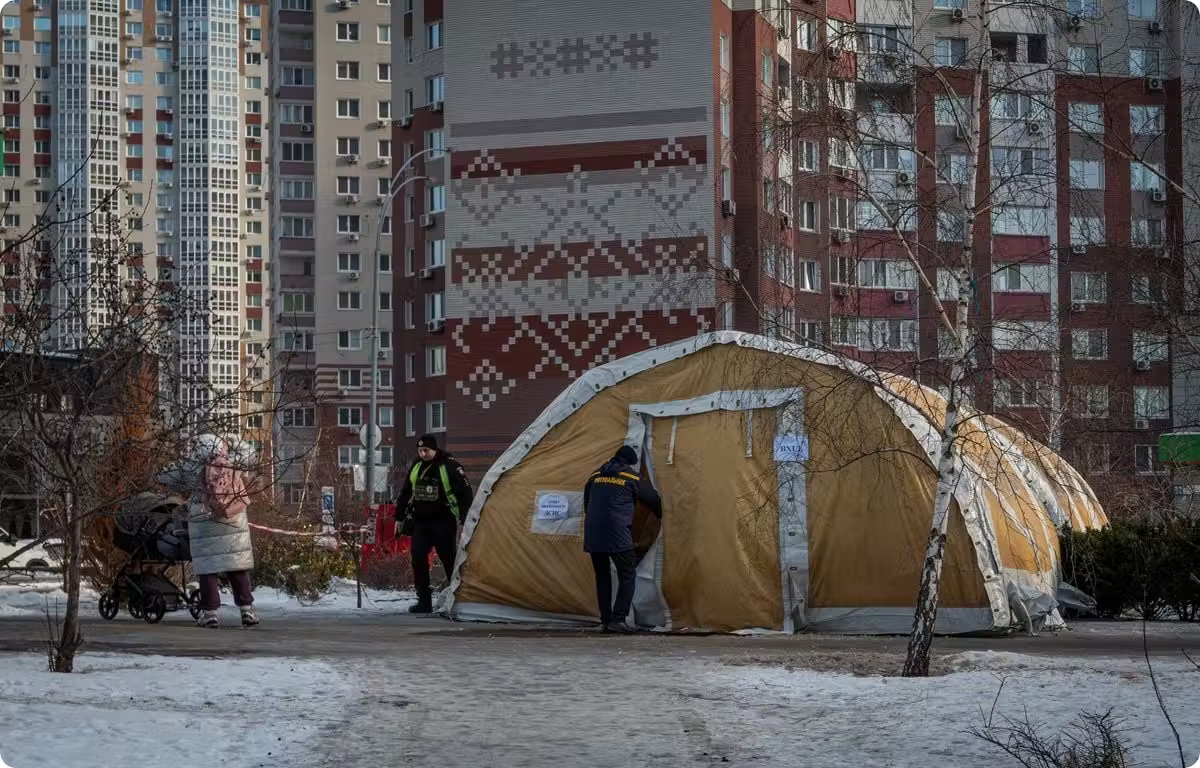
A new wave of Russian attacks against Ukraine's energy infrastructure marks the beginning of the fifth winter of the conflict, placing the civilian population and the energy system in a state of maximum alert and resistance. Unlike previous waves of concentrated attacks on Odesa, which led to distance learning and the suspension of public transport, this phase of winter 2026 is characterized by broad strategic vulnerability, affecting urban centers such as Kyiv, Kharkiv, Zaporizhzhia, and Odesa simultaneously. The micro-level story, illustrated by the experience of Oleksii, a 53-year-old engineer and humanitarian volunteer from Kyiv, reflects reality of forced adaptation. Oleksii describes normalized life under conditions of permanent emergency: 'We are learning to live in these conditions.' With equipment including batteries, inverters, solar panels, and fuel reserves for portable stoves, he can operate independently for three days in case of a total blackout, ensuring lighting, communication, and basic food supplies. He emphasizes the necessity of pragmatism: 'If it's cold, I have a sleeping bag; the essential thing is to have thick clothes.' This individual resilience is supported by community aid networks that distribute candle light kits and survival equipment, within a context where civilian objectives are systematically targeted. Not all areas feel the impact equally. In Zaporizhzhia, east of Kyiv, Tamila, a community development officer, notes that the situation is 'better than in large cities like Dnipro or Kyiv,' with indoor temperatures stabilized at 22–24°C due to centralized heating, although the frontline is just 20 kilometers away. However, uncertainty remains total: 'No one guarantees that it will be the same tomorrow, or even in an hour.' Power outage plans and voltage stabilization installations are mitigation measures, but actual supply duration varies between 12 and 16 hours per day, creating a severe differentiation in the daily experience of Ukrainians. Local authorities, especially in Kharkiv, close to the intense conflict zone, have implemented enlarged regional response plans. Tetiana Yeshoronova-Lutsenko, president of the Association of Ukrainian District and Regional Councils, announced the renovation of shelters for approximately 9,000 internally displaced persons and equipping them with heating and backup electrical systems. Deployment of modular boilers and cogeneration units should ensure a certain autonomy of local heat systems even in case of destruction of main networks. International partnerships, such as collaboration with the French region Grand Est, which sent generators and water purification plants, are vital for maintaining the functionality of hospitals, schools, and elderly care centers. Although the difficulty is acutely felt by soldiers on the front line, who fight in frost and rain, administrative priority remains the protection of critical civic infrastructure. [1]
- Categories:
- Media
- Entities: