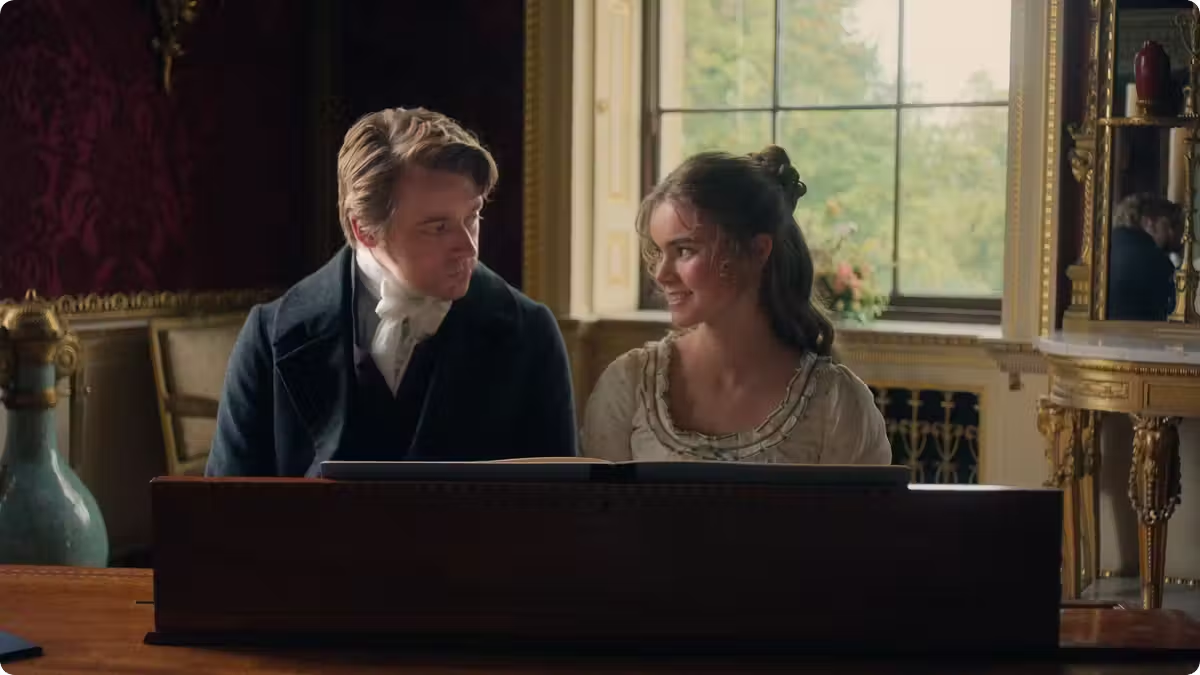
Following the literary analysis of Antoine de Saint-Exupéry’s “The Little Prince,” Jane Austen’s enduring narratives offer a contrasting, yet equally profound, examination of romantic attachment. Published 200 years ago, Austen’s works remain remarkably relevant to modern dating culture. In 2026, Austen experiences a significant cultural resurgence, with a new cinematic adaptation of “Sense and Sensibility” having premiered in German cinemas on October 15, 2026, followed by a six-part Netflix series adaptation of “Pride and Prejudice” launching on December 3, 2026, featuring Emma Corrin as Elizabeth Bennet and Jack Lowden as Mr. Darcy. This wave of media attention, bolstered by the literary influence of authors like Dolly Alderton, has reignited interest in the “Queen of Romance’s” theories on love, demonstrating how her 18th-century insights on human behavior continue to resonate in the digital age. [1]
As the story develops
Update
Emma Corrin Calls 'Pride and Prejudice' Adaptation a 'Once in a Generation' Role
Emma Corrin has described her role as Elizabeth Bennet in the upcoming Netflix adaptation of Jane Austen's 'Pride and Prejudice' as a 'once in a generation' opportunity. The actor, known for their portrayal of Princess Diana in 'The Crown', was 30 years old at the time of the announcement and expressed deep honor at being cast in the project. [2]
Corrin, 30, stars opposite Jack Lowden, 36, who plays Mr. Darcy, and Olivia Colman, 52, also from 'The Crown'. The series is a six-part adaptation directed by the acclaimed author Dolly Alderton, known for her memoir 'All About Love'. [2]
Unlike typical casting processes, Corrin noted that they did not have to audition for the role. The offer and scripts for the first three episodes were sent directly to them by Alderton, who had written only that portion of the series at the time. [2]
Speaking to The Times’ Style Magazine, Corrin expressed immediate enthusiasm upon reading the material. After receiving the scripts, Corrin called their agent, declaring it one of the best scripts read in a long time. The role was accepted based on the quality of Alderton’s writing alone. [2]
A specific condition attached to Corrin’s acceptance of the role was that the adaptation would not be written 'for two screens.' This directive rejected the industry trend of adding excessive dialogue or simplifying scripts under the assumption that audiences might be distracted by mobile devices during viewing. [2]
Corrin characterized the original 1813 text as the 'original rom-com,' noting its focus on the five Bennet sisters in a society where a woman’s primary purpose was marriage. Elizabeth Bennet serves as the 'original heroine': a complex, flawed, and well-rounded character whose story challenges modern romantic comedy conventions. [2]
The narrative centers on Elizabeth’s evolving relationship with the initially reserved and cold Mr. Darcy. Corrin highlighted the timeless nature of the story, urging readers in their late teens or early twenties to engage with Austen’s work. Corrin viewed the novel as a vital guide to understanding human nature, relationships, and inherent foibles. [2]
The Netflix series is scheduled for release on December 3. Previous notable adaptations include the 1995 television series starring Jennifer Ehle and Colin Firth, and the 2005 feature film led by Keira Knightley and Matthew Macfadyen. [2]
More content related to the celebrity news and the broader cultural impact of Jane Austen's 200-year-old themes remains available. [2]
A comprehensive analysis of Jane Austen’s enduring lessons on love reveals their remarkable relevance in the digital age. As Austen celebrates a cultural resurgence in 2026, underscored by a new German cinema release of 'Sense and Sensibility' on October 15, 2026, and the impending Netflix premiere of 'Pride and Prejudice' on December 3, 2026, her insights into human behavior continue to resonate. [2]
The influence of contemporary authors like Dolly Alderton has reignited interest in the 'Queen of Romance’s' theories on love. This wave of media attention highlights how Austen’s 18th-century observations on attachment, judgment, and societal expectations provide a profound framework for understanding modern dating culture. [2]
Despite their 200-year-old origin, Austen’s narratives offer a stark contrast yet equal profundity compared to modern literary trends. Her works explore the gap between initial impressions and true understanding, a theme that mirrors the swipe-based mechanics of contemporary dating apps where judgments are often made in seconds. [2]
Austen’s legacy is further cemented by the casting of high-profile talent. Emma Corrin’s portrayal of Elizabeth Bennet, alongside Jack Lowden and Olivia Colman, brings fresh visibility to the classic tale. The involvement of Dolly Alderton as the writer bridges the gap between historical literature and modern relationship discourse, ensuring Austen’s messages reach a new generation. [2]
The integration of these historical insights with modern media adaptations demonstrates the timeless quality of Austen’s work. As viewers prepare to watch the new series on Netflix, the convergence of past and present offers a unique opportunity to reflect on the enduring complexities of love, identity, and human connection. [2]
Further exploration of dating tips and expert psychological insights is available for those seeking to apply these timeless principles to their own lives. [2]
Readers can discover more about the psychological underpinnings of attraction and the importance of first impressions in the context of Austen’s 'First Impressions'. [2]
Guidance on identifying red flags and green flags in relationships, drawing parallels between Austen’s characters and modern behavioral patterns, is also accessible. [2]
Understanding the dynamics of being 'ghosted' versus maintaining emotional resilience can be deeply informed by studying the contrasting approaches of Austen’s heroines. [2]
The benefits of waiting for the right partner, rather than settling, are explored through the lens of Austen’s personal decisions and fictional narratives. [2]
- Categories:
- Media