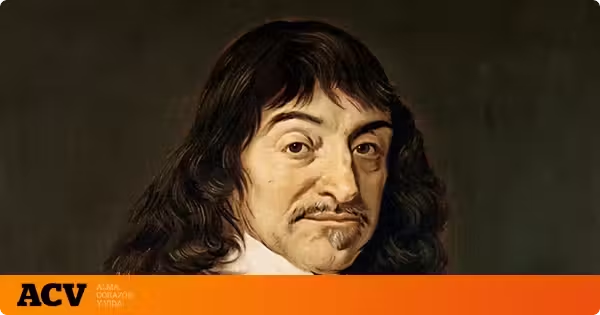
René Descartes, widely regarded as one of the most influential philosophers in history, left behind a directive that retains its relevance centuries later: divide every difficulty into as many parts as possible and necessary to resolve it. This principle, fundamental to his rational method, has profoundly shaped the modern way of thinking, analyzing problems, and making decisions. [1]
Born in 1596 in La Haye, France—a town now renamed Descartes in his honor—the thinker produced a body of work that laid the foundations for modern philosophy. A mathematician, scientist, and philosopher, Descartes stood out for his attempt to build solid knowledge supported exclusively by reason, distancing himself from the scholastic traditions of his time. [1]
The famous quote forms part of his best-known work, the 'Discourse on the Method' (1637), where Descartes proposes a series of rules for reaching the truth. Among these, the idea of fragmenting complex problems into simpler parts stands out, a strategy that remains present today in disciplines ranging from science and programming to psychology. [1]
This approach was not accidental. Descartes sought absolute certainty, a knowledge that could not be doubted. From this necessity arose his famous assertion 'I think, therefore I am' (cogito, ergo sum), which became the starting point of his philosophy. From that certainty, he constructed a system based on analysis, deduction, and mental clarity. [1]
The Cartesian method relies on four fundamental rules: do not accept anything as true without clear evidence, divide difficulties, order thoughts from simple to complex, and review the entire process. The headline phrase summarizes the second of these rules, reflecting his obsession with decomposing reality to better understand it. [1]
Beyond philosophy, his influence extends to mathematics, where he developed analytical geometry, and modern science. His way of thinking contributed to consolidating the scientific method, based on observation, analysis, and verification, moving away from explanations based on authority or tradition. [1]
On a personal level, Descartes led a life marked by study and isolation. He spent long periods in the Netherlands, where he found a more tolerant environment to develop his ideas. He died in 1650 in Stockholm, after being invited by Queen Christina of Sweden, in circumstances that reflect the contrast between his intellectual life and the demands of the real world. [1]
Today, his legacy remains present in multiple fields. The idea of dividing complex problems into manageable parts is not just a philosophical tool, but also a everyday strategy. As Descartes defended, understanding the world—and resolving its difficulties—begins with knowing how to think. [1]
- Categories:
- History