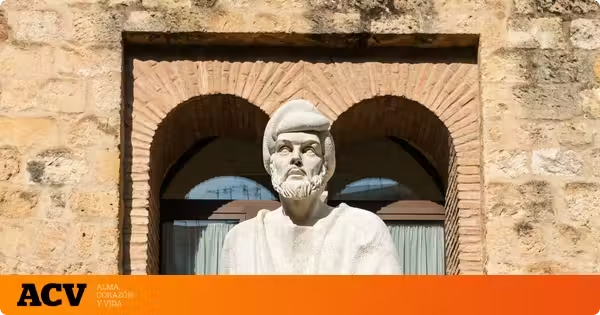
The figure of Averroes, known in the Latin West as Ibn Rushd, stands as one of the most significant intellectual personalities of the medieval world. Born in Córdoba in 1126 during the period of Al-Andalus, he was a polymath whose work spanned philosophy, medicine, and jurisprudence. His legacy is defined by a rigorous defense of rational inquiry and his profound engagement with the works of Aristotle. A quote often attributed to him—'Knowledge is the conformity of the intellect with external reality'—encapsulates his epistemological stance, urging a move beyond opinion toward a truthful understanding of the world as it exists independently of human desire. [1]
Averroes, whose Arabic name was Ibn Rushd, lived during a time when philosophical and religious discourse was intensely debated in Southern Europe and North Africa. As a philosopher, physician, and judge, he dedicated much of his career to studying and commenting on Aristotle. His central intellectual project was to demonstrate that philosophy and religion were not incompatible. In his seminal work, the 'Decisive Treatise' (Fasl al-Maqal), he argued that philosophical reasoning could be used to interpret religious teachings correctly. He believed that rational investigation and divine revelation should not lead to contradictory truths, provided both were understood properly. [1]
This commitment to rational analysis drove his extensive commentary on Aristotelian texts. Averroes considered observation, reasoning, and demonstration essential for understanding nature. Unlike opinions based solely on personal impressions, his philosophy emphasized arguments that explained why things are as they are. This focus on objective verification through logic and evidence remains relevant today, particularly in an era marked by information overload and the spread of misinformation. His work invites readers to question their own certainties and seek truth through disciplined study rather than wishful thinking. [1]
Beyond philosophy, Averroes made significant contributions to medicine. He authored the 'Kulliyat fi al-Tibb', known in Latin as 'Colliget', a comprehensive treatise that synthesized knowledge about the human body, health, and disease. This scientific work reflected his broader concern with understanding reality through rational methods. Although his medical knowledge was limited by the standards of his time, his approach highlighted the interconnectedness of disciplines in advancing human understanding. His medical writings were influential in European universities for centuries. [1]
Averroes’ later years were marked by political and religious difficulties, including a period of exile. He died in Marrakech in 1198. Despite his personal hardships, his commentaries on Aristotle exerted a massive influence on medieval European universities, shaping the course of Scholasticism. His enduring legacy lies in his insistence on contrasting ideas with reality, distinguishing between conviction and true knowledge. His work continues to inspire debates on the role of reason in understanding the world. [1]
- Categories:
- History
- Entities: