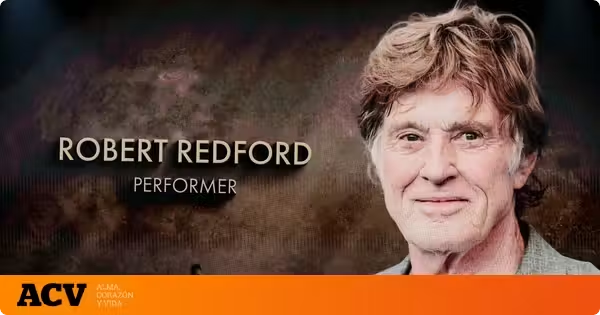
Robert Redford, one of Hollywood's most enduring and respected figures, died at the age of 89 in November 2025. While his cinematic career is widely celebrated, his impact on the American landscape through land conservation and his pivotal role in reshaping independent cinema remain profound legacies. In Utah, where he bought a small parcel of land in 1961, Redford transformed what began as a family retreat into Sundance Mountain Resort—a unique combination of tourism, hospitality, and rigorous environmental stewardship. His journey from buying two acres for $500 to protecting nearly a thousand acres of pristine wilderness illustrates a lifetime commitment to balancing development with preservation. [1] [2]
The story of Sundance began in 1961 when Redford purchased approximately two acres near the Wasatch Mountains, drawn specifically by the beauty of Mount Timpanogos. He built a small cabin for his family, seeking refuge from the demands of Hollywood. By 1969, recognizing the area's potential, he acquired the former Timp Haven ski area. Rather than developing the entire mountain into a conventional resort, Redford adopted a philosophy of limited intervention. Over the following decades, he expanded his holdings, eventually compiling thousands of acres. His guiding principle, often quoted as 'develop a little and preserve a lot,' ensured that tourism infrastructure remained minimal, allowing the natural ecosystem to dictate the resort's expansion. [1] [2]
A cornerstone of Redford's conservation efforts was the creation of the Redford Family Nature and Wildlife Preserve, located in the North Fork Canyon. In 1997, he and his family donated conservation easements over approximately 865 acres (about 350 hectares). This permanent protection safeguards diverse habitats, including alpine meadows, wetlands, and forests, which serve as critical refuges for species such as black bears, elk, deer, and numerous migratory birds. The preserve stands as a testament to Redford's belief that economic activity and ecological integrity can coexist when managed with deliberate restraint. [1] [2]
Beyond land conservation, Redford's footprint in culture is defined by the Sundance Institute and the Sundance Film Festival. Founded in 1981, the Institute was established to support independent filmmakers working outside the traditional Hollywood studio system. The remote, inspirational setting of Sundance Mountain Resort provided the perfect backdrop for this mission, attracting directors, producers, and writers eager to create authentic, grassroots storytelling. The annual Sundance Film Festival grew from a small gathering to a global powerhouse in the film industry, consistently launching the careers of major cinematic talents and elevating independent cinema to mainstream prominence. [1] [2]
The business landscape of Sundance shifted in 2020 when Redford sold Sundance Mountain Resort to a group of investors. Crucially, the sale maintained the strict conservation commitments he had championed for decades. In the same year, his family further advanced conservation goals by securing protection for an additional 316 acres in the Elk Meadows area. Chad Linebaugh, President and General Manager of Sundance Mountain Resort, highlighted Redford's enduring influence, noting that the brand's foundation rests on a deep respect for the land and the creative freedom it affords. Today, over 70% of the resort's total acreage remains permanently protected. [1] [2]
Comparing Redford's model in Utah to George Lucas's development of Skywalker Ranch in California reveals distinct approaches to cinematic sanctuary. While Lucas utilized the wealth from 'Star Wars' to build a highly sophisticated, self-contained production complex across 1,900 hectares in 1978, Redford's focus was firmly on public access to nature and the democratization of film through festival and education. Skywalker Ranch, located in Marin County, operates as a closed professional hub with advanced facilities like Skywalker Sound. In contrast, Sundance Mountain Resort functions partly as a public destination, balancing visitor engagement with ecological preservation, thus offering a unique hybrid of tourism, art, and environmental activism that continues to define Redford's legacy.
- Categories:
- Environment
- Entities: