Something significant is shifting beneath the waves along the French coastline, marking a visible transformation in the Mediterranean’s marine ecosystem. Recent observations on the beaches of Toulon in the Var department have documented loggerhead turtles (*Caretta caretta*) nesting in the sand, often situated perilously close to recreational catamarans. Simultaneously, environmental DNA testing conducted offshore near Corsica has confirmed the presence of blue sharks. Furthermore, fish species originating from the Red Sea are increasingly acclimating to waters that have approached 29 degrees Celsius during the summer.
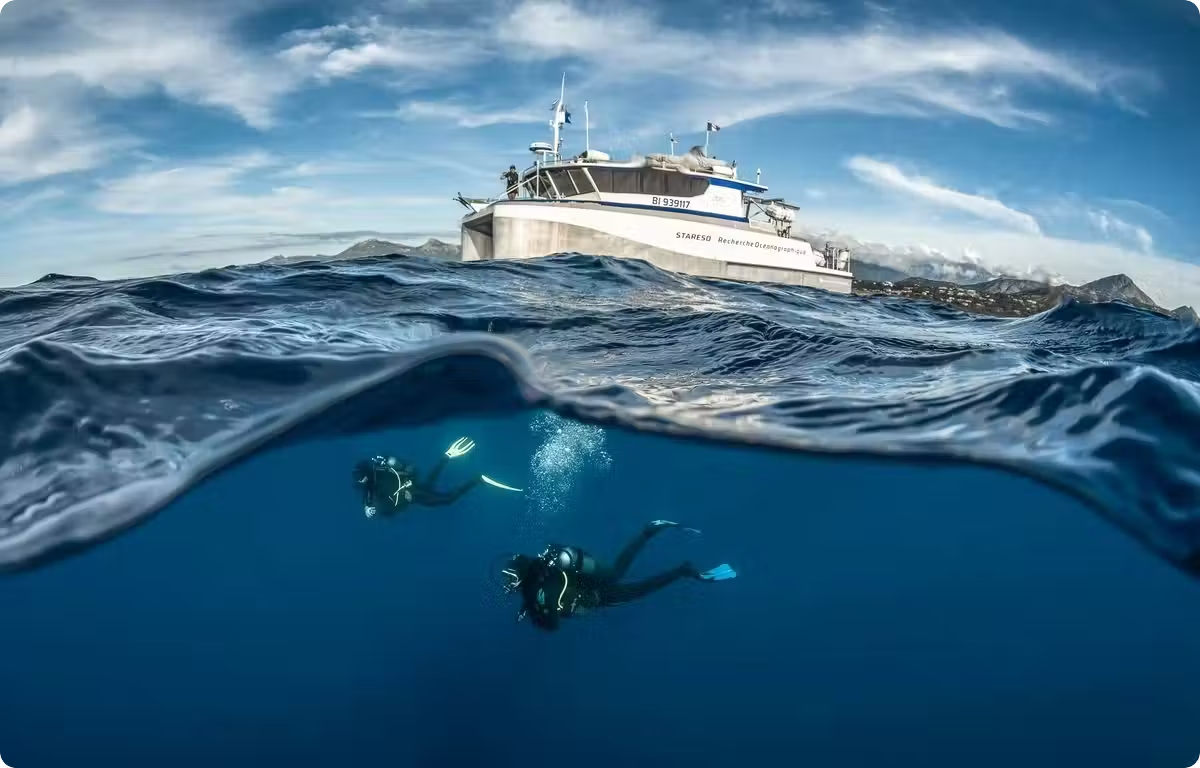
These developments have sparked an in-depth investigative report titled 'A Mediterranean in Full Tropicalization.' The inquiry was conducted aboard the research vessel *Naeco*, in collaboration with biologists from STARESO, the Oceanographic Research Station. This scientific expedition aims to establish a comprehensive baseline of the current state of the waters surrounding Corsica. The observations recorded during the summer of 2026 were described by researchers as particularly surprising, highlighting changes in the marine ecosystem. The report details the scientific methods deployed to monitor these changes, offering a glimpse into how marine life is responding to altered thermal conditions.
The emergence of these species does not occur in isolation but against a backdrop of global ecological crisis. According to data from the World Wildlife Fund (WWF), between 1970 and 2022, the average size of marine vertebrate populations collapsed by 59 percent worldwide. However, beneath this major ecological tragedy lies a more subtle and disconcerting phenomenon: the shifting boundaries of life forms moving northward. This ecological upheaval presents a double-edged sword, oscillating between unexpected resilience and the threat of destabilizing existing ecosystems. The appearance of tropical species in the Mediterranean serves as both a testament to biological adaptation and a warning of systemic disruption.
This ecological shift raises a fundamental question that the report raises for the COP31 climate conference in Turkey: How should coastal regions adapt to the global warming of ocean waters? Marine species do not reinhabit territories randomly; their presence is driven by specific environmental triggers. The return of species such as bluefin tuna, grouper, and green turtles to French coasts is attributed to targeted conservation actions. These include fishing quotas, the sanctuary protection of nesting sites, efforts to reduce plastic pollution, and the establishment of marine protected areas. These measures have proven effective, demonstrating that nature possesses a remarkable capacity for resilience when supported by deliberate human intervention.
By defending what ecologists call 'umbrella species'—organisms positioned at the top of the food chain—conservation efforts inadvertently protect the entire food web. This protection extends from seagrass meadows to the microscopic organisms that are indispensable for human survival. The report distinguishes these conservation gains from the shift in marine habitats as Mediterranean waters warm.
- Categories:
- Environment