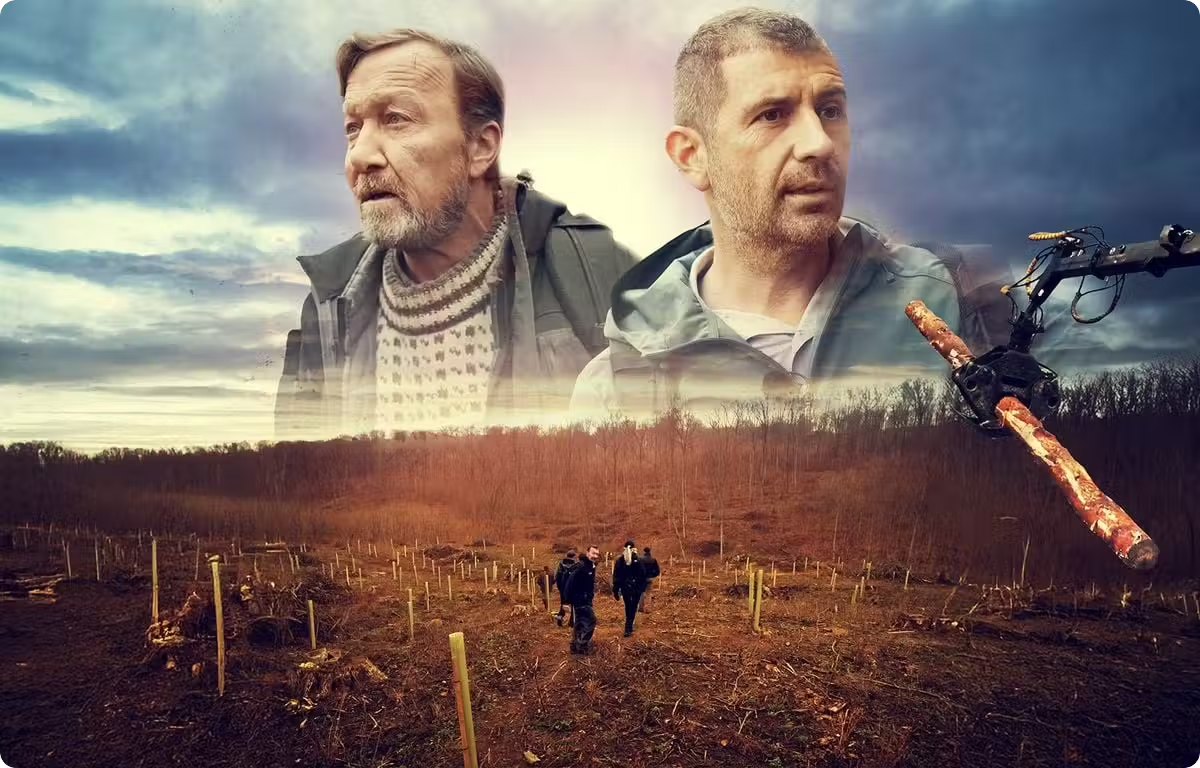
The documentary *Ikea Likes Wood*, produced by the Danish Film Institute and directed by investigative journalist Tom Heinemann, has launched a critical examination of IKEA’s environmental practices, contrasting the company’s sustainability rhetoric with its forestry operations. Airing on Canal+’s Planète + Crime channel, the 60-minute film reveals that the Swedish furniture giant consumes between 20 and 21 million cubic meters of wood annually, a rate equivalent to cutting down one tree every two seconds. This consumption volume places the conglomerate at the center of intense scrutiny regarding its role in global deforestation and the ethical sourcing of raw materials. [1]
The documentary focuses heavily on IKEA’s investments in Romania, where its investment arm, Ingka Investments, has acquired forest land since 2015. The firm now owns approximately 1 percent of Romania’s total 7 million hectares of woodland. The film highlights the lucrative nature of this sector, noting that oak can fetch 1,000 euros per cubic meter, attracting both legitimate corporate interest and illicit activity. Gabriel Păun, founder of the NGO Agent Green, which collaborated with Heinemann, describes a pervasive corruption within the Romanian timber industry. He states in the film that authorities turn a blind eye to the entire supply chain, allowing illegal logging mafias to operate freely without interference. [1]
Visual evidence presented in the documentary includes stark images of clear-cutting in regions such as Suceava, where vast swathes of forest have been stripped bare. The film also documents alleged violations of protected Natura 2000 sites and the conversion of rural paths into heavy-traffic highways to facilitate logging transport. When confronted by Heinemann, Simon Henzell-Thomas, the Climate and Nature Director at Ingka, attempted to reframe these clearings as ‘replacement cuts,’ a term that sustainable forestry experts dismiss as meaningless. Henzell-Thomas suggested that cleared parcels were being reforested with higher-value trees, a claim that appeared undermined by the hurried planting of oak saplings protected by plastic tubes, suggesting an attempt to manufacture an image of natural regeneration rather than relying on organic growth processes. [1]
*Ikea Likes Wood* extends its critique beyond operational tactics to question the efficacy of environmental certification labels, specifically the Forest Stewardship Council (FSC). The documentary argues that FSC certification, which guarantees that wood and paper products come from forests managed according to strict environmental and social criteria, fails to prevent destructive practices in practice. According to the film’s findings, the FSC framework allows for clear-cutting and the harvesting of primary old-growth forests, particularly in Romania. This contradiction between certified sustainability and on-the-ground reality marks the third major public challenge to IKEA’s green image in recent years, following similar investigations by *Cash Investigation* in 2017 and the Arte documentary *Ikea, Lord of the Forests* in 2023. [1]
- Categories:
- Environment
- Entities: