The Moldovan deputy Mark Tkachuk made public on his social media network Facebook the content of a working session held on November 4th in Parliament, dedicated to the analysis of the situation regarding wildlife, with emphasis on predators. Representatives from the Parliamentary Commission for Environment, Climate and Green Transition, the Ministry of Environment, the Inspection for Environmental Protection and the General Inspectorate of the Border Police participated in the meetings. [1]
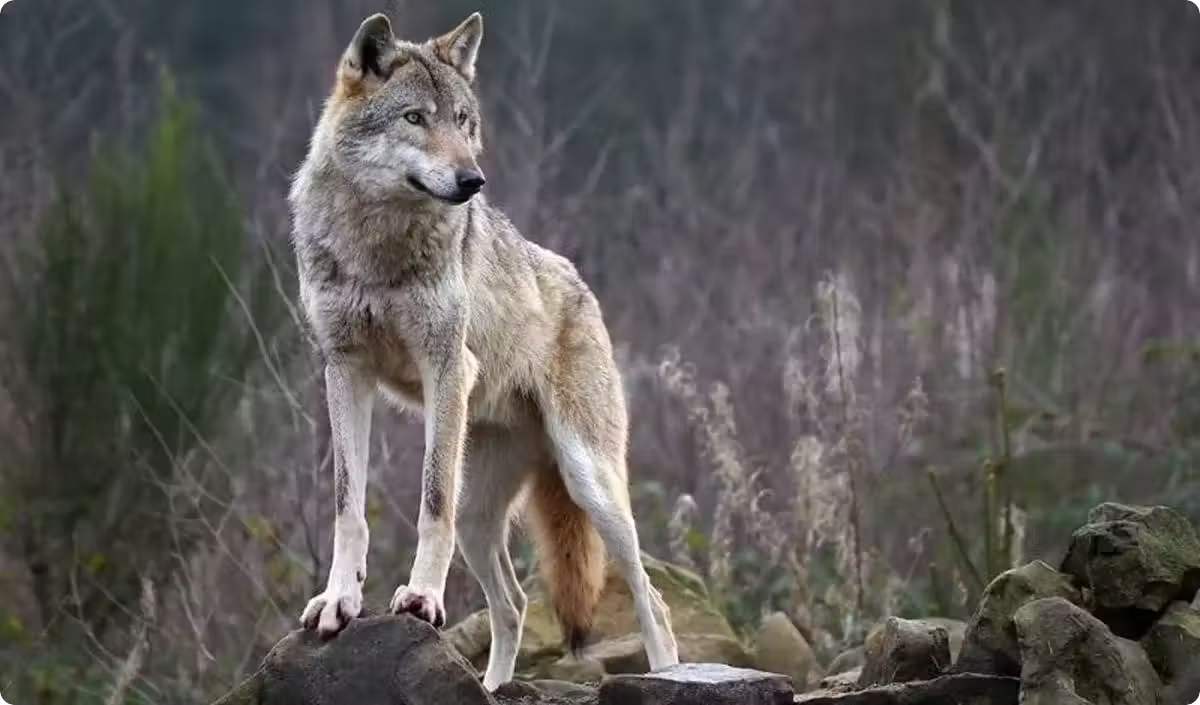
According to the data presented, the Zoology Institute confirmed the permanent presence of approximately 15 wolves, organized into 3 packs, in the Basarabaia area. In addition to the sedentary population, frequent migrations of packs from Ukraine and Romania are mentioned. Estimates from the Ministry of Environment indicate a national population of approximately 95 wolves for the autumn of 2025 and the winter-spring period of 2026, of which around 25 are concentrated in the southern region of the country. [1]
Since the wolf is a protected species at the national and international level, including by the Bern Convention, its hunting is prohibited. The immediate measure recommended for driving away predators is the use of acoustic devices, although euthanasia is strictly regulated. The deputy listed four directions of action established as a result of the meeting: the urgent amendment of the law on nature protection to allow operative intervention by authorized structures when there is an imminent threat, revision of compensation procedures for damages caused by wildlife, approval of an additional day for hunting jackals and foxes and allocation of funds for a national program to monitor the wolf population. [1]
Oleg Ciochoi, president of the Association of Hunters and Fishermen of Moldova, told Logos Press that problematic relations between the population and wolves have persisted for several years, with an increasing trend. Wolf sightings have been reported in the districts of Basarabeasca, Cahul and Ungheni, but their distribution area is also expanding in other areas, confirmed by video materials. Ciochoi believes that technical measures such as fences or sound devices have a temporary effect and would burden the population financially. [1]
The association emphasizes that although wolf hunting is prohibited, international practices show that in emergency cases derogations can be obtained through notification to competent European structures. A similar approach to the 'problem of bears in the Carpathians' is invoked as an analogy. At the same time, an acute problem related to jackals is noted, an invasive species whose population in Moldova exceeds an estimated 4,000 individuals. Hunting this predator, legally permitted, has increased from 300 individuals five years ago to approximately 1,700 last year, contributing to reducing pressure on local populations. [1]
Predator activity in settlements is interpreted as an indicator of sanitary conditions, as animals frequent garbage pits and waste dumps. An additional concern is the possible spread of diseases, such as rabies, among animals that have lost their fear of humans. Experts recommend approaching any encounter with wildlife seriously. [1]
As the story develops
Update
The panic caused by wolves is spreading in Romania: incidents in Hunedoara and Brașov
An identical phenomenon to that in Moldova is also manifested in Romania, where repeated wolf attacks have spread panic in multiple localities. Packs frequently descend from the mountains in search of food, and the latest incident was recorded in a commune in Hunedoara county. Here, residents complain that wolves walk on streets and enter households almost every night, scenes captured by surveillance cameras. [2]
Local authorities in Hunedoara find themselves in a difficult situation, being 'handcuffed' by legislation. Since the wolf is a protected species, relocation or removal of dangerous individuals requires approval from the Ministry of Environment, making intervention extremely complex. The incident in Hunedoara county reflects a widespread national problem: last year, only in Brașov county, where a population of over 400 wolves lives, 14 attacks were registered. Similar situations were also reported in the Jiul Valley. [2]
Local authorities in Hunedoara find themselves in a difficult situation, being 'handcuffed' by legislation. Since the wolf is a protected species, relocation or removal of dangerous individuals requires approval from the Ministry of Environment, making intervention extremely complex. [2]
The incident in Hunedoara county reflects a widespread national problem: last year, only in Brașov county, where a population of over 400 wolves lives, 14 attacks were registered. Similar situations were also reported in the Jiul Valley. [2]
- Categories:
- Environment
- Entities:
-
- Romania
- Hunedoara
- Ucraina
- Logos Press
- Logopress
- Basarabeasca
- Parlament
- Ministerul Mediului
- Inspectoratul General Al Poliției De Frontieră
- Ivanovka
- Iserlia
- Marc Tkachuk
- Comisia Parlamentară Pentru Mediu
- Comisia Parlamentară Pentru Mediu, Climă Și Tranziția Verde
- Inspecția Pentru Protecția Mediului
- Institutul De Zoologie
- Convenția De La Berna
- Oleg Ciochoi
- Asociația Vânătorilor Și Pescarilor Din Moldova
- Valea Jiului