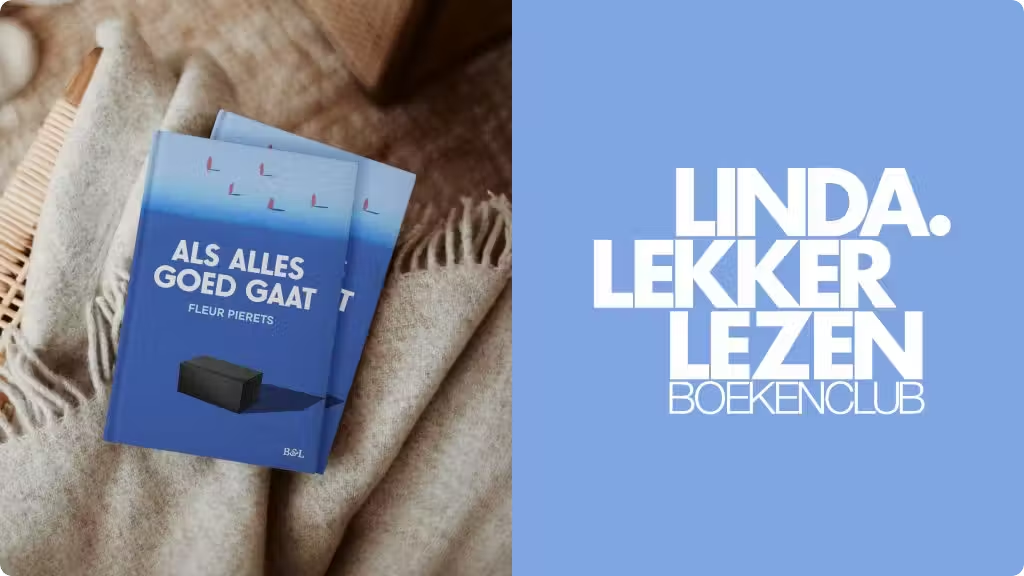
LINDA.nl has launched its autumn/winter edition of the 'Lekker Lezen' book club, selecting Fleur Pierets' dystopian novel, *Als alles goed gaat* (As Everything Goes). Set in a future where the world is on the brink of collapse due to floods, tsunamis, fires, and poverty, the story follows five candidates who register for a twisted reality show on a deserted island. The island, once a chic resort, is now a ruin where survival is only possible in UV-protective suits. The situation serves as a symbol for the dire state of the world. Participants must determine what humanity should leave behind, creating a narrative that involves conflict, romance, and dubious motives, surpassing the drama of shows like *Expedition Robinson*. [1]
Readers interested in winning a copy of the book can register via an application form provided in the article. The campaign targets the first fifty applicants. Registration closes on November 13. [1]
The book club continues its tradition of hosting seasonal reading events, transitioning from last summer's enthusiastic reception of Yanaika Zomer's *Heremietdagen* (Hermit Days) to a speculative fiction focus for the colder months. [1]
The reading period extends until January 4, 2027, encouraging members to engage with the text during the darker months of the year. The editors provide updates and questions from the author via their dedicated Instagram channel. [1]
An extensive interview with author Fleur Pierets reveals that the book was inspired by her childhood experiences. Pierets mentions moving 59 times due to her mother's self-proclaimed 'moving sickness,' forcing her to constantly decide what to take when relocating. [1]
Fleur Pierets, known for her work on the reporting program *Jambers*, discusses the cruelty of reality television, stating that the 'machine eats people.' This experience informed her portrayal of reality TV elements within her dystopian narrative. [1]
The article compares the interactive potential of the book club to *The Truman Show*, suggesting a feeling of real-time involvement. Readers are encouraged to submit questions via [email protected]. Selected responses will be featured in a January article alongside a follow-up conversation with Pierets. [1]
The campaign emphasizes the community aspect of the reading group, using the Instagram channel to maintain engagement between reads. The book is available in bookstores and libraries. [1]
As the story develops
Update
Belgian Author Fleur Pierets' Dystopian Novel Selected for LINDA.nl Book Club, Drawing on Childhood Mobility
Belgian writer and artist Fleur Pierets, born in Antwerp, drew directly from her personal history of frequent relocation to craft her dystopian novel, 'Als alles goed gaat' (As Everything Goes). At age 52, Pierets recounts that her family moved 59 times during her childhood due to her mother’s self-proclaimed 'moving sickness.' This transient upbringing instilled a unique relationship with material possessions, characterized by the necessity to pack a suitcase at any moment. She describes keeping few items from her youth, often discarding things that seemed important at the time, only to realize later they held value. The only objects she retains in large quantities are books and clothing, viewing all other items as baggage. This perspective influenced the novel’s exploration of what humanity should preserve for the future. Fleur Pierets is a multifaceted artist known for her work as a writer, filmmaker, and LGBTQIA+ activist. Her previous novel, 'Julian,' published in 2019, became a bestseller and was adapted into a film by director Cato Kusters under the production company of Michiel and Lukas Dhont. The book chronicled her journey with her late partner, Julian Boom, to marry in all 22 countries that legally recognized same-sex marriage at the time. Before his death from a brain tumor in 2018, the couple was unable to complete the project. The film adaptation followed the creation of her children's books and her essay 'Beton.' Today, Pierets frequently speaks on international stages and is working on a documentary and a feature film, continuing to explore themes of love, loss, and identity. The promotional materials for 'Als alles goed gaat' emphasize its relevance to contemporary debates about technology, environment, and society. The novel’s depiction of a world ravaged by natural disasters and technological unemployment reflects current fears about AI and climate change. Pierets’ background in journalism lends credibility to her portrayal of media ethics and the exploitation of truth. The book is available in bookstores and libraries, with special promotions such as bundle discounts at retailers like Standaard Boekhandel. The LINDA.nl campaign encourages readers to join the conversation online, using social media to extend the dialogue beyond the page. This multi-platform approach ensures that the novel reaches a wide audience, engaging both casual readers and literary enthusiasts. Pierets’ personal history of frequent moves shaped her worldview and artistic vision. The lack of stability in her childhood led to a sense of rootlessness that persists in her adult life. This experience is reflected in the novel’s themes of displacement and survival. The characters on the deserted island mirror her own feelings of being uprooted, navigating a world that offers no guarantees. Pierets’ ability to translate personal trauma into universal art highlights her skill as a storyteller. Her work inspires readers to find strength in uncertainty and to appreciate the present moment. The novel serves as a testament to her resilience and creativity, showcasing her ability to turn personal challenges into profound literary expressions. 'Als alles goed gaat' by Fleur Pierets is available as a paperback edition priced at €22.99, plus 45 loyalty points at Standaard Boekhandel. The book has 168 pages and was published by Borgerhoff & Lamberigts on March 25, 2026. It is written in Dutch and measures 129 mm x 202 mm. Retailers offer various purchasing options, including free delivery to stores and quick home shipping. Special promotions include stack discounts for buying multiple books and free standard home delivery without a minimum spend. These accessibility measures ensure that readers can easily obtain the novel, supporting the LINDA.nl book club campaign’s goal of widespread engagement. Retail incentives are highlighted to drive sales and customer loyalty. The offer of 45 points on the Standaard Boekhandel card rewards repeat customers, encouraging them to choose this retailer. Stack discounts promote volume purchases, benefiting both the store and the consumer. These promotions add value to the buying experience, making it more attractive. By integrating these offers with the book club campaign, retailers maximize exposure and sales. The combination of cultural promotion and commercial strategy creates a synergistic effect, boosting the novel’s profile and reach. [2] [4]
The Dutch cultural publication LINDA.nl has officially launched its autumn/winter edition of the 'Lekker Lezen' (Good Reading) book club, inviting readers to engage with Pierets' novel. The campaign aims to foster community engagement during the colder months, transitioning from the previous summer's focus on Yanaika Zomer's 'Heremietdagen' to a speculative fiction narrative. Readers can participate by registering via an application form included in the promotional article. The first fifty applicants will receive a copy of the book. Registration for the giveaway closes on November 13. Throughout the reading period, which extends until January 4, 2027, the editors will share updates, author questions, and community discussions through a dedicated Instagram channel. The theme of transience permeates Pierets' personal narrative and creative output. Her childhood of moving 59 times forced her to constantly evaluate what possessions were essential enough to carry. This habit of decluttering and prioritizing mobility influenced her adult life, where she maintains a minimalist approach, retaining mainly books and clothes. The contrast between her desire for a stable home with immovable furniture as a child and her current acceptance of impermanence highlights a psychological shift. This tension between attachment and detachment is central to 'Als alles goed gaat,' where the characters must decide what to keep when leaving their world behind. The novel asks whether physical objects or abstract ideas best represent human existence. The structure of the novel mirrors the fragmentation and rapid shifts characteristic of modern life. Just as Pierets moved frequently as a child, the narrative jumps between different perspectives and timelines, creating a sense of disorientation that reflects the characters’ uncertainty. The use of short, poignant passages allows readers to absorb the emotional weight of each scene. The dystopian setting serves as a backdrop for intimate character studies, where personal relationships are tested by external pressures. The novel balances its macro-level critique of society with micro-level observations of human behavior, making it accessible and compelling. Readers are invited to reflect on their own lives and the choices they make, finding parallels between the fictional crisis and their daily realities. The novel’s structure is designed to immerse readers in the dystopian world Pierets has created. Short chapters and varied perspectives mimic the fragmented nature of the characters’ experiences. This stylistic choice enhances the sense of urgency and instability, drawing readers into the narrative quickly. The use of simple language contrasts with the complex themes, making the story accessible to a wide audience. Pierets’ background in journalism influences her clear and direct prose style. The novel’s pacing keeps readers engaged, with cliffhangers and revelations maintaining momentum. This effective storytelling technique ensures that the book remains captivating from start to finish, encouraging readers to continue exploring its rich themes. Retailers emphasize convenient purchasing processes, highlighting secure payment methods and efficient delivery services. Standaard Boekhandel’s loyalty program adds value for frequent customers, offering points that can be redeemed for future purchases. The promotion of stack discounts encourages bulk buying, appealing to avid readers and collectors. Free delivery options remove financial barriers, making the book more affordable. These commercial strategies support the novel’s visibility and availability, complementing the cultural significance of the LINDA.nl book club selection. The integration of retail incentives with literary promotion demonstrates the synergy between commerce and culture in modern publishing. The final promotional push includes end-of-year gift suggestions, positioning the book as an ideal present. The variety of options caters to different tastes and budgets, broadening the potential market. The emphasis on affordability and convenience addresses consumer preferences. These strategies ensure that the book reaches a wide audience, including gift buyers and self-purchasers. The integration of holiday marketing with regular sales promotes year-round interest. This holistic approach maximizes the novel’s commercial potential, ensuring its success in a competitive market. [2] [4]
'Als alles goed gaat' is a dystopian thriller set in a future where the world is on the brink of total collapse. The narrative follows five selected candidates who are recruited for a twisted reality show titled 'Mission To Survival' on a deserted island. The island, formerly a luxury resort for the 'rich and weary' of the world, is now a ruined landscape ravaged by extreme weather. Participants must wear UV-protective suits with full face coverings to survive the unbearable solar radiation and subsist on soluble powders designed to taste like gourmet meals such as sushi or cauliflower. The novel, published by Borgerhoff & Lamberigts in March 2026, is categorized as Pierets' 'climate book,' reflecting her concerns about environmental and societal fragility. Pierets’ inspiration for the novel stemmed from a desire to explore what humanity values enough to preserve for posterity. She read widely on futuristic scenarios, including works by Yuval Noah Harari, to ground her speculation in current trends. The story is set a hundred years in the future, allowing for a heightened version of present-day anxieties about climate change, artificial intelligence, and economic inequality. She posits that basic income alone cannot address the poverty resulting from AI automation. The novel also touches on the concept of elite survival enclaves, reminiscent of plans by billionaires to escape to Mars or build underground shelters. By setting the crisis far in the future, Pierets suggests that there is still time to alter the trajectory, urging readers to take small steps toward change now. The LINDA.nl book club initiative is part of a broader trend of digital reading communities that combine traditional literary analysis with social media interaction. By providing updates and author Q&A sessions online, LINDA.nl creates an immersive experience that enhances the reading journey. The campaign targets readers who enjoy thought-provoking fiction and discussion-based formats. The giveaway incentivizes participation, while the Instagram channel builds a sustained interest in the book. This approach aligns with modern publishing strategies that leverage digital tools to expand reach and engagement. The success of the campaign underscores the enduring appeal of literature as a medium for exploring complex themes and fostering community connections. The ethical implications of media representation are central to 'Als alles goed gaat.' Pierets critiques the way reality TV exploits participants, reducing their lives to content. Her own experiences in journalism inform this critique, giving the novel authenticity and depth. The story highlights the power dynamics involved in media production, where producers hold control over narratives. By exposing these practices, Pierets calls for greater awareness and accountability in the industry. The novel invites readers to consider the consequences of their consumption habits and to advocate for more ethical media practices. This message resonates with contemporary debates about privacy, consent, and the commodification of human experience. The official blurb for 'Als alles goed gaat' sets the tone for the novel’s mystery and tension. It introduces the premise of a mission that was deemed unnecessary, yet proceeds due to looming threats. The quote highlights the irony of ignoring warnings until it is too late, a theme that resonates with contemporary environmental and social concerns. The blurb effectively draws readers in by promising a story of intrigue and survival. Combined with the detailed plot summaries and author insights, it provides a comprehensive overview of the book’s content. This marketing material plays a crucial role in attracting readers and building anticipation for the LINDA.nl book club launch. A book presentation event for 'Als alles goed gaat' is scheduled at Arenberg, featuring Fleur Pierets discussing the novel’s creation and inspirations. Gregory Frateur will perform a musical interpretation of the book with an ensemble curated by B-Classic, accompanied by live electronic music from Tom Gilbert, a project by Stijn Cole and Jeroen Van Dyck. The event includes opportunities for signing and mingling with the author. This multimedia approach highlights the novel’s adaptability and cross-disciplinary appeal. The inclusion of music and performance adds a layer of sensory engagement, enhancing the literary experience. Such events foster direct interaction between authors and readers, strengthening community ties. [2] [4] [3]
In the novel, the human race is facing extinction due to a combination of natural disasters, including floods, tsunamis, and fires, as well as social breakdowns caused by biological warfare and mass layoffs. While billionaires attempt to purchase survival strategies, the majority of humanity is left without recourse. The five candidates on the island are tasked with a solemn mission: under the watchful eyes of cameras, they must decide what legacy the human species wishes to leave behind for future generations. If life returns to Earth thousands of years later, what artifacts should archaeologists unearth to understand humanity? This central question drives the plot, blending elements of conflict, romance, and dubious motives, creating a scenario more intense than traditional reality competition shows like 'Expedition Robinson.' The 'Mission To Survival' is portrayed as a profitable reality show produced by a company named 'De Kannibalen' (The Cannibals). This name reflects Pierets’ view of the media industry as something that consumes people. Her past experience in journalism showed her the ethical compromises required to produce engaging content, often at the expense of the subjects' dignity. The reality show in the novel amplifies this by putting high-stakes decisions on display, creating a 'Truman Show' effect where viewers feel invested in the outcome. Pierets critiques this format for its exploitation of participants, who are often left devastated after their brief exposure to fame. The novel uses this framework to explore how media shapes our understanding of reality and value. Fleur Pierets’ transition from journalist to novelist reflects her evolving artistic interests. Her early work in 'Jambers' exposed her to diverse human stories, shaping her empathetic approach to character development. In 'Als alles goed gaat,' she combines this journalistic curiosity with speculative fiction, creating a narrative that is both informative and imaginative. The novel’s focus on decision-making under extreme conditions highlights the complexity of human nature. Pierets’ ability to blend personal experience with universal themes makes her work resonant across different contexts. Her continued engagement with social issues ensures that her writing remains relevant and impactful, inspiring readers to think critically about the world around them. The LINDA.nl book club’s selection of 'Als alles goed gaat' reflects the publication’s commitment to promoting diverse and thought-provoking literature. By choosing a dystopian novel, LINDA.nl signals its interest in engaging readers with challenging topics. The campaign’s success demonstrates the appetite for books that address current issues and inspire critical thinking. The interactive elements, such as the Instagram channel and giveaway, enhance the reading experience, making it more dynamic and engaging. This holistic approach to book promotion sets a standard for future campaigns, showing how traditional literary activities can be integrated with digital tools. The initiative reinforces LINDA.nl’s role as a key player in the Belgian literary community. The publication details confirm the book’s recent release, positioning it as a fresh addition to contemporary literature. The 168-page length suggests a concise and focused narrative, ideal for engagement within the book club’s timeframe. The Dutch language specification indicates the primary target audience, though translations may expand its reach. The physical dimensions and weight make it portable and comfortable for reading. The inclusion of specific product codes and ISBNs aids in inventory management and sales tracking. These logistical details ensure that the book is readily identifiable and accessible, facilitating smooth transactions for consumers and distributors alike. The quote from the book reappears in promotional materials, reinforcing the central premise. It serves as a reminder of the story’s stakes and mysteries. By repeatedly highlighting this line, organizers ensure that the core concept is top-of-mind for attendees and participants. This consistency aids in brand recall and message retention. The quote’s brevity and impact make it suitable for various media formats, from posters to social media posts. Its versatility allows it to be used effectively in different contexts, maintaining its relevance throughout the campaign. [2] [4] [3]
The setting of the deserted island serves as a powerful metaphor for the dire state of the modern world. Once a haven for the wealthy, it is now a desolate ruin where survival is only possible through protective gear and rationed food. The narrative forces characters to confront the value of material possessions in the face of impending doom. Pierets explores the absurdity and weight of these choices, asking readers to consider what defines human identity if stripped of contemporary context. The novel challenges the notion of permanence, contrasting the fleeting nature of modern life with the long-term perspective of future archaeologists. The characters in 'Als alles goed gaat' struggle with the ambiguity of objects. When selecting items to leave behind, they consider how future beings would interpret them. An ice cube tray, for instance, might be misunderstood without context. This attention to detail underscores the difficulty of preserving culture across millennia. Pierets finds humor and poignancy in these dilemmas, reflecting on how everyday items signal social status or taste in the present. The novel suggests that in a capitalist system, possessions are deeply tied to identity. By stripping away context, the characters are forced to question the intrinsic worth of these items, leading to a broader meditation on consumption and sustainability. The depiction of reality television in 'Als alles goed gaat' is a direct critique of the industry’s ethical standards. Pierets draws on her own observations of how media outlets manipulate participants for ratings. The novel’s portrayal of the 'Mission To Survival' shows how spectacle can override substance, turning serious decisions into entertainment. This theme is particularly poignant given the increasing prevalence of reality TV in modern culture. Pierets’ critique invites readers to question the value of such content and its impact on society. By exposing the cruelty behind the scenes, she advocates for more humane and meaningful media practices. The novel serves as both a warning and a call for change, encouraging audiences to demand higher standards from the industry. Fleur Pierets’ impact on Belgian literature is evident in her ability to blend personal narrative with broader social commentary. Her work challenges readers to look beyond surface-level entertainment and engage with deeper themes. 'Als alles goed gaat' continues this tradition, offering a nuanced exploration of legacy, survival, and human connection. The novel’s popularity underscores the relevance of Pierets’ voice in contemporary discourse. Her willingness to tackle difficult subjects makes her a respected figure in the literary world. The book’s inclusion in the LINDA.nl campaign further cements its status as a significant work of modern fiction, deserving of widespread attention and appreciation. The synopsis repeats key elements of the plot, reinforcing the central mystery of the five candidates’ mission. The emphasis on selecting what to leave behind appeals to readers’ curiosity about legacy and memory. The question posed in the blurb serves as a hook, encouraging readers to ponder the same dilemma. This repetitive messaging ensures that the core concept remains clear in the minds of potential readers. The consistent use of language across different platforms strengthens the book’s branding. By aligning the synopsis with the promotional materials, publishers create a cohesive narrative that enhances the overall marketing effort. The plot description is reiterated to maintain clarity and interest. It summarizes the five candidates’ mission and the philosophical questions it raises. This repetition ensures that new readers understand the book’s premise without prior knowledge. Clear communication of the plot is essential for attracting a diverse audience. By keeping the description consistent, organizers avoid confusion and build anticipation. The focus on the selection process appeals to readers’ curiosity about legacy and identity. This thematic emphasis aligns with the book’s broader messages, creating a cohesive narrative arc. [2] [4] [3]
The mission given to the five candidates is to determine what is worth preserving if the Earth heals itself millennia from now and a new population emerges. They must decide how to communicate the existence of humanity to these future beings. This objective raises philosophical questions about what truly matters: tangible objects, ideas, or both. The protagonists grapple with the selection process, realizing that common items like ice cube trays or wine glasses may lose their meaning without context. The story uses this premise to critique consumerism and highlight the arbitrary nature of value in a capitalist society, while also offering a meditation on memory and legacy. Pierets sees the novel as a call to action, albeit subtle. By projecting the crisis a century ahead, she hopes to inspire readers to consider their impact on the present environment. She acknowledges that not everyone will be motivated to act immediately, but believes that starting small is essential. The story also addresses the psychological toll of living with constant uncertainty. The candidates on the island must make decisions under pressure, mirroring the choices people face today regarding resource use and societal priorities. The novel’s climax involves a confrontation between the nobility of the mission and the reality of its execution as a spectacle, raising questions about integrity and purpose. The novel’s exploration of legacy and preservation is framed by a sense of urgency. Pierets’ belief that the present moment is paramount influences the characters’ actions and decisions. The story does not offer easy answers, instead presenting a range of perspectives on what matters most. This ambiguity reflects the complexity of real-world issues, where multiple valid viewpoints coexist. The novel’s ending leaves room for interpretation, allowing readers to draw their own conclusions. This open-ended approach encourages continued discussion and reflection, extending the impact of the story beyond its final page. The LINDA.nl book club facilitates this ongoing dialogue, providing a space for readers to share their thoughts and insights. The promotional efforts surrounding 'Als alles goed gaan's highlight the importance of community in reading. By fostering connections among readers, LINDA.nl creates a supportive environment for discussing complex topics. The campaign’s interactive features encourage active participation, transforming reading from a solitary activity into a shared experience. This approach aligns with the growing trend of online book clubs and digital literary communities. The success of the LINDA.nl initiative suggests that readers value opportunities to engage with authors and peers. By leveraging social media, publishers can expand the reach of their campaigns and build lasting relationships with audiences. This model promises to shape the future of book promotion and reader engagement. The repetition of the blurb in various sources underscores its importance in the book’s promotion. It acts as a standardized description, ensuring consistency in how the novel is presented to the public. This uniformity helps build brand recognition and trust. Readers encountering the book in different contexts will have a clear understanding of its premise. The strategic use of recurring phrases aids in recall, making the title and concept memorable. This approach is effective in a crowded market, where standing out requires clear and compelling communication. The blurb’s power lies in its ability to summarize the novel’s essence while sparking interest. Fleur Pierets is introduced as a versatile creator, known for her writing, filmmaking, and speaking engagements. Her debut novel 'Julian' established her as a prominent voice in Belgian literature. The adaptation of 'Julian' by the Dhont brothers’ production house brought her work to a wider audience. Her subsequent projects, including children’s books and essays, showcase her range. Currently, she is working on new film projects, demonstrating her continued evolution as an artist. Her presence at the Arenberg event allows fans to meet her in person, fostering a deeper connection. Her biography highlights her contributions to art and activism, underscoring her significance in the cultural landscape. [2] [4] [3]
The 'Lekker Lezen' book club campaign encourages readers to reflect on their own relationship with material goods through the lens of the novel. Pierets notes that writing the book served as a valuable exercise in distinguishing what is truly essential in life. She observes that without immediate relativization, one can realize how much is unnecessary. The campaign aims to spark conversations about responsibility, legacy, and the present moment. By engaging with the text during the darker months, participants are invited to connect personally with the themes of impermanence and the importance of living authentically, inspired by Pierets' own loss and her reflection on the brevity of life following the death of her partner, Julian Boom. The theme of legacy is further explored through Pierets’ reflections on art and memory. She considers why creators produce work, whether for a ripple effect on others or for personal fulfillment. As someone who does not desire children, she finds her legacy in her books, films, and performances. However, she remains grounded in the present, emphasizing that life is transient and that the 'now' is all that truly exists. This philosophy was reinforced by the sudden death of her partner, Julian, in 2018. The realization of life’s fragility drives her to advocate for taking responsibility and living intentionally. The novel encourages readers to embrace the present moment and make meaningful choices before it is too late. The cultural significance of 'Als alles goed gaat' lies in its ability to spark conversations about pressing global issues. By tackling themes of climate change, technological advancement, and social inequality, the novel resonates with contemporary concerns. Pierets’ background in activism informs her approach, ensuring that the story is not just entertaining but also enlightening. The book’s reception in Belgium and beyond highlights the interest in narratives that address current challenges. Publishers and literary critics recognize the novel’s potential to influence public discourse, making it a key title in recent Dutch-language fiction. Its inclusion in the LINDA.nl book club further solidifies its place in the cultural landscape, bringing attention to its themes and messages. Technical specifications provide essential information for collectors and librarians. The page count, language, and publication date are critical for cataloging and reference. The EAN code facilitates accurate tracking and sales monitoring. These details ensure that the book is correctly identified in databases and retail systems. For academic and professional purposes, precise metadata is necessary. The inclusion of physical attributes like size and weight helps readers visualize the product. This thorough documentation supports the book’s distribution and availability, contributing to its success in the marketplace. [2] [4]
Pierets’ background in journalism and activism heavily informs the novel’s portrayal of media and survival. Having worked as an editor for the reportage program 'Jambers' in the 1990s, she witnessed the media industry's tendency to consume individuals for the sake of ratings. This experience inspired her depiction of the reality show 'Mission To Survival' in the book. She criticizes reality television for devouring participants, turning their lives into content while disregarding their well-being. The novel mirrors this dynamic, where the candidates' decisions are broadcast for entertainment, highlighting the cruelty of the spectacle. Pierets connects this to her broader activism, noting her empathy for those exploited by the system and her desire to challenge the status quo. Pierets’ work continues to resonate with audiences due to its emotional depth and timely themes. Her advocacy for LGBTQIA+ rights and her exploration of queer love in 'Julian' have made her a significant voice in Belgian literature. 'Als alles goed gaat' adds to her oeuvre by addressing global crises and the human condition. The book’s release coincides with growing public concern over climate change and social instability. The LINDA.nl book club offers a platform for readers to discuss these issues collectively, fostering a sense of community and shared purpose. The inclusion of the novel in the autumn/winter season highlights the desire for engaging narratives that provide insight and comfort during challenging times. The promotional campaign for 'Als alles goed gaat' leverages social media to create a buzz around the book. LINDA.nl’s active presence on Instagram allows for real-time engagement with readers, sharing excerpts, author interviews, and reader reactions. This strategy helps build anticipation and sustains interest throughout the reading period. The campaign also highlights the community aspect of reading, encouraging participants to connect with like-minded individuals. By integrating digital tools with traditional literary content, LINDA.nl demonstrates the evolution of book clubs in the digital age. The success of this model suggests that future campaigns will increasingly rely on online platforms to enhance the reading experience and broaden reach. The author’s name and publisher are prominently displayed, linking the work to its creative origins and production source. Fleur Pierets’ reputation precedes the book, drawing in fans of her previous works. Borgerhoff & Lamberigts is known for quality publications, adding credibility to the release. The collaboration between author and publisher is evident in the cohesive presentation of the book. This partnership ensures that the novel meets high standards of writing and production. The visibility of these key players helps establish the book’s authority and appeal within the literary community. [2] [4]
- Categories:
- Entertainment
- Entities:
Sources
- LINDA Een realityshow terwijl de wereld (bijna) vergaat: dit boek lezen we dit najaar met de LINDA. Lekker Lezen boekenclub
- LINDA Schrijfster Fleur Pierets verhuisde in haar jeugd 59 keer: 'Ik moet op elk moment mijn koffer kunnen pakken'
- arenberg.be Deze website gebruikt cookies
- standaardboekhandel.be Als alles goed gaat | Fleur Pierets | Literatuur | 9789493487895 | Standaard Boekhandel