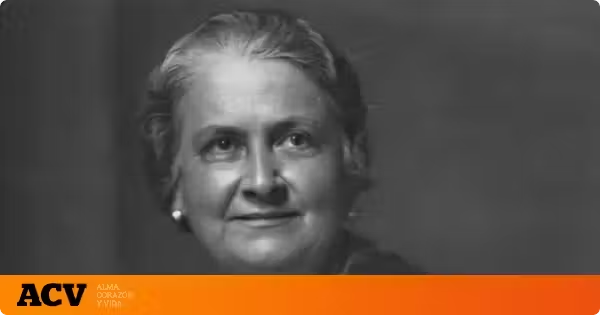
Maria Montessori, an Italian physician and educator, fundamentally transformed educational theory and practice in the early 20th century. Central to her philosophy was the belief that education is not merely the transmission of knowledge from teacher to student, but a natural process facilitated by the child's own curiosity and interaction with their environment. Her seminal quote, 'Education is not what the teacher gives; it is a natural process which develops spontaneously in the human being,' encapsulates this revolutionary approach. Montessori argued that true learning stems from direct experience, autonomous exploration, and active participation, rather than passive listening to verbal explanations. [1]
Born in 1870 in Chiaravalle, Italy, Maria Montessori broke significant ground as one of the first women in her country to obtain a medical degree. Her professional journey began with a focus on child development and the education of children with disabilities. Working with these children allowed her to observe that they progressed significantly when provided with appropriate materials and opportunities for self-directed experimentation. These early experiences led her to critically question the prevailing educational systems of the time, which were heavily reliant on discipline, rote repetition, and the unilateral transmission of knowledge. [1]
A pivotal moment in Montessori's career occurred in 1907 with the opening of her first 'Casa dei Bambini' (Children's House) in the San Lorenzo neighborhood of Rome. This institution served as a laboratory for her pedagogical theories. Here, she implemented materials specifically designed to stimulate the senses, enhance concentration, and develop practical daily skills. Students were empowered to choose specific activities, manipulate objects, and repeat exercises until mastery was achieved. Montessori demonstrated that freedom within a structured, organized environment could foster autonomy and intrinsic interest in learning, eliminating the need for constant external rewards or punishments. [1]
Montessori's approach also redefined the role of the educator. She moved away from the traditional model of the teacher as the sole director of activity and source of knowledge. Instead, she proposed that the adult should act as an observer, companion, and preparer of the environment. This did not imply permissiveness; rather, it involved offering freedom adapted to the child's age and developmental stage. The educator’s role was to intervene only when necessary, avoiding the habit of solving problems that children could resolve themselves, thereby fostering independence and problem-solving skills. [1]
These principles were codified in major works such as 'The Montessori Method' (originally published in 1909) and 'The Absorbent Mind' (1949). Through extensive research and observation, Montessori emphasized that the first years of life are critical for acquiring knowledge and developing capabilities. Practical examples of her method include using physical objects for counting and grouping before introducing abstract mathematical operations. Similarly, daily activities like buttoning clothes, pouring water, or caring for plants are utilized to work on coordination, responsibility, and independence. [1]
The influence of Maria Montessori extends far beyond Italy, remaining present in educational centers across numerous countries today. While her method has faced debate and its success can depend on implementation, her core contribution remains valid: learning involves acting, making mistakes, exploring, and understanding, not just receiving information. Her reflection continues to challenge educators and families to rethink how teaching occurs, emphasizing the importance of awakening curiosity and providing tools for individuals to develop their full potential. [1]
- Categories:
- Education
- Entities: