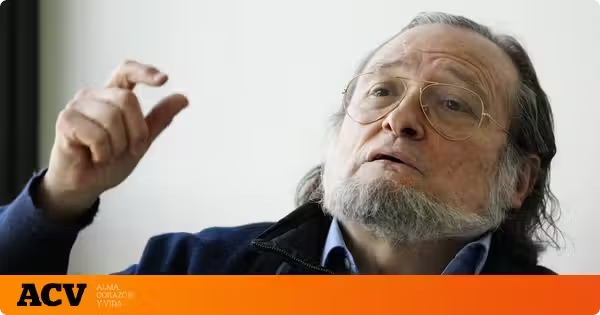
Spanish economist Santiago Niño Becerra argues that the concept of the middle class was not a natural market evolution but a political strategy designed to buy social peace. He suggests that this stability is now collapsing under the pressure of technology and automation. [1]
Speaking on the 'Tengo un plan' podcast, Niño Becerra explained that since the early 1980s, GDP growth and employment creation have diverged, with GDP increasing faster than jobs. He predicts a drastic future for the global workforce, claiming that eventually, only 5% of the population will be needed to generate 100% of the world's GDP. [1]
The economist highlighted a significant decline in mid-level employment due to technological shifts. [1]
According to Niño Becerra, artificial intelligence is primarily replacing intermediate roles, including administrative and mid-level technical positions. He asserts that productivity is becoming binary—one is either 'very useful' or 'very little useful,' with no middle ground. To illustrate this, he cited a case where a machine performing experiments replaced thirteen PhD holders. [1]
This technological purge has diminished the role of higher education as a tool for social mobility. Niño Becerra noted that over a decade ago, the prestige and value of MBAs in the United States began to decline. He pointed out that large corporations now prioritize problem-solving abilities over prestigious diplomas, citing a mass recruitment process at Tesla where candidates were required to solve a case study without being asked for academic certificates. [1]
The shift marks what the economist describes as the collapse of the academic elevator. [1]
Niño Becerra argues that the middle class is currently defined by income rather than education. He contends that accumulated degrees no longer guarantee socioeconomic stability, stating that a PhD in astrophysics who sweeps the street is not middle class, which leads to massive losses in purchasing power. [1]
As a survival strategy, the economist recommends hyper-specialization in practical skills, advocating for the 'professionalization of hobbies.' He argues that in the coming economy, it is better to be the best wall painter in the world than a mediocre lawyer. Additionally, while he acknowledges that social capital and contacts can open doors, he warns that they cannot guarantee job security without demonstrated real value. [1]
- Categories:
- Economy
- Entities: