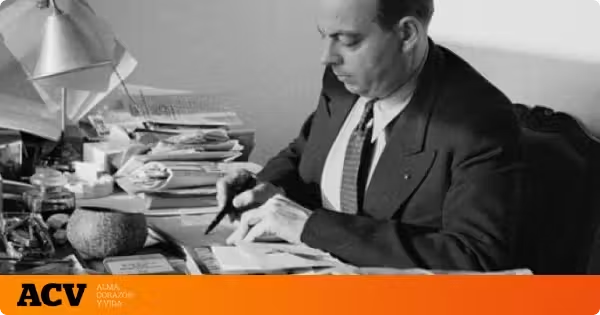
Antoine de Saint-Exupéry, the French author of The Little Prince (El Principito), left a profound reflection on the nature of memories and the true value of existence, casting doubt on the importance of money. The writer stated: 'If I look through my memories for those that have left a lasting taste, I always encounter those that brought me no fortune.' [1]
This statement invites thinking about what remains with a person as the years pass. From Saint-Exupéry's perspective, the most precious experiences are not necessarily linked to economic success or material possessions, but to intangible values. [1]
On the contrary, often the simplest moments, lived without expecting anything in return, are those that take their special place in memory, thus defining the essence of a meaningful life. [1]
The biography of the French writer, marked by his career as an aviation pilot, provides the necessary context for understanding this philosophy. The airplane was much more than an occupation; it shaped his worldview, influencing literary works featuring themes such as friendship, responsibility, loneliness, and human relationships. [1]
In this context, The Little Prince is not just a children's story, but a meditation on the importance of looking beyond appearances and recognizing the value of those who cannot be measured materially. Saint-Exupéry's personal experiences are reflected in the message of his famous work. [1]
His words remind us that a life rich in experience should not be confused with one rich in wealth. An unexpected encounter, a sincere conversation, or a gesture of affection can leave a much deeper imprint on the soul than any financial reward. [1]
- Categories:
- Culture