Recent social unrest in France has highlighted a deep connection between contemporary youth activism and historical patterns of resistance. From the streets of Nantes, where unions have refused to declare protests since 1955, to the playlists of mobilizing students, the echoes of past struggles are vividly present. The current wave of demonstrations, which began in mid-October 2026, draws on both institutional history and cultural memory, creating a unique landscape of protest that blends legal defiance with artistic expression.
In Nantes, the capital of Loire-Atlantique, the tradition of unions not declaring protests remains a cornerstone of local labor politics. This practice, which defies Article L211-1 of the Internal Security Code requiring prior declaration for public demonstrations, stems from a tragic event on August 19, 1955. During a metallurgy strike that had lasted eight months, 24-year-old construction worker Jean Rigollet was killed by law enforcement officers who fired live rounds into the crowd on the Cours des 50-Otages. This event, described by Nelly Goyet, General Secretary of the Local Union of the CGT in Nantes, as having 'gone around all of France,' fundamentally altered the relationship between workers and the state. [1]
“On do not yield,” said Goyet, summarizing the stance that has persisted for over seventy-one years. “It is symbolic. The prefecture is perfectly aware of this.” While the French government insists on legal compliance, local unions maintain that the refusal to declare is a necessary safeguard against police violence. Opposition figures, such as former MP Valérie Oppelt, have argued that undeclared protests endanger public safety because police cannot properly secure areas without warning. However, union leaders counter that declared protests have also been sites of police violence, rendering the argument moot in their eyes. Despite this, the historic route through the city center, including the Cours des 50-Otages, remains the default path for marchers, with authorities clearly anticipating their movements. [1]
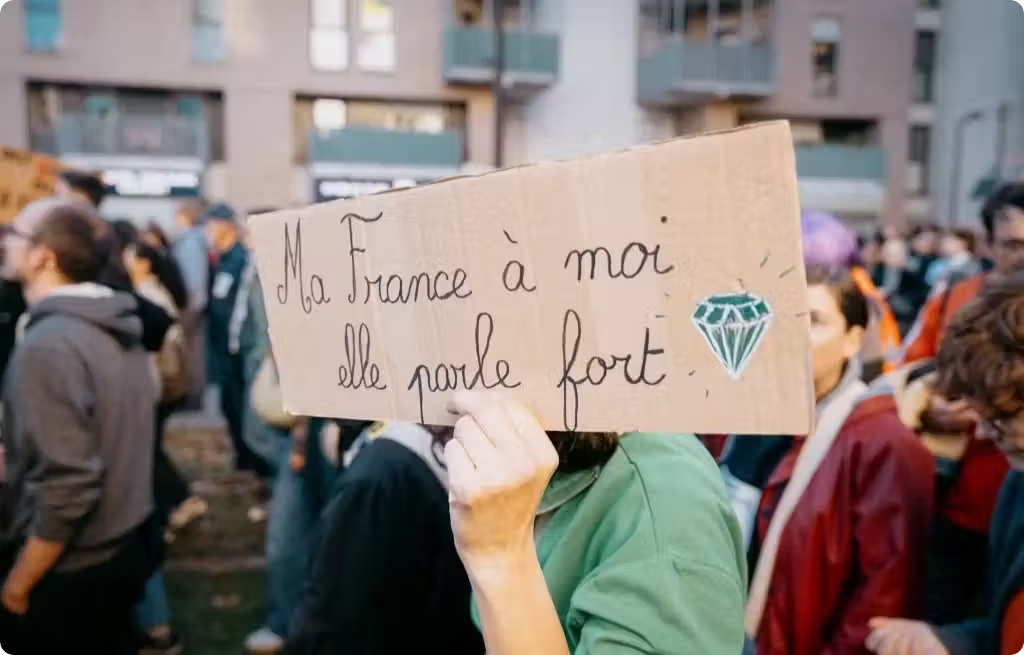
This spirit of defiance finds a parallel in the cultural sphere, particularly among France's youth. Since the October 17 protests escalated, following urban violence in Nantes, young demonstrators have turned to hip-hop tracks from the early 2000s to articulate their grievances. Songs like 'La France' by Sniper, 'Banlieusards' by Kery James, and 'La Boulette' by Diam’s have seen significant spikes in streaming numbers. According to Spotify, streams for Kery James’s 'Lettre à la République' rose by 75%, 'Vivre ou mourir ensemble' by 61%, and 'Banlieusards' by 13% since the start of the mobilization. Similarly, Diam’s 'Ma France à moi' and 'Marine' saw increases of 50% and 37% respectively. [1]
Keivan Djavadzadeh, a sociologist and associate professor at University Paris-8, notes that this is not merely a nostalgic trend but a strategic use of existing cultural resources. “The artists were right twenty years ago; they formulated a statement that has not been refuted,” Djavadzadeh explains. He highlights that the lyrics of these older tracks provide ready-made slogans for protests, reducing the need for adaptation. Unlike today’s artists, who navigate algorithmic constraints and prefer engagement through social media or concerts, the rap pioneers of the 90s and 00s used their music as one of the few available platforms to voice political dissent. [1]
The resilience of Diam’s 2006 album 'Dans ma bulle' is particularly notable. While 'La Boulette' is listened to broadly, its specific anthemic quality—catchy melody combined with easily remembered, morally light lyrics that avoid preaching—makes it uniquely effective for chanting in marches. This contrasts with more overtly political tracks, which may struggle to reach wide audiences. Nevertheless, there are signs of a return to direct engagement in contemporary rap, with artists like Soli, Orelsan, and Niska releasing politically charged songs in response to the rise of the National Rally and ongoing social tensions. [1]
Both the Nantese union tradition and the resurgence of 2000s rap illustrate how historical contexts shape current actions. Whether through the silent refusal to declare protests or the loud affirmation of identity in music, these methods reflect a continued struggle for recognition and rights. As long as the issues that sparked the 1955 strike and the 2000s social movements persist, the symbols of those eras will remain potent tools for modern mobilization. [1]
- Categories:
- Culture
- Entities: