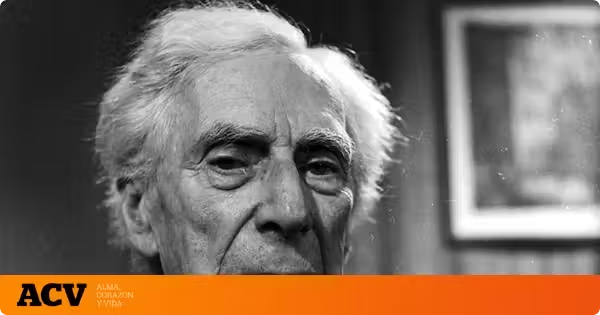
A 20th-century British philosopher and political activist, Bertrand Russell (1872–1970), is renowned for a widely circulated statement describing a psychological asymmetry in public life: people with limited knowledge tend to be excessively certain of their opinions, while the educated manifest a continuous state of doubt and caution. This observation, which has spread intensely in the digital age, reflects a profound view of how social and political decisions are made. Russell wrote numerous essays and books on various subjects, from religion and education to sex and global peace. His constant idea was that reason should govern daily life and that education should encourage independent and critical thinking, not mechanical learning. This is what reminds us today of the necessity of an educated citizenry to resist manipulation. [1]
The context of emergence of this remarkable thought dates back to the interwar period, particularly the 1930s, an era marked by the rise of totalitarianism in Europe. As Adolf Hitler consolidated power in Germany (1933), Russell observed with concern how the public masses were easily seduced by simple, clear discourse filled with absolute promises. Populist leaders offered quick certainties amid economic and political uncertainty, gaining ground at the expense of nuanced and cautious arguments. The paradox of illusory safety was all the more visible in the 1930s, when global problems called for complex solutions. Russell noted how, while the academic community approached challenges with caution and reservations, totalitarian leaders offered a simple, firm message that was easy to digest. This artificial simplicity was far more convincing for a frightened and unstable population. The main source of the quote is often associated with his volumes on ethics and morality, such as 'Marriage and Morals' (1950). The exact origin of the idea circulating in the interwar period places it in a specific political context. Russell was concerned with how nationalist and racial ideas gained power precisely due to simplification and detachment from complex realities. [1]
Russell, winner of the Nobel Prize for Literature in 1950, did not see this hypothesis as a mere academic exercise but as a practical problem. He rejected the idea that extreme certainty is a sign of intelligence or mental health; on the contrary, doubt and perpetual seeking were signs of the capacity to understand the complexity of the world. This perspective was later confirmed by cognitive psychology through the Dunning-Kruger effect, which explains why incompetence generates unfailing confidence, while expertise brings intellectual modesty. Today, 'Parte de las dificultades del mundo se deben a que los ignorantes están seguros y los inteligentes llenos de dudas' remains one of the most quoted phrases of contemporary thought. It perfectly synthesizes the difficulty of fighting falsehoods, conspiracy theories, and fake news, because opponents of disinformation often have stronger arguments, but a captivating narrative devoid of ambiguity holds an unequal psychological advantage. [1]
The origins of this interest in the way the masses think are found in Russell's activity as a mathematician and logician. Co-author of the monumental work 'Principia Mathematica' alongside Alfred North Whitehead, Russell attempted to base mathematics on purely logical principles. This training in analytic logic provided him with the tools to deconstruct simplistic assertions and highlight the need for critical reasoning in the fight against dogmas, whether religious, political, or social. His principal work, 'Principia Mathematica,' created jointly with A.N. Whitehead, was a huge effort to deduce mathematics from logic. Although the project did not achieve the complete success desired in its original endeavor, it had a major impact on analytic philosophy and modern logic. This scientific rigor later defined his approach to public arguments. [1]
Besides his academic merits, Russell was a controversial and engaged figure. Born into an aristocratic family, he refused the conventions of Victorian society, campaigning for educational reform, women's rights, sexual justice, and global peace. His critical attitude toward authority and any form of fanaticism led him even to prison for his opposition to World War I. The Dunning-Kruger effect, a psychological phenomenon documented decades later by modern researchers, describes exactly the paradox pointed out by Russell. According to it, individuals with low abilities in a domain tend to significantly overestimate their level of competence, being unable to recognize their own gaps. On the other hand, experts, aware of the vastness of the subject, tend to be more modest in their statements. [1]
Bertrand Russell's legacy remains current in contemporary debate regarding disinformation and polarization. The trap in which 'the certain' capture attention and power, to the detriment of those who see the limits of their knowledge, represents one of the major challenges of modern democracies. His philosophy encourages an attitude of constructive skepticism, necessary in a world dominated by algorithms and informational noise. [1]
- Categories:
- Culture