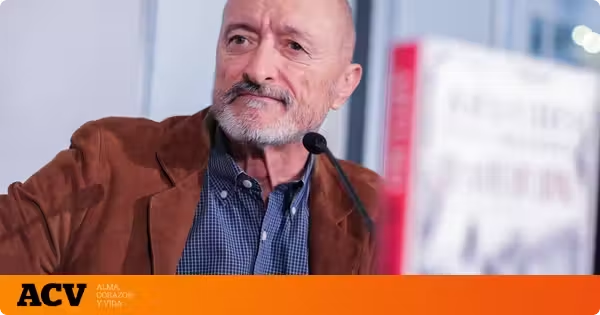
At the presentation of his latest novel on La Ventana (Cadena SER), the Spanish writer participated in a discussion led by Carles Francino regarding how to confront suffering when the things and people we value most are threatened. Perez-Reverte, known for works that often feature war and the sea, explored these themes as questions about life itself. He attended the program to promote his new book, The Most Dangerous Hypothesis (La hipótesis más peligrosa), published by Alfaguara on October 20, 2026. The story follows 16-year-old Cal Gadea, a video game enthusiast searching for the father he never knew. After finding him in a Mediterranean port, the two embark on a sailing journey that blends family discovery with a plot involving stolen art and historical mystery. Francino read a passage from the book to the author: 'Understand once again that indifference is the only possible remedy against the evils of the world. It is the only thing that allows one to bear the weight of life intact.' The host then shifted the question from literature to personal experience, asking if such emotional distance is truly the best way to live. [1]
Perez-Reverte made a crucial distinction: 'I don't know if indifference is the best way to live, but it is the most effective way to endure.' He explained this difference by recalling his memories of Beirut and Sarajevo. Witnessing great disasters allowed him to recognize a protection that direct victims lacked: knowing his own family was safe. This distance did not eliminate empathy or impact, but changed his position relative to suffering. He noted that while humanity is undoubtedly affected, 'it is not the same to see your own house burning as to see others' houses.' He connected the intensity of pain to personal bonds, stating, 'Then you realize that the more things you have in the fire, the more loves, affections, and interests, the more painful everything is.' His reflection led to a reference to ancient thought: 'Ancient sages sought indifference, that psychological distancing from events, allowing them to survive.' The writer thus outlined the emotional cost of having something to lose and the protection offered by remaining on the sidelines. [1]
However, the author avoided presenting this attitude as personal advice. 'I speak of classical philosophy, I do not speak of myself nor what I think,' he clarified. He also acknowledged the downside of this apparent security: 'I also do not say that I practice it; I say that it is a comfortable and selfish state, undoubtedly.' [1]
- Categories:
- Culture
- Entities: