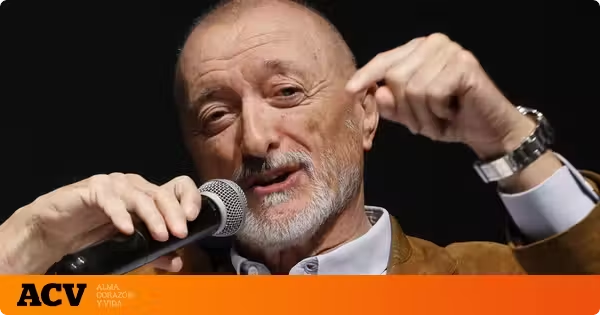
Spanish writer and Royal Spanish Academy academic Arturo Pérez-Reverte has issued a poignant reflection on contemporary relationships, challenging the traditional narrative of male romantic agency. His statement, 'The man believes himself to be the lover of a woman, when in reality he is only her witness,' serves as a central thesis for exploring the humility required in modern intimacy. [1]
The 'witness' metaphor dismantles the masculine vanity that often places men at the center of the romantic narrative. It suggests that women maintain an autonomous inner world where men may act merely as invited spectators rather than co-authors of their emotional destinies. This perspective strips men of a false sense of authority, positioning them in a passive role that reveals a striking emotional blindness toward the clarity and resilience with which many women manage their affective lives. [1]
Sharing living spaces or long-term projects does not guarantee a deep knowledge of another person. Inhabiting the same territory, whether physical or emotional, leaves inaccessible corners within the intimacy. Couples often navigate an ambiguous landscape where male vanity conflates romantic dedication with a form of submission, failing to perceive that the woman's emotional sovereignty remains intact and separate. [1]
This romantic blindness clashes with the true nature of the bond, where ego obscures the ability to truly observe the female universe. Accepting the impossibility of fully knowing another human being is the foundation of mature affection. Love is not about dominating a territory but constitutes the immense privilege of witnessing its evolution day by day. [1]
The piece frames this transition as a journey from the illusion of the conqueror to the silence of the witness, emphasizing the weight of observation over the right to command. [1]
By redefining the man as a witness, the narrative removes the illusion of conquest. Men tend to misinterpret affection as dependency on themselves, unaware that the woman's interior world operates independently. This figure of the witness exposes a profound lack of perception regarding the emotional independence that allows women to direct their affective dimensions with lucidity. [1]
The source cites a meta-analysis in Psychological Bulletin that found some accuracy in how people perceive their romantic partners, alongside biases such as projecting their own traits or thoughts. It also describes a study of 292 people who had recently moved in with their partners. Their ability to recognize personality traits varied by context and was higher when they were alone with their partners. [1]
Accepting that we are simple witnesses to the person we love is presented as the greatest gesture of humility and the true privilege of loving. [1]
Crossing literature with science clarifies that intimacy does not eliminate individual interpretations nor guarantee absolute knowledge of the beloved. Accepting the condition of witness involves understanding love as an act of respectful observation toward a universe that will never fully belong to us. The good fortune of a couple lies precisely in the humility to accompany that light without pretending to govern it. [1]
- Categories:
- Culture
- Entities: