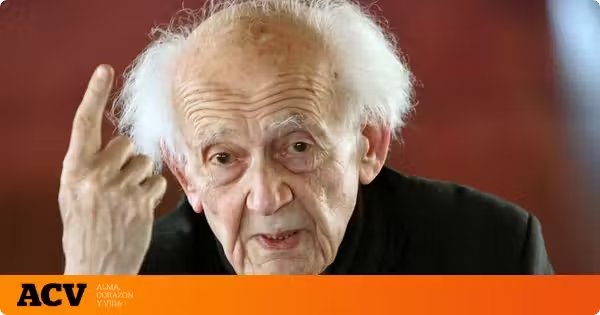
Zygmunt Bauman examines uncertainty about the future in personal decisions such as choosing a profession, starting a relationship or imagining where to live, emphasizing that each project requires time and commitment while depending on circumstances outside individual control. The gap between plans and outcomes occupies a central place in the sociologist and philosopher’s reflection. [1]
Born in Poland in 1925 and died in the United Kingdom in 2017, Bauman was emeritus professor at the University of Leeds and analyzed how social transformations affect everyday life. In The Art of Life, originally published in 2008, he brought his thought on liquid modernity to personal choices, examining how people try to shape their existence as expectations about success, happiness and individual fulfillment change. [1]
He addresses the construction of identity, writing in The Art of Life that although identity has remained important since the modern shift from a society of ascription to a society of achievement, it now shares the fate of other life fixtures. Deprived of a fixed direction from the start and without needing to leave solid, indestructible traces, identity is expected and preferred to melt easily and adapt to different forms. [1]
That capacity to change also introduces a demand to remain available for adopting another way of living. A decision can cease to seem appropriate when opportunities, relationships or expectations sustaining it change. Bauman summarizes the shift in the same book: what was once a project for a whole life has become an attribute of the moment. Flexibility affects both external circumstances and how we understand who we are. [1]
From this arises reflection on the fragility of plans. Once designed, the future is no longer forever but needs to be assembled and disassembled continuously. The phrase appears in The Art of Life and is reproduced in Reflections on a Liquid World. For Bauman, a life project is no longer decided once. It must be reviewed and adapted as surroundings change. [1]
The Art of Life develops these questions without offering a formula for happiness. Its interest lies in examining the conditions in which we choose, the limits of our possibilities and the responsibility attributed to each individual for outcomes. From that perspective, building a life involves making one’s own decisions while also recognizing how much resources available and social demands influence them. [1]
- Entities: