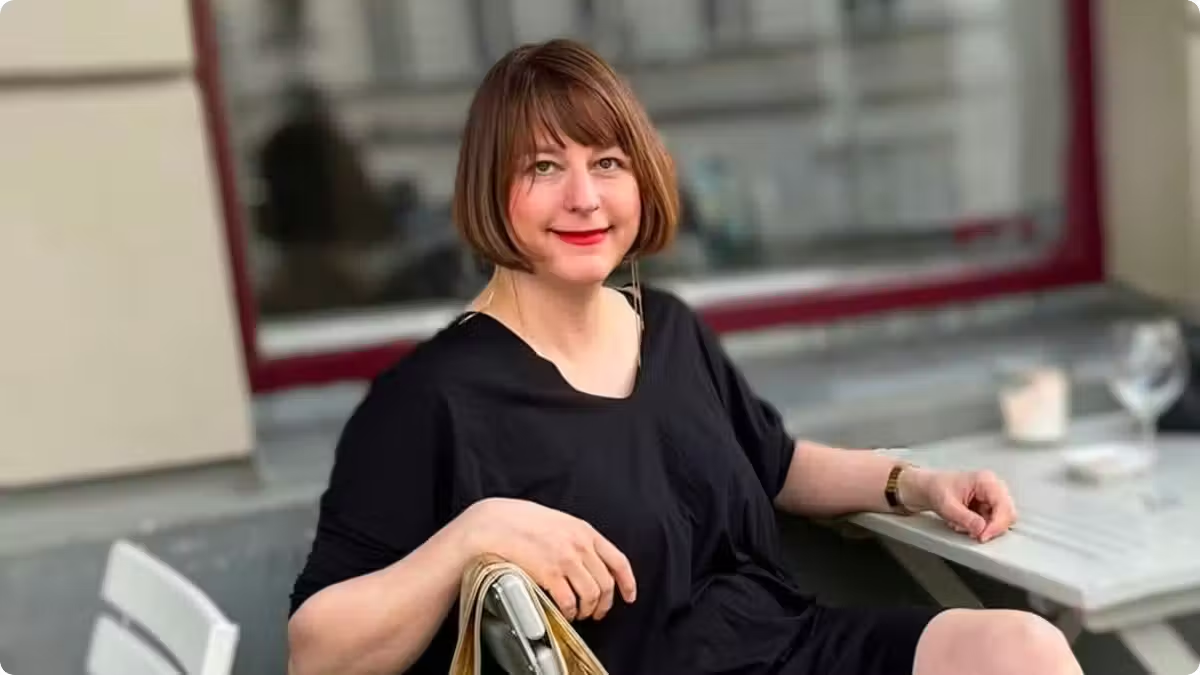
German physician Anne-Katrin Göstemeyer, a rheumatologist at Charité Berlin and mother of two, speaks publicly about the sudden death of her husband Torsten and the years of grief and rebuilding that followed. She was 42 when he died, with children aged 1 and 3, and now lives as a single mother in Berlin.
Göstemeyer and Torsten met in 2010 while working at Charité. After an unhappy previous relationship for both, they began a relationship in 2012 and built a patchwork family with shared children. They described their life together as largely happy despite the complexities of blended families.
In March 2020 both were infected with COVID-19 during the first wave, before lockdowns, vaccines, masks and rapid tests were widespread. Torsten likely contracted the virus on the intensive care unit where he worked. The couple quarantined for 14 days with two small babies under supervision of the health authority.
After returning to work, Torsten remained unwell with persistent fever, exhaustion and poor appearance. He did not seek medical attention, saying as a doctor he knew what could be done. In retrospect Göstemeyer says the infection may have damaged his heart and that a heart transplant might have been the only chance, probably not realizable in time.
On 23 August, Göstemeyer’s mother-in-law woke her at 6 a.m. saying Torsten was lifeless on the balcony. She recalls no sirens or collapse, just birds chirping while she stood beside her dead husband. She describes the moment as an unbearable physical pain, a loss of breath and light, and the end of her previous life.
The weeks after were a fog. Friends took shifts around the clock. Göstemeyer remembers being unable to sleep, eat or rest, and fearing she could not care for her children or that they might be taken away. She felt she needed medication to calm down but lacked the energy to navigate the health system.
She stresses the importance of practical, present support for grieving people: cooking, cleaning, filling forms, and simply being there for embraces when tears came. She argues people need to learn how to approach mourners, that silence hurts more than asking, and that those present carry a share of the grief.
Over months she built a network of professionals who understood her situation: a therapist found via her gynecologist, a psychiatrist who listened and prescribed appropriate medication, psychological support for parenting, and a peer group of younger widowed people, the Young Widow:ers Dinner Club.
The Young Widow:ers Dinner Club originated in Vienna after a self-help group dissolved and members kept meeting for meals. It is aimed at people widowed between 20 and 50 and is not a formal circle with coffee, but an informal setting where laughter, tears, stories and jokes are allowed. Göstemeyer first heard of it through telephone counseling.
She notes the club is strict on age because the life reality differs sharply from losing a partner at 80 versus in one’s twenties or forties. Members are often 20 to 30 and face questions about new partners, children and new love, which is a different trajectory than older bereavement.
Three and a half years after Torsten’s death, Göstemeyer says the pain is not smaller but different. She has learned about herself, life, love, death and grief, and wants to share what helped. She rejects the word “widow” as evoking an old, sad, black-clad stereotype, saying she is energetic, works full time and is a single mother with a life ahead.
She now frames her outlook as wanting to be happier now rather than postponing happiness for a house, pension or occasional holidays. She emphasizes acting on what makes her happy today, changing jobs if it bothers her, and recognizing that no one knows how long life lasts.
Using Elisabeth Kübler-Ross’s model, she places herself in acceptance: “You are not my friend, I think you’re really shitty, but I accept that you are here. And now I show you the long nose and make something really great out of my life.” She still has bad moments but also moments of joy and laughter, especially in small things.
Göstemeyer lives with her two children in Berlin and works as a specialist in rheumatology at Charité. Together with two other women she organizes Young Widow:ers Dinner Club meetings in Berlin. The group, originally from Vienna, now meets in many German cities.