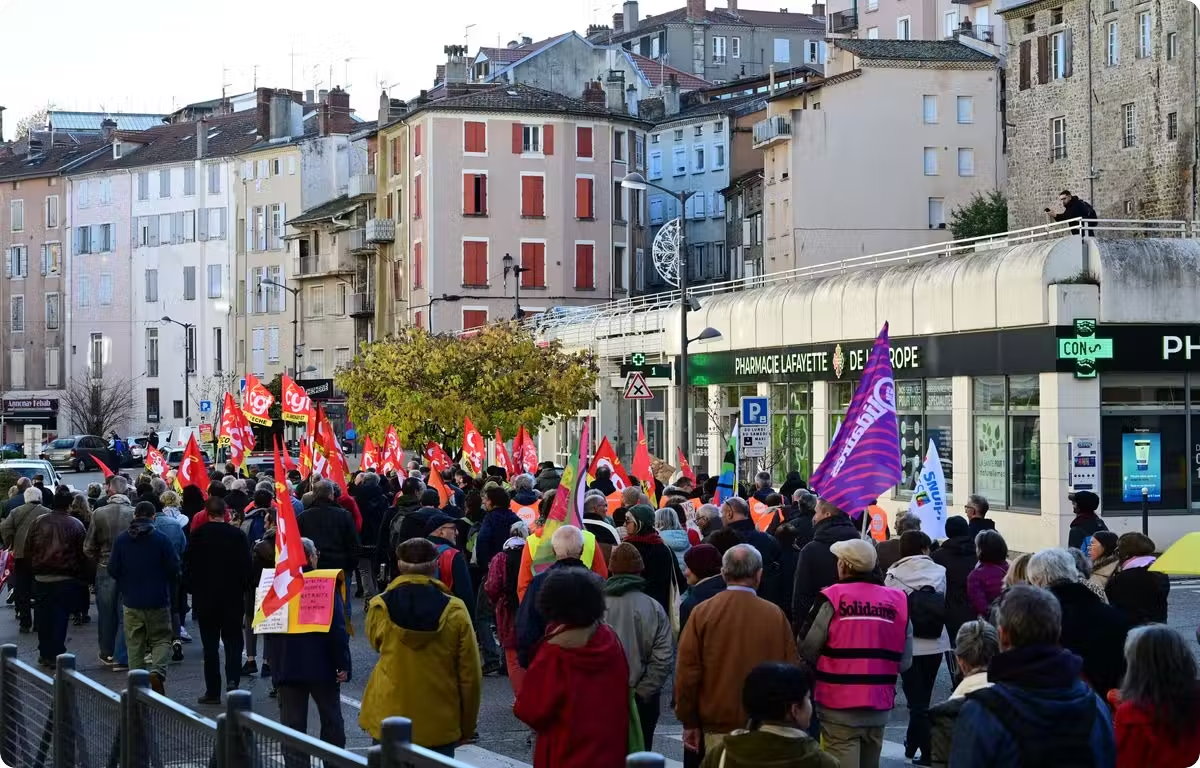
On Tuesday 17 November, public sector workers were called to strike, with the CGT urging continuation of the movement. While teachers and rail workers can easily walk out, some public service occupations are barred from striking. 20 Minutes listed the jobs denied the right to strike. Although strike action is a constitutional right since 1946, duties of certain professions take precedence. This is known as continuity of public service and it concerns especially sovereign and judicial bodies. Professionals barred from striking include soldiers, the most well known on the government site. By extension, gendarmes are not allowed to strike. This is also the case for CRS, who have in recent days reportedly used sick leave to circumvent the ban. More broadly, police officers have no right to strike, including commissioners. The same applies to magistrates, transmission staff of the Interior Ministry and civil servants of decentralized administration of the penitentiary services such as prison officers. The right to strike is authorized but limited for other public service occupations, such as municipal police, who can be requisitioned by their mayor. It can also be complex for workers in air navigation, with agents obliged to ensure continuous missions, notably air traffic control and territorial defense. Not all functions concerned by strike limitations belong to security or defense. The right to strike for caregivers in hospitals and EHPADs is strictly framed because they must provide minimum service. The same is partly true for workers in transport, nursery and primary schools, and public audiovisual, who must ensure continuity even during strikes. [1]
- Entities: