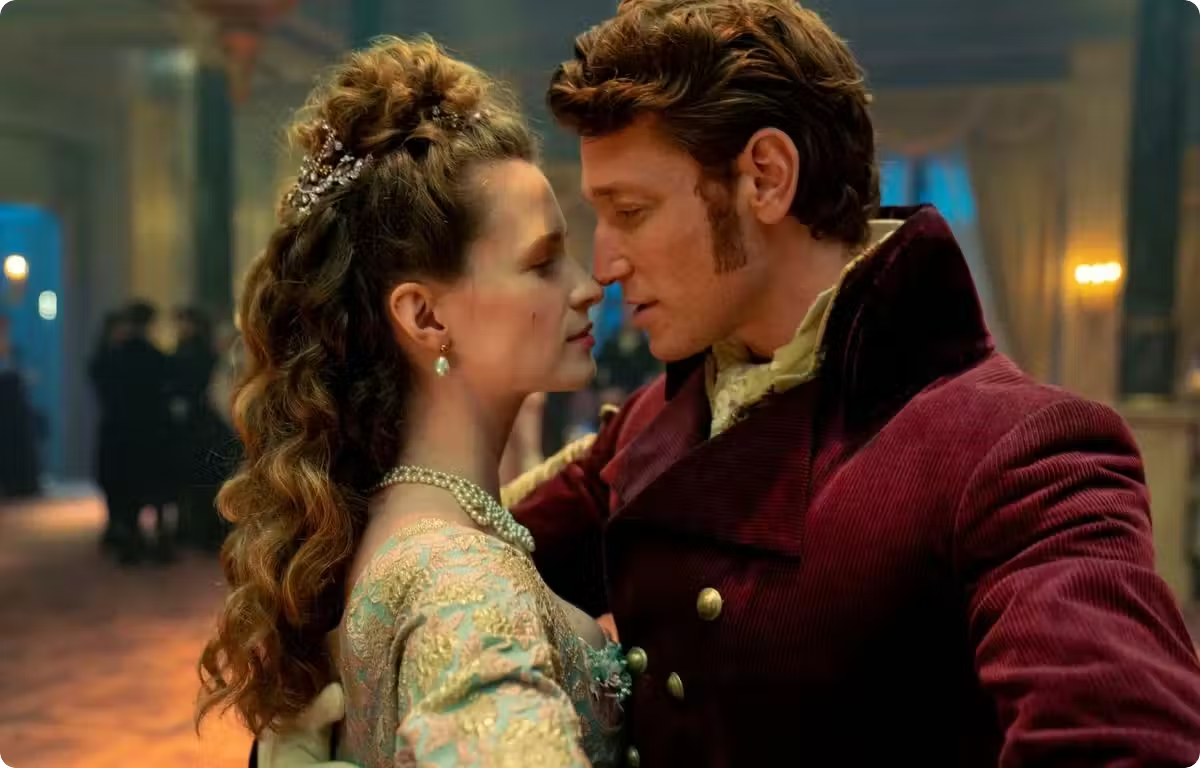
Disney+ has released the German-language historical drama series Vienna Game, drawing immediate comparisons to the hit show Bridgerton due to its blend of lavish period costumes, romantic intrigue, and high-stakes social maneuvering. Premiering on November 18, 2026, the series reimagines the Congress of Vienna (1814–1815), the pivotal diplomatic conference held after the first defeat of Napoleon Bonaparte. Rather than focusing solely on dry political negotiations, the show transforms the era’s famous balls, liaisons, and salon gatherings into a battlefield for European influence. Set against the backdrop of powers attempting to redraw the continent's borders, the narrative centers on Wilhelmine von Sagan, played by Marlene Tanczik, a close confidante of Austrian Chancellor Klemens von Metternich, portrayed by Alexander Scheer. Wilhelmine aims to influence the delicate negotiations, but her plans are disrupted by the arrival of Amor Łaski, a charming Bonapartist spy played by Daniel Donskoy, whose antics inject both comedy and danger into the diplomatic landscape. [1]
The production distinguishes itself from Netflix’s Bridgerton, which centers on marriage and desire as primary drivers within Regency London society, by positioning seduction as a genuine tool of statecraft. In Vienna Game, behind every romance lies the future of post-Napoleonic Europe. This approach aligns with a broader trend of German-speaking historical fiction gaining international traction. Netflix recently unveiled the final season of The Empress, focusing on Empress Elisabeth of Austria (Sisi), in November 2026. Prior to that, the second season of The Empress reached the global top 10 in 84 countries, including France, in 2024. Earlier, the four-season series Sissi aired on TF1 in 2021. However, Vienna Game carves a unique niche by opting for political satire and espionage comedy over courtly drama. It highlights how the mondain life served alliances, suggesting that the screenwriters did not entirely invent the social dynamics that facilitated political deals. [1]
Historical authenticity plays a complex role in the series. While certain characters like Amor Łaski are fictional fabrications akin to farce, others are rooted in documented reality. Wilhelmine von Sagan was a real historical figure whose relationship with Metternich and their extensive correspondence are well-documented. According to historian Anne Sommerlat-Michas, aristocratic women excluded from official negotiations often exercised significant influence through their salons and networks. The series also features Marie Louise of Austria, Napoleon’s second wife, portrayed by Roxane Duran. Historically, in 1814, Marie Louise began an affair with Count Neipperg, who accompanied her after Napoleon’s fall; the couple later married following Napoleon’s death in 1821. This inclusion underscores the show's effort to center forgotten female actors in diplomatic history, even if it occasionally reduces their influence to romantic conquests and conspiracies. [1]
Critical reception among German-speaking press outlets highlights the tension between entertainment value and historical responsibility. DWDL praised the show's energy but criticized caricatured characters and confused diplomatic intrigues. Meanwhile, Tagesspiegel questioned the liberties the series takes with well-documented events. The paradox of Vienna Game lies in its dual nature: it revitalizes the narrative role of women in diplomatic history while risking the distortion of their actual geopolitical impact. By blending fact with fiction, the series serves as both a stylish introduction to early 19th-century history and a cautionary tale about how entertainment can obscure complex historical stakes. As audiences engage with the romanticized version of the Congress, the series raises questions about whether such popular history helps preserve collective memory or dilutes the serious consequences of the era's political decisions. [1]