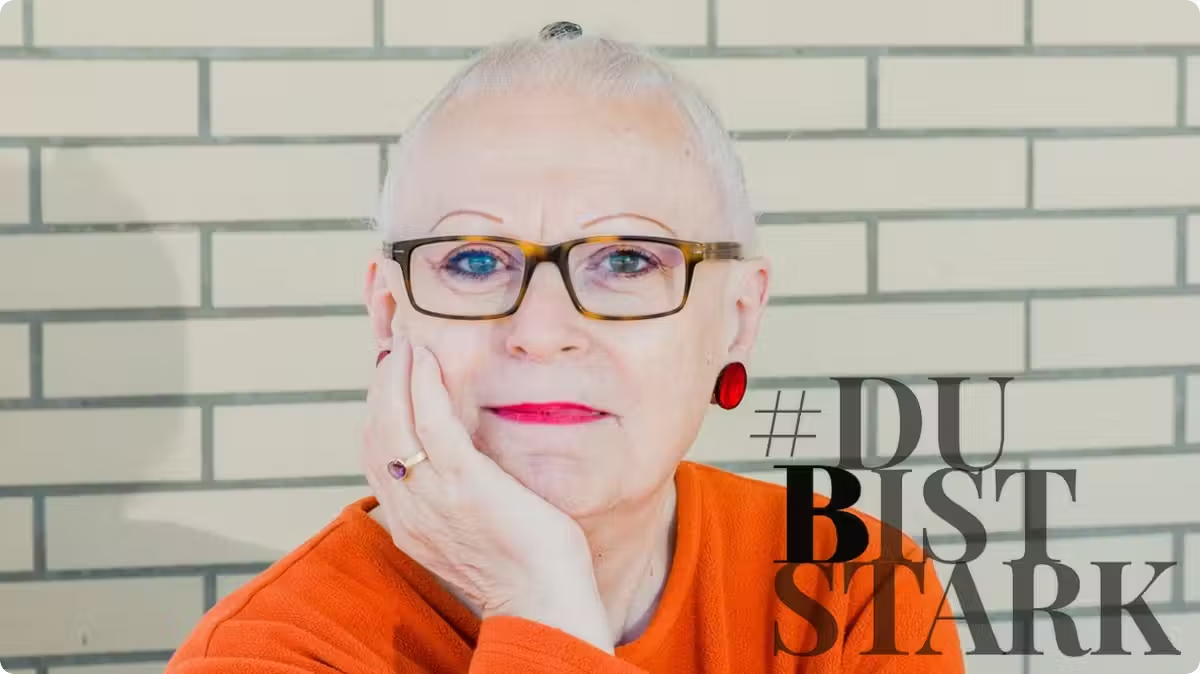
Nora Eckert was born in 1954 in Nuremberg and has lived in Berlin since the '70s, and at the time of the interview on 19 November 2026 she is over 70 years old. [1]
She is known as an author about Wagner, Büchner and Shakespeare, does not use social media and has interests in Einstein and neurology. [1]
The interview conducted by Susanne Schumann for Brigitte on 19 November 2026 describes that Nora has lived as a woman since the beginning of her 20s and talks about the discovery of gender identity. [1]
Brigitte presents on 19 November 2026 a discussion with Nora Eckert, a trans* woman who has lived as a woman since the beginning of her 20s, about the discovery of identity and its impact on the self. [1]
Nora is originally from Franconia, lives in Berlin since the '70s, is a Pisces, drinks tea not coffee and has a warm, mischievous smile that sparks curiosity. [1]
For the interview author, Nora's trans* is initially just a trait, however the conversation shows that trans and feminine identity play a major role in her life. [1]
Nora states that trans people take on difficulties to live what they discover inside, regardless of the environment's support. [1]
The title of the section in the interview highlights that Nora was born trans*, but trans* was not an option for a long time for her. [1]
Nora was born in 1954 in Nuremberg, was assigned male sex at birth, her parents had a mixed religious marriage, she was baptized Catholic and at 14 she left the church. [1]
She lived with a male identity until the beginning of her 20s, when she realized the transition to woman. [1]
Nora cannot explain how she arrived at the certainty that she is trans* and has femininity in her, describing the experience as a discovery without words or prior knowledge. [1]
In the '60s-'70s, when she discovered herself, few talked about trans*, although the concept has existed for a long time. [1]
The ZDF documentary 37°: Trans - Drei Generationen, eine Reise includes Nora's experiences and is available in Mediathek until 19 March 2029. [1]
Nora considers that trans* is not a medical problem, but the discovery of a gender identity different from that on the birth certificate. [1]
She notes that explaining this discovery is difficult and compares the situation with how cisgender people do not have to explain identification with biological sex. [1]
In retrospect, Nora recognizes early signs of feminine identity, such as preference for games with girls and the role of mother in the Vater-Mutter-Kind game. [1]
Nora emphasizes that the perception and treatment of others influences self-esteem and that being seen as a man although she was a woman was tormenting. [1]
She describes getting out of this situation as liberation and acceptance. [1]
The section discusses the idea of personal role in the context of trans people. [1]
Nora rejects the formulation of 'wrong body' and says 'I was born trans* and will die trans*', adding that if she had always had to be a woman she would have been born a woman. [1]
She says that life does not come with a user manual and that she had to discover her role and 'her thing'. [1]